
The Great Destiny of a Nation
The Seed Under the Ground
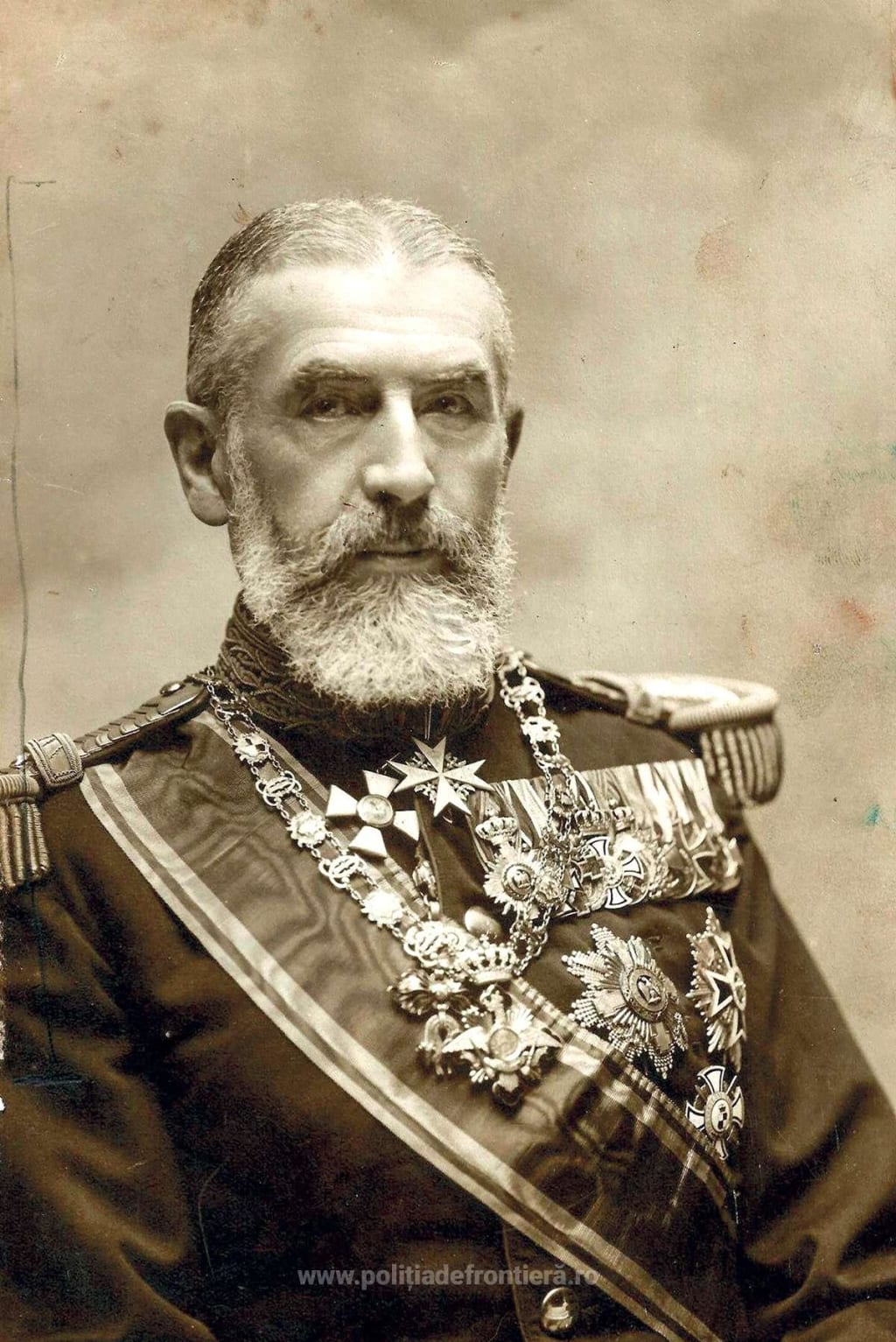
The Great Destiny of a Nation
Part I: The Seed Under the Ground
In the 15th-16th centuries, in the West, the idea of a national "home," of a unitary state, took deep root. But for the peoples of Eastern Europe, especially for the Romanians, this idea was a seed buried deep, which waited for centuries to sprout. A seed constantly threatened by greedy empires—the Tsarist, the Ottoman, and the Habsburg—that devoured peoples, denationalized them, and forced them to abandon their lands.The most enlightened Romanians, intellectuals, priests, and politicians, understood with painful clarity that, without a national state, their people were condemned to disappear. More than half of them were scattered under foreign domination, like fragments of a shattered mosaic. This realization did not come overnight but was the result of a long and suffering historical process. The Revolution of 1848 was not a failure but a lighthouse. It was the moment when the program for the formation of modern Romania was drawn with blood and courage. It was the first whisper of the nation, which began to demand its right to exist.Starting in 1848, the desire for union became a creed, a fundamental goal. The leaders of the Romanians, visionary and pragmatic alike, knew they could not act alone. They needed a partnership with history, the support of the great powers. Their plan was a marathon, not a sprint. The union had to be done in stages, just like the Italians and Germans. The first stage was the union of Moldavia and Wallachia, under the leadership of Alexandru Ioan Cuza, a nucleus of strength, a solid foundation for what was to come.The War of Independence of 1877-1878 followed, a crucial moment. Romania, armed with unshakeable determination, entered the battle to win its freedom. This was the second whisper, a whisper of courage, which was heard at the Congress of Berlin and led to the international recognition of absolute independence.
Part II: The Storm and the Triumph
The year 1918 was the climax. After a World War that swept empires off the face of the earth and changed destinies, the wind of history blew, and for the Romanians, it was a wind of freedom. US President Woodrow Wilson gave a signal, a declaration that formalized the right to self-determination, and the oppressed peoples understood that this was their moment.People acted with astonishing speed. In Bessarabia, Bukovina, and Transylvania, the popular assemblies voted for union with overwhelming enthusiasm. It was not an act from behind the scenes, a conspiracy of the elites, but an explosion of popular will, a shout of joy that echoed throughout the provinces. The Romanians understood that freedom is not a gift but a right earned with blood and suffering.The act of the Great Union was validated at the Paris Peace Conference in 1919-1920. Romanian leaders presented a map of a new Romania, a country that had regained its lost territories and gathered all its scattered children. The new treaties, from Saint Germain, Neuilly-sur-Seine, and Trianon, internationally consecrated what the Romanians had decided. For the first time in history, the great powers took into account the will of the peoples, not just their own interests.Unified Romania became a regional power of the first rank, with nearly 300,000 square kilometers and 15 million inhabitants. It was a victory of the spirit, a triumph of patience and perseverance. But, as we know, history is not linear. In the decades that followed, Romania went through moments of glory but also through profound suffering. During communism, the national idea was manipulated, distorted, and history was rewritten.But the truth survived. Although it was sometimes forgotten, it remained in the soul of every Romanian. The truth is that the majority of Romanians wanted the Great Union. The truth is that the elites did not impose the union, but listened to and amplified the whisper of the people. The truth is that the Romanians, like other peoples in this part of Europe, traveled a difficult road, but succeeded in building a home, a nation.When we celebrate National Day on December 1st, we must not be overwhelmed by triumphalism, but remember the sacrifices, the struggle, and the courage of those people. We are neither superior nor inferior, but simply ourselves, with our good and bad parts. The Great Union of 1918 is not just a historical act, but a testament, a living proof that a dream, once born in the hearts of thousands of people, cannot be stopped, no matter how powerful the oppressors may be.
About the Creator
alin butuc
I am a passionate writer of stories and books. I explore the human soul, from deep psychological thrillers to heartfelt romance. Join me on a journey through words and discover a world of memorable characters and powerful emotions.
Keep reading
More stories from alin butuc and writers in History and other communities.
The History of the Danube's Cauldrons
The History of the Danube's Cauldrons: A Legend Sculpted in Time Part I: The Land of Decebalus and Roman Power Before the rock of Ghița mountain bore the face of Decebalus, and before the road narrowed into a gorge where the waters of the Danube thrashed like a wounded dragon, the Cauldrons were a sacred place. For the Dacians in the area, the mountains were sanctuaries, and the river was a living being with a powerful spirit. The deep waters and strong currents were considered a manifestation of the gods, who protected the land from enemies. When rival tribes approached, the sound of the troubled waters hitting the rocks would drive them away, as a warning that here, the land itself was defending itself.In those times, the elders of the villages would whisper stories about Zamolxe, who had sat on a rock, with his gaze fixed on the sun, and had merged with the mountain. Thus, his spirit became the protector of the Cauldrons, watching over his people. Every rock had a legend, every waterfall a secret. It was believed that in the hidden caves lived beings of the earth, who appeared only on full moon nights to bless those who respected nature.Then, the Romans came. With their shiny weapons and disciplined legions, they descended towards the Danube, seeking to conquer and civilize. For them, the river was not a sacred being but a transportation route, a strategic border. When they reached the Cauldrons, they understood why the Dacians revered them. The waters were agitated, the currents were strong, and the narrow rocks made navigation almost impossible. They were forced to build a network of roads on the bank to transport troops and supplies, and the testimony of their work is still inscribed in the famous Tabula Traiana, a commemorative plaque that stands as a testament at the entrance to the gorge today.Trajan, the Roman emperor, understood that to conquer Dacia, he also had to conquer this water route. But the Dacians were not easy to defeat. Fearless warriors, led by King Decebalus, they knew every crevice, every hidden rock. They retreated into the mountains, using the rugged terrain as an ally. Fierce battles took place, and their echoes can still be heard when the wind blows strongly through the rocks. After the death of Decebalus and the conquest of Dacia, the Romans remained. But the spirit of the place refused to be subdued. The Dacian stories continued to be told in whispers around campfires, and the Romans, although they considered them superstitions, felt an unseen force, a weight of history that hovered over the Canyon. That is why the Tabula Traiana was not just a monument to Roman victory, but also a recognition of the power of the place. It was as if the Romans were telling the world: "We came, we conquered, but this place is more than just land. It has a soul." For centuries, the Cauldrons were a border, a place of passage and conflict. Romans, migrants, foreign peoples, all passed through here. But the Dacian spirit, that of freedom and love for the land, remained.
By alin butuc7 months ago in History
Iran’s Final Warning
Iran’s Final Warning Tensions in the Middle East have reached one of the most dangerous levels in recent years as Iran issued strong warnings to both the United States and Israel during the ongoing conflict. Iranian military leaders and political officials say that if the attacks against Iranian territory continue, the war could expand far beyond its current battlefield.
By Wings of Time 3 days ago in History




Comments