
The Glory of the Pandyan Empire: Wealth, Trade, and Legacy
The Pandyan Empire, one of the greatest dynasties in South Indian history, flourished for centuries, leaving behind a legacy of immense wealth, maritime trade, and architectural wonders. Renowned for its vast pearl fisheries, extensive trade networks with Rome and Southeast Asia, and powerful military, the Pandyas built grand temples and fortresses that still stand today. This article explores the rise and fall of the Pandyan Empire, its economic power, and the mysteries surrounding its lost treasures

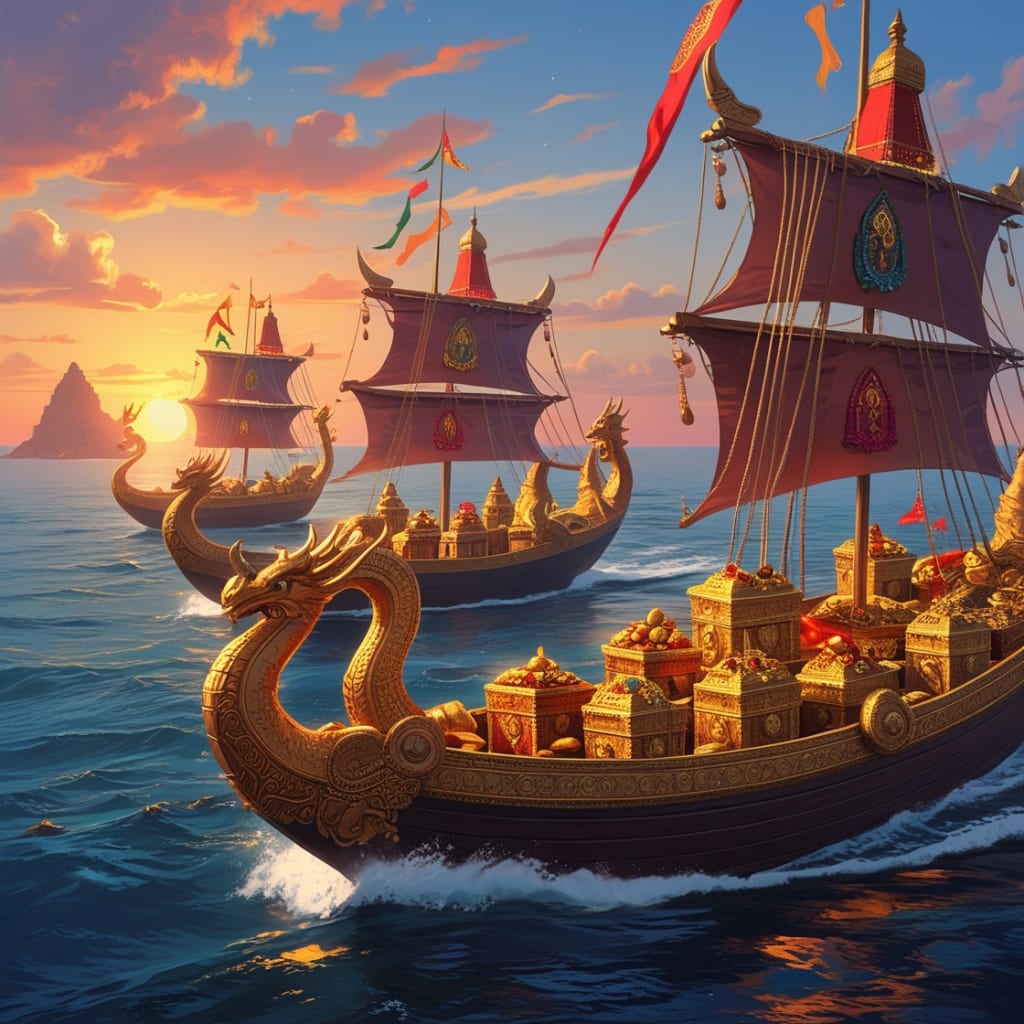
The Legacy of the Pandyan Empire: A Forgotten Wealth of South India
Introduction
The Pandyan Empire, one of the longest-ruling dynasties in South India, was known for its immense wealth, strategic trade networks, and powerful military. Flourishing for over two millennia, the Pandyas ruled regions of present-day Tamil Nadu and extended their influence across the Indian Ocean, engaging in trade with Rome, China, and Southeast Asia. Despite their grandeur, much of their wealth and influence has faded into history, leaving behind architectural marvels, ancient inscriptions, and legends of lost treasures.
The Rise of the Pandyan Empire
The Pandyas first emerged as a dominant force in Tamil Nadu around the 4th century BCE. Sangam literature, one of the earliest sources detailing Tamil culture and history, mentions the Pandyan kings as great warriors and patrons of literature. Their capital, Madurai, became a thriving center of Tamil culture, education, and trade. The dynasty was well-known for its efficient administration, with kings ruling alongside ministers and advisors.
Trade and Wealth: The Source of Their Power
The economic strength of the Pandyan Empire came from its extensive trade connections. The Pandyas controlled pearl fisheries along the Gulf of Mannar, exporting high-quality pearls to Rome, Egypt, and China. Their kingdom was rich in spices, textiles, and gemstones, which were in high demand across the ancient world.
Roman and Greek traders frequently visited Pandyan ports, including Korkai and Kayal, making them crucial centers for global commerce. Gold and silver coins from the Roman Empire have been found in Tamil Nadu, indicating a thriving trade relationship. This trade wealth allowed the Pandyas to build grand temples and fortifications, showcasing their dominance.
The Pandyan Army and Military Strength
The Pandyas maintained a strong military, often engaging in conflicts with neighboring kingdoms like the Cholas and Cheras. They expanded their influence across South India and even launched naval expeditions to Sri Lanka. The Pandyan army included well-trained infantry, cavalry, and war elephants, which played a crucial role in their victories. Their naval forces also protected trade routes and ensured dominance over maritime commerce.
Architectural and Cultural Contributions
One of the most enduring legacies of the Pandyan Empire is its contribution to temple architecture. The Meenakshi Temple in Madurai stands as a testament to their architectural excellence. Known for its towering gopurams (gateway towers) and intricate sculptures, the temple remains a significant pilgrimage site today.
The Pandyas were also great patrons of Tamil literature and arts. The third Tamil Sangam, a literary assembly held in Madurai, flourished under their rule. Poets and scholars were encouraged to compose literary masterpieces, preserving Tamil culture for generations to come.
Decline and the Mystery of Lost Wealth
Despite their strength, the Pandyan Empire faced internal conflicts and external invasions. The empire suffered a major setback in the 14th century when the Delhi Sultanate, under Malik Kafur, invaded South India. The invasion led to the destruction of many Pandyan temples and cities. With the decline of the Pandyas, much of their wealth vanished, leading to speculation about hidden treasures.
Legends suggest that Pandyan riches were concealed in secret vaults beneath temples or buried in remote locations to prevent looting by invaders. Some historians believe that valuable artifacts and gold may still be hidden in the ruins of their ancient cities, waiting to be discovered.
The Pandyan Influence in Modern Times
Though the Pandyan Empire faded into history, its cultural and economic influence remains visible. The Tamil language, literature, and temple traditions owe much to the Pandyas. Modern Tamil Nadu continues to celebrate their legacy through temple festivals and literary heritage.
Archaeological discoveries in sites like Keezhadi have provided new insights into the advanced urban planning and trade networks of the ancient Tamil civilizations. Researchers are still uncovering new evidence that sheds light on the prosperity and achievements of the Pandyas.
Conclusion
The Pandyan Empire was a powerhouse of wealth, culture, and military strength in ancient South India. Its influence on trade, architecture, and Tamil heritage is undeniable. While much of its material wealth remains lost to history, its legacy continues to inspire historians, archaeologists, and Tamil scholars. The mysteries of the Pandyan treasures may yet be uncovered, offering a deeper understanding of this great empire’s grandeur.
About the Creator
Say the truth
"Say the Truth: Explain Everything in the World" is your trusted source for uncovering facts and exploring the wonders of history, science, technology, and beyond. We simplify complex ideas and reveal truths to inspire curiosity .
Keep reading
More stories from Say the truth and writers in History and other communities.
The Enigma of the Vijayanagara Vaults: India’s Lost Imperial Treasure
The Riddle of the Vijayanagara Vaults Deciphering the Enigma of South India’s Abandoned Imperial Wealth At the core of South India resides a narrative of grandeur, destruction, and lingering intriguethe account of the Vijayanagara Empire and its concealed vaults. Once regarded as one of the most affluent and influential kingdoms on the Indian subcontinent, the Vijayanagara Empire emerged in the 14th century and thrived until the 16th century. Centered around its splendid capital city of Hampi in contemporary Karnataka, the empire became a symbol of commerce, culture, and architectural excellence. However, its wealth, believed to be immeasurable, disappeared following a singular calamitous eventleaving behind murmurs of concealed vaults, lost fortunes, and enigmas still obscured beneath the remnants.
By Say the truth 10 months ago in History
Power's Sake
When it comes to gaining power, bad people use it to gain more They never gain power to do something with it, they gain power to have it, relish in it, double it down on itself so it grows exponentially and never goes anywhere. Even if you see the people in power commit an atrocity, that is never the true goal. It is a deplorable action for sure but the action itself usually doesn't matter it's the outcome.
By Donny Foley5 days ago in History
How Case Documents Are Maintained in Philadelphia County
Case documentation forms the backbone of judicial accountability in Philadelphia County. Every filing, order, transcript, and judgment plays a defined role in preserving procedural accuracy and historical reference. The methods used to preserve these materials reflect long-standing legal standards combined with structured administrative practice. This article explains how case documents are created, organized, stored, reviewed, and preserved within Philadelphia County, with a clear focus on factual processes rather than commentary or promotion.
By Owen Perryabout 14 hours ago in History




Comments
There are no comments for this story
Be the first to respond and start the conversation.