

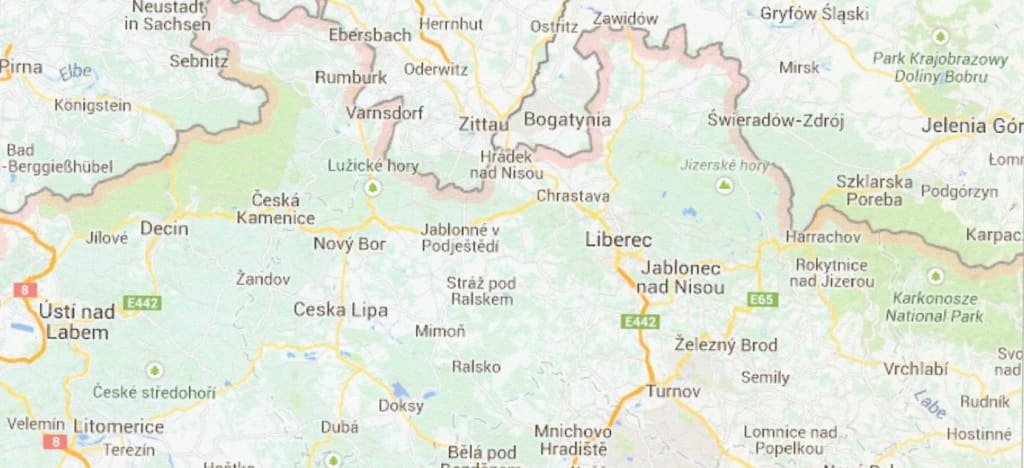
The glass road of Central and Eastern Europe is not a highway but a mountain road of winding, mountainous terrain and valleys, forests and rivers. It spans eastern Germany, Czech Republic and Poland. From its beginning in the 14th century, when ethnic Germans were invited to the region by King Charles of Bohemia, the road has grown longer and windier and more specialized in glass making than any other region of the world.
The southernmost town on the road is Turnov, where stone cutting of Czech garnet became world famous, and where glass was created to imitate that garnet and made into jewelry. Turnov is situated in the heart of Cesky Raj, (Bohemian Paradise), a national preserve of mountainous crags and walking/biking trails with villages and towns sprinkled throughout. Museums and glassworks are still located in Turnov, and numerous towns within this area, such as Mala Skala and Semily. Small glassworks producing lampwork beads and buttons can be found here, as well as larger pressing factories and coating companies.
Moving north from Turnov you come upon Zelezny Brod which is a large town boasting of many bead factories and a world famous technical high school specializing in glass production and all its by- products from glass production to bead making, moldmaking, sculpture and other specialties.
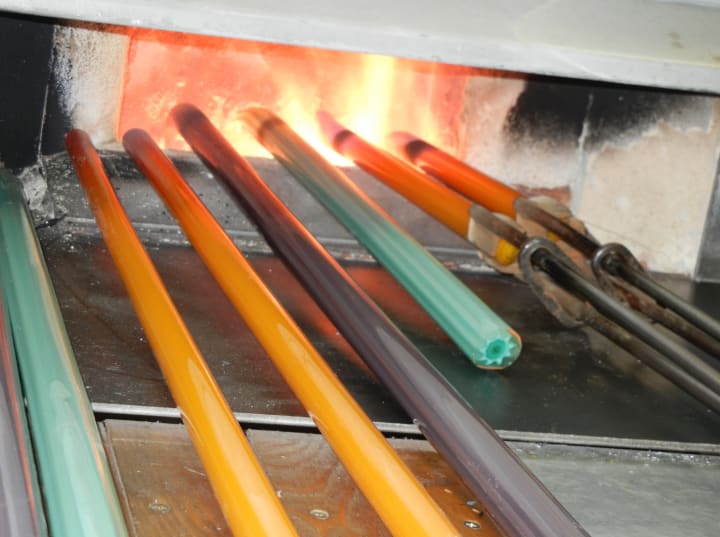
Further north again you come to Jablonec nad Nisou, the current industrial center of the glass road, with its hundreds of glass related companies and jewelry businesses. From large glassworks producing glass rods
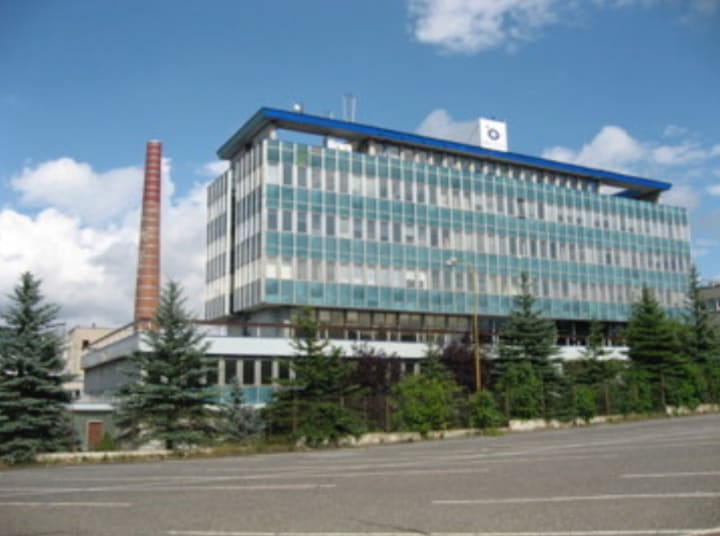
Most factories are cottage industry where individual families take work home with them to accomplish the task set out for them, whether it be faceting, coating, painting or stringing beads, but also very large factories with dozens if not hundreds of employees like PreciosaOrnela, with buildings sprinkled throughout town and all around the neighboring villages surrounding Jablonec.
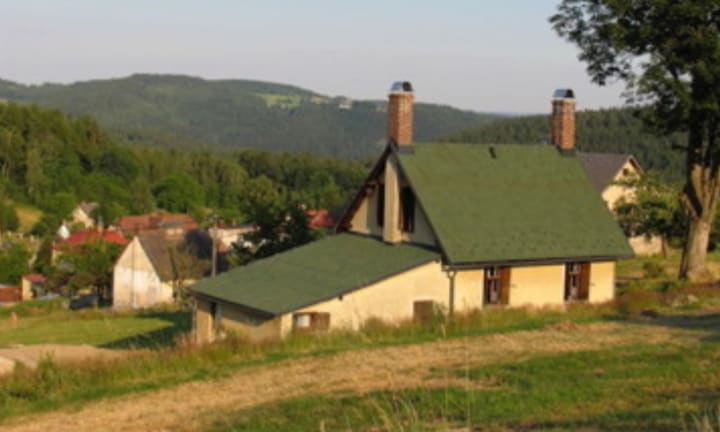
From Jablonec the road travels in several different directions, all towards towns whose beginnings involved glass and/or jewelry making of some kind.
Towards Poland and even deeper into the Jizera Hory you travel through Joseph Dul, Smrzovka, Desna and up to Harrachov, where the second oldest continually operating glassworks is located.
Here also on this road you pass the Riedel mausoleum in Tanvald, whose 19th century family controlled the glass industry of this region.
Across the border into Poland the road continues along the international glass road (Szklarska Poreba, Piechovice, Jelenie Gora, Boleslawiec, Zgorelec,) where small and large glassworks such as Julia Glassworks in Piechovice still operate to this day, creating glassware and sculptures.
Christmas ornaments are another Polish specialty handblown in these glassworks located in this region and along this road; and into Germany (Goerlitz - Niesky - Rietschen - Bad Muskau - Weisswasser - Schleife - Doebern - Drebkau), where smaller museums and galleries showcase glassworks from days past.
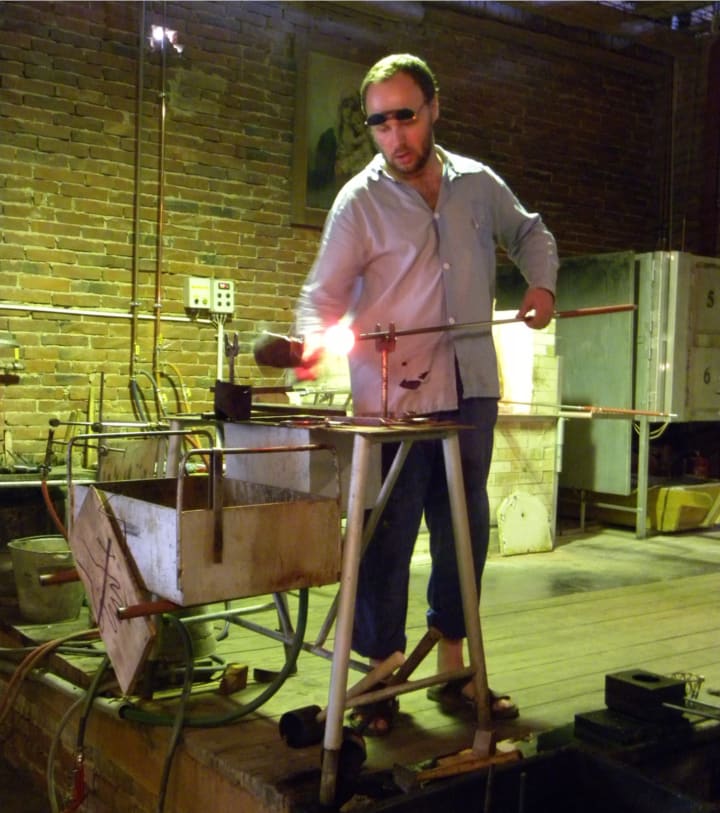
Returning to Jablonec and going in another direction totally along the glass road you travel through Cesky Kamenice, Kamenicky Senov and Novy Bor. These towns are well known for their glassworks which create glassware and chandelier parts. You will also find glass museums and glass schools sprinkled throughout these towns. Ajeto glassworks in Novy Bor is the largest company with two fully operational glassworks open to the public for viewing during business hours while enjoying lunch or dinner. At their fully restored and period pub/glasshutte from the 1800’s you can pay to learn how to blow a vase or bowl while you are there having a meal.
Deeper into this mountainous region are smaller villages with studio glassworks and ancient glass huts, such as Chribska which until 2012 had the oldest continually operating glass factory dating from the 15th century. Its current owner is in the process of renovating the buildings and installing new kilns and machinery to make beads and buttons again. Probably Europe's oldest and most famous glassmaking family, Friedrich, came from this area, and founded over 60 glasshuttes. The family's main factory was situated in Doubice, whereas the longest continually operating factory glasshutte was next door in Chribska, as mentioned above.
Close by this area and related to the glass industry is Petrovice, an old Sudeten German town that specialized in metal buttons and parts for the jewelry industry, and the factories here worked closely with the factories producing glass goods. The town is still there but the industry vanished when the Czechs deported all the Germans after world war two in 1945.
Historic remnants of this German bygone age is still visible in this region when you travel this road, such as the old Sudeten German names of the Czech towns you are approaching while still in Germany or Poland. For instance, the regional capital of the entire district which emcompasses the Jablonec nad Nisou glass district is Liberec. The road signs in Germany as you approach the Czech border state that you are approaching Reichenberg, which was the German name for the town of Liberec. Speaking to older German glass makers while traveling this road you will hear town names dating back to Sudeten German days and even before when the region was Austrian Empire, such as Haida (Novy Bor), Reichenberg (Liberec), Gablonz (Jablonec nad Nisou), Smržovka (Morchenstern), Turnau (Turnov), Petrovice (Peterswald), Harrachov (Harrachsdorf). Chribska (Kreibitz), Doubice (Daubitz) and Zelezny Brod(Eisenbrod). Polish towns had German names, such as Szklarska Poreba (Schreiberhau). This region was part of Sudetenland, settled by ethnic Germans dating from the 14 century and annexed by Hitler in 1939 into Greater Germany. The Czech Government tried to erase the German history after WW2 by deportation and name changes, but this is an old road still traveled and remembered.
Come explore and travel this road and the villages along it. The people are friendly, the food is good, the beer is cheaper than water, and the glass is the best in the world. If you are into sports, Cesky Raj has some of the best hiking and biking trails around. In the middle of nowhere you will come across a pension to have lunch or a beer, or get a room for the night. If its ski-ing you like, then Harrachov and its world famous ski jumps might be just the place for you. The glass road is a wonderful road to travel for many things besides glass, but glass is the reason it is there.
About the Creator
Guy lynn
born and raised in Southern Rhodesia, a British colony in Southern CentralAfrica.I lived in South Africa during the 1970’s, on the south coast,Natal .Emigrated to the U.S.A. In 1980, specifically The San Francisco Bay Area, California.
Alexander the Great’s Looted Wealth from India: A Historical and Economic Estimation
While his campaigns reshaped the ancient world politically and culturally, one of their most lasting impacts was the massive wealth he acquired from conquered territories, especially during his Indian campaign. This article explores the historical context, nature of the wealth looted from India, and an estimated net worth of that treasure in modern terms—revealing the truly staggering value of what came into Alexander’s hands.
By Say the truth 6 days ago in History




Comments
There are no comments for this story
Be the first to respond and start the conversation.