
The Ghost Ship of the Atlantic: The Unsolved Mystery of the Mary Celeste
A seaworthy vessel, a vanished crew, and 150 years of unanswered questions, what really happened aboard the Mary Celeste?

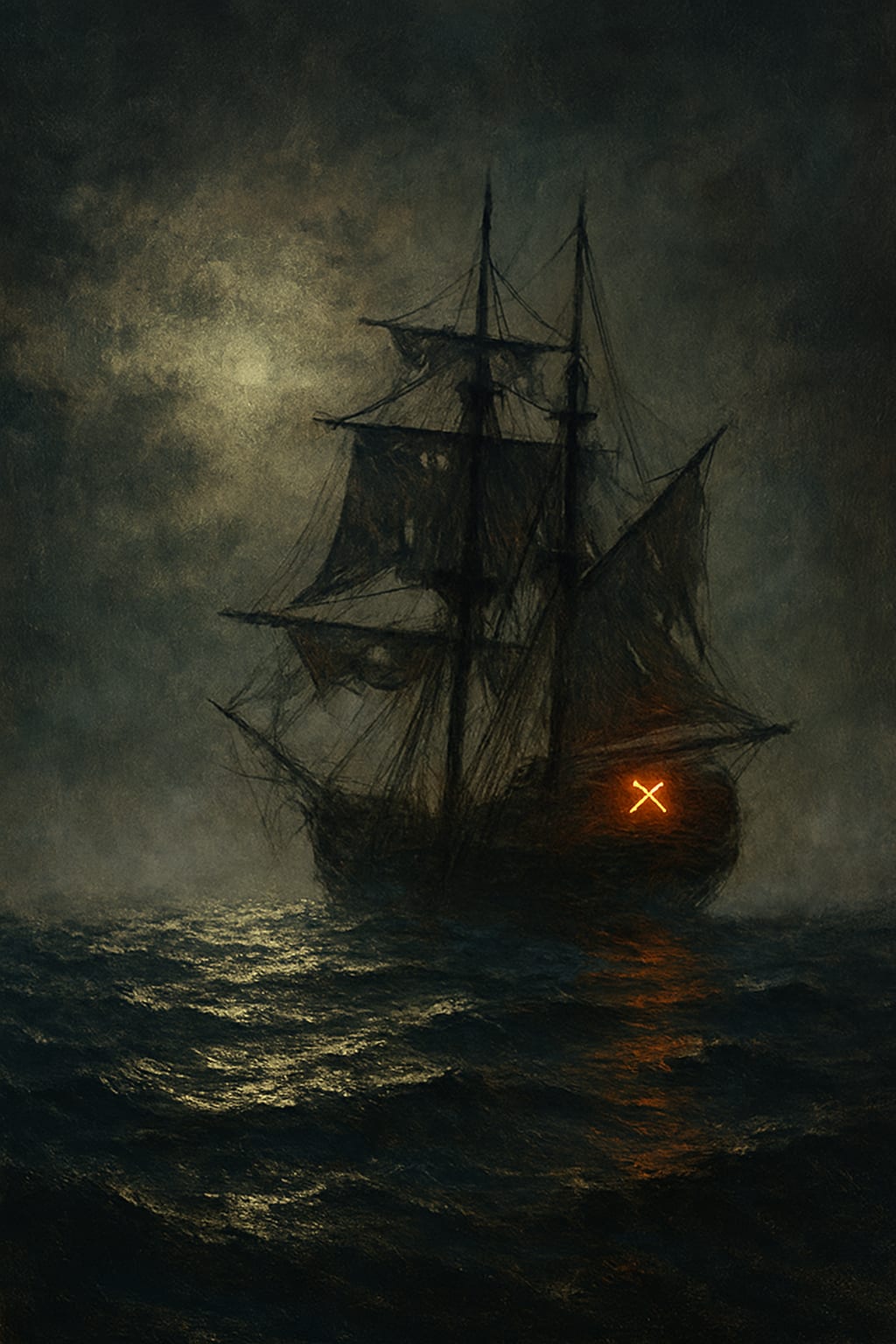
December 5, 1872.
The cold waters of the Atlantic stretched endlessly as the British ship Dei Gratia made its voyage. Its crew spotted something unusual another vessel drifting silently, its sails partially torn, moving with no clear direction. The ship’s name painted on its bow read: Mary Celeste.
At first glance, it looked like just another cargo ship battling the ocean’s harsh winds. But when the Dei Gratia crew boarded it, their blood ran cold. There was no one on board.
The ship was intact. Its cargo untouched. Food supplies stocked. No signs of fire, battle, or natural disaster. Yet the captain, his wife, his 2-year-old daughter, and seven experienced sailors had vanished into thin air.
What happened aboard the Mary Celeste remains one of the greatest unsolved maritime mysteries in history.
The Mary Celeste: A Ship with a Troubled Past
The Mary Celeste wasn’t new to misfortune. Originally built in 1861 and first christened as the Amazon, she had a reputation for bad luck even before becoming a ghost ship.
In her first voyage, the ship’s captain fell ill and died.
Later, she collided with another vessel in the English Channel.
She even ran aground in Nova Scotia and had to be salvaged.
After being sold and renamed Mary Celeste, it seemed her fortunes might change. But destiny had other plans.
By 1872, the ship was captained by Benjamin Briggs, an experienced, respected sailor. Known for his discipline and devotion, Briggs was traveling with his wife Sarah and their little daughter Sophia. Alongside them were a crew of seven men, handpicked for their skill and reliability.
On November 7, 1872, the Mary Celeste left New York, loaded with 1,700 barrels of industrial alcohol bound for Genoa, Italy. It would be her last known voyage.
Discovery at Sea: The Ghostly Encounter
The Dei Gratia, commanded by Captain David Morehouse, came across the Mary Celeste nearly 400 miles east of the Azores. Both ships had departed New York within a week of each other.
When Morehouse ordered his men to board, they were met with a scene stranger than fiction:
The ship’s logbook ended suddenly on November 25, with nothing unusual recorded.
The cargo hold was secure, only a few barrels had leaked.
The crew’s belongings were still in their quarters boots, pipes, clothing, even a sewing machine with unfinished work.
The galley had fresh food supplies, enough to last six months.
No signs of struggle, piracy, or violence.
The only things missing: the lifeboat, some navigation equipment, and a few papers.
It was as if the crew had left in a hurry, but why abandon a seaworthy ship in the middle of the Atlantic?
Theories That Tried to Explain the Mystery
Over the past 150 years, countless theories have been proposed. Some practical. Some outrageous. None conclusive.
1. Piracy
The first suspicion was piracy. But nothing was looted not the cargo, not the crew’s personal valuables. Pirates rarely leave gold watches and barrels of alcohol untouched.
2. Mutiny
Could the crew have turned against Captain Briggs? Possible, but unlikely. Briggs had carefully chosen trusted sailors. And again, nothing was stolen. Mutinies usually end with chaos blood, damage, destruction. The Mary Celeste was eerily neat.
3. Alcohol Fumes Explosion
This is one of the most widely discussed theories. Some barrels of alcohol were found empty. Could vapors have escaped, leading the captain to fear an explosion? Perhaps Briggs ordered everyone onto the lifeboat temporarily, only for tragedy to strike the lifeboat rope breaking, leaving the crew stranded as the ship drifted away.
But skeptics argue: the ship showed no burn marks, no fire damage. Was the captain really so cautious that he abandoned a perfectly safe vessel?
4. Rogue Wave
Another theory blames nature’s fury. A sudden, massive wave could have flooded the deck, convincing the crew the ship was sinking. They might have evacuated in panic. But why no major structural damage? And why did the ship remain afloat for weeks afterward?
5. Seaquake or Waterspout
Some scientists suggest a seaquake (underwater earthquake) or a waterspout (a tornado at sea) may have rattled the ship, causing fear of imminent sinking. Again, little evidence exists for such an event in that region during 1872.
6. Conspiracy: Insurance Fraud
Some suggested Captain Morehouse of the Dei Gratia staged the whole thing abandoning the Mary Celeste crew and claiming salvage rights for profit. But such a bold crime would have required flawless execution, leaving no survivors or witnesses. Morehouse’s reputation remained clean.
7. Alien Abduction & Paranormal Theories
Of course, no great mystery escapes the more bizarre explanations. Some argue extraterrestrials took the crew. Others link it to the Bermuda Triangle even though the ship wasn’t anywhere near it. Ghost stories also flourished: sailors whisper the Mary Celeste was cursed, carrying an invisible doom for anyone aboard.
Modern Investigations: Science Meets Mystery
In the 20th and 21st centuries, researchers revisited the case with modern tools. Forensic experiments tested alcohol vapor explosions, showing they could indeed force a captain to abandon ship without leaving burn marks.
Documentaries used computer simulations to reconstruct weather patterns of 1872, suggesting sudden storms might have scared the crew. Still, no definitive proof emerged.
In 2006, scientists studied the ship’s remains (which sank years later near Haiti). They found no unusual damage that could explain the abandonment.
After all the tests and theories, the truth remained just as elusive as in 1872.
Why the Mary Celeste Still Haunts Us
The Mary Celeste’s mystery endures because it feels deeply human.
Here was a ship in good condition, a family onboard, a crew of trusted sailors. Nothing about them suggested recklessness. And yet they vanished, leaving only silence behind.
Unlike the Titanic, there’s no grand wreck to visit. Unlike Amelia Earhart, no confirmed final message. Only an empty ship, drifting on cold waters, holding its secrets tightly.
This lack of closure sparks the imagination. Every theory feels both possible and incomplete. Every attempt at explanation collapses under scrutiny.
The Mary Celeste is not just a maritime mystery it’s a mirror of our deepest fear: the unknown that cannot be solved, the question that refuses an answer.
Conclusion: A Story Without an Ending
More than 150 years later, the Mary Celeste remains the most famous ghost ship in history. Books, films, and endless retellings keep her story alive.
Some mysteries fade with time. This one grows stronger. Because sometimes, the truth doesn’t survive history. Sometimes, all we are left with is wonder.
And maybe that’s why the Mary Celeste will never truly vanish because her emptiness tells us something profound: even in our age of science and technology, the sea still holds secrets beyond our reach.
About the Creator
Muhammad Ayaan
🎙️ Rebooting minds with stories that matter.
From news & tech to real talk for youth no face, just facts (and a bit of fun).
Welcome to the side of the internet where thinking begins.
Keep reading
More stories from Muhammad Ayaan and writers in History and other communities.


Comments
There are no comments for this story
Be the first to respond and start the conversation.