

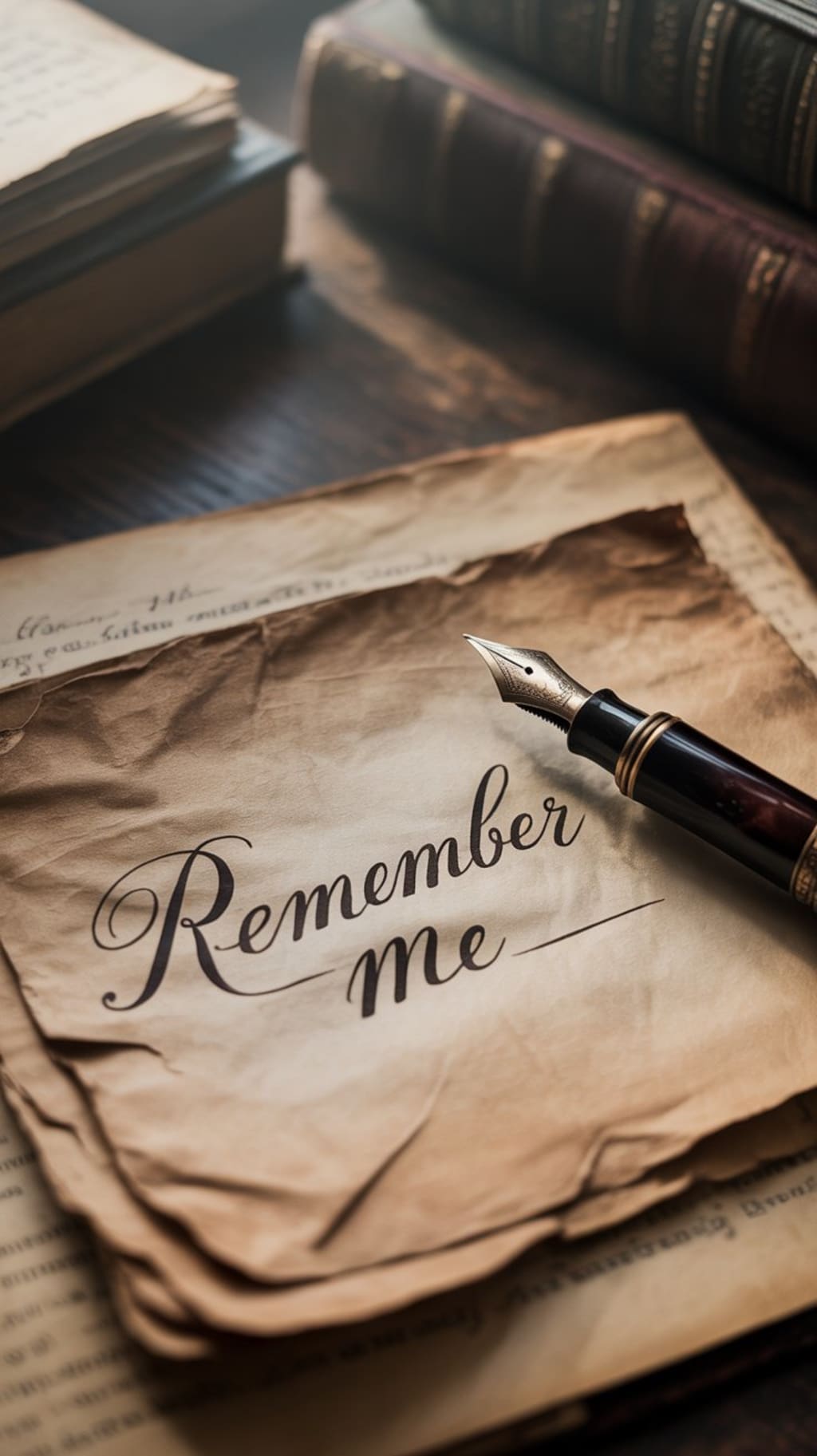
A hidden letter reveals the soul of a young soldier lost in the silence of Partition.
---
Prologue: The Letter That Was Never Meant to Be Found
In the spring of 2021, among decaying boxes of government records in a military archive in Lahore, 25-year-old history student Zara Saeed was searching for post-Partition documents for her university thesis. She expected dusty files and red tape. What she found instead was a story — one not written in textbooks, but buried in silence.
An old, worn leather diary caught her eye. It was fragile, tied together with a broken shoelace. Inside it, she discovered a single, folded letter — yellowed with age, smudged in places as if touched by damp fingers. It was dated August 11, 1947, just four days before the Partition of British India.
The author was Adeel Khan, a Muslim soldier in the British Indian Army, stationed near the Punjab border. The letter was addressed to his mother, but it was never sent. That forgotten letter would go on to echo a truth that history had long left behind.
---
The Voice of a Forgotten Soldier
> “Ammi, I do not know if this letter will reach you. Maybe it won’t. But writing it helps me breathe.”
Thus began Adeel’s final letter. He did not write it for the military. He did not write it for a politician. He wrote it for his mother — for peace in a world that had none.
Born in 1922 in a humble village near Peshawar, Adeel was an only child raised on simplicity, honesty, and his mother’s quiet resilience. He had joined the army during World War II, proudly wearing a uniform that once symbolized structure and order.
But now, in August 1947, as British India fell apart and a new line — the Radcliffe Line — split the subcontinent into India and Pakistan, Adeel found himself in the eye of a storm far worse than any battlefield he had seen in Burma.
---
The Days Before the Divide
As riots erupted across Punjab, Adeel was posted near Amritsar, a city drowning in bloodshed. He wasn’t just a soldier anymore — he was a witness. A witness to fire, screams, betrayals, and madness no uniform could contain.
> “Yesterday, I watched a man stab another in the street over a flag. What is a flag, Ammi? A piece of cloth that now decides if you live or die?”
He wrote of trains arriving from Lahore filled not with passengers, but with corpses. He described temples set on fire, mosques desecrated, children orphaned, and neighborhoods burning under skies heavy with smoke.
> “I’ve seen war, Ammi. But I’ve never seen neighbors become enemies like this. I’ve never seen humanity fall apart so quickly.”
---
A Friendship Across the Divide
Among the chaos, one moment stood out in his letter. Adeel mentioned seeing a fellow soldier — a Sikh named Harjeet, once a comrade during World War II. They locked eyes across a ruined checkpoint. Neither saluted. Neither lifted a weapon.
> “We stood in silence. He had tears in his eyes. So did I. We didn’t speak. We didn’t need to. In that moment, I realized: borders are drawn on paper — not in hearts.”
This moment revealed the deep emotional conflict within soldiers like Adeel. He was trained to follow orders, but nothing could prepare him for watching a country rip itself apart.
---
The Final Lines
As the letter reached its end, his words grew quieter — almost like whispers on paper.
> “If I return, I will not bring medals. I will bring silence. But if I don’t return… please know I died trying to hold on to my soul.”
He signed the letter simply:
“Your son, Adeel”
---
Zara’s Discovery — And the Echo of the Past
When Zara held that letter in her hands 74 years later, she knew she had found something more powerful than any academic source. It wasn’t just a letter. It was a witness statement from a buried voice of Partition — a perspective often ignored in political narratives.
She spent weeks confirming Adeel’s identity. Army records confirmed he had died on August 14, 1947, during a violent clash near the newly created border. His body was never recovered. His name, like many others, was lost in the noise of history.
Zara went on to publish the letter in her research paper. The story received widespread attention in academic and historical circles. Later, she compiled a book titled "Whispers Between Borders" to share Adeel's letter and other forgotten voices from Partition.
---
A Voice That Still Speaks
Adeel’s story is not a political tale. It’s a human one. It reminds us that wars are fought by people with hearts, not just flags. That loss isn’t measured in statistics — but in mothers who never saw their sons again, in letters that never reached home.
Even today, as tensions continue to simmer between nations born from that same partition, Adeel’s letter speaks:
"Choose compassion before identity. Choose memory over revenge. Choose humanity over history."
---
Conclusion: A History of the Heart
We often ask, “Who writes history?”
But we rarely ask, “Who was silenced in it?”
The forgotten letter of Adeel Khan does not demand that we rewrite the past. It simply asks that we remember it better — not just through the lens of politics or power, but through the stories of those who stood quietly, lost everything, and still tried to hold onto what made them human
About the Creator
John Smith
"I write to remember, to feel, and to keep the voices of the past alive. Stories of war, hope, and the human spirit."
Keep reading
More stories from John Smith and writers in History and other communities.
How the Cold War Shaped Our Modern World
🧠 Introduction When we hear the term “Cold War,” most people immediately imagine spies in trench coats, nuclear missiles on standby, and a tense standoff between East and West. But the Cold War was more than just political hostility — it was a defining era that changed the very structure of the modern world.
By John Smith 6 months ago in History
Military Strength of Alexander the Great and the Chola Empire: A Historical Comparison
Though separated by more than a thousand years and operating in vastly different geographical and cultural contexts, both forces achieved extraordinary success through discipline, innovation, and strategic brilliance. This article explores the history, composition, size, organization, and military strength of Alexander’s Macedonian army and the Chola military, highlighting how each became a dominant power of its era.
By Say the truth 6 days ago in History



Comments
There are no comments for this story
Be the first to respond and start the conversation.