
The forgotten history of The Kingdom of Cambodia.
The darkest days of a lesser-known country. (1975-1979)
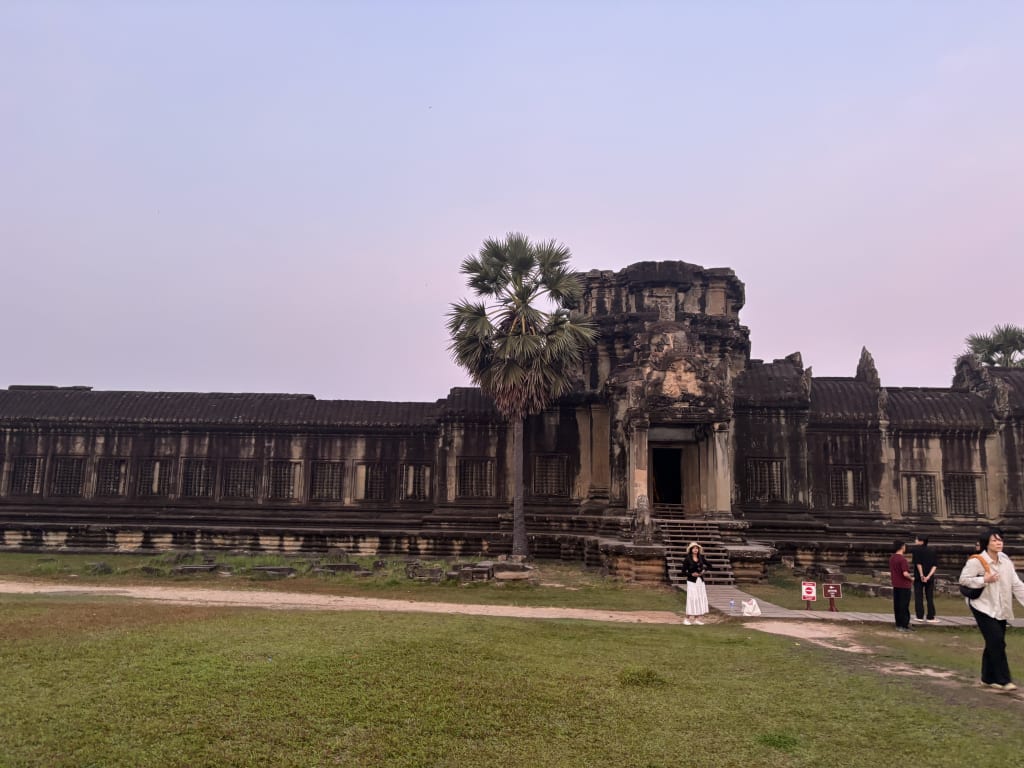
For those of us in the West who have heard of Cambodia without visiting, it may be seen as just a country in South East Asia that is not too well off. Those of us who have been lucky enough to travel to or simply read about this humble hidden gem, may know the rich yet dark history surrounding the Kingdom itself. I myself have been fortunate enough to travel here recently and spent about 3 weeks travelling throughout the country. From border towns and bustling cities with wild nightlife, to the vast green fields of rice paddies, all the way to the coast with some of the most gorgeous water I have ever seen. In my time spent in the country my eyes have been opened in more than one aspect.
Brief history and facts.
Sandwiched between Thailand and Vietnam, Cambodia is a nation neighbouring two of the biggest tourist hotspots in the world today. Although, this small country was not just a neighbour from 802-1431 as it was known then as the Khmer (Kuh-My) Empire which included most of what is now present day Laos, Thailand, Cambodia, and Vietnam. It continues to share multiple things in common with each of their neighbours. Whether it be the rather large presence of Pagodas and Buddhism, or even traditional martial arts, Cambodia and Thailand have long argued what belongs to who.
While Laos, Vietnam and Cambodia share more political things in common such as: French Colonization better known as French Indochina lasting from 1863-1954, (although Cambodia was a Japanese puppet state in 1945) economical and political instability, and unfortunately war. Cambodia is also home to the largest religious structure in the world, Angkor wat.
The picture below is one I have taken.
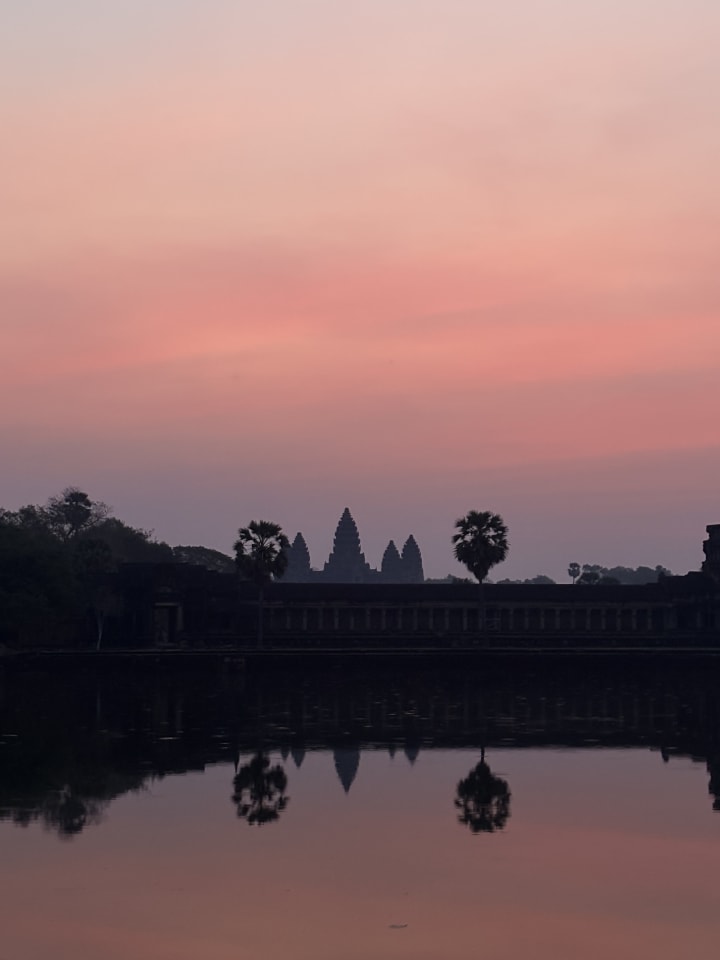
Being able to see Angkor wat as a history lover was an absolutely surreal experience, something I will never stop talking or thinking about. Although, as we walked on throughout the temple there were many signs of the dark yet recent days that fell upon the nearly 1000 year old temple.
Cambodia was an independent kingdom from 1953-1970 ruled by King Norodom Sihanouk until the government was toppled by Lon Nol’s Army in a Coup d’état in 1970. Cambodia’s United States backed military republic would be short lived as it would see a complete overthrow in 1975 by the Communist regime, the Khmer Rouge. The Khmer Rouge decided to use King Sihanouk to endorse the new regime and as the face of their government for only 1 year in order to earn the people’s trust. The Khmer Rouge would hold total power over the country for 4 years, which to many seemed like a lifetime. The man behind the regime went by the name of Pol Pot or, brother number 1.
Within 1 year of the regime, the country’s name would be changed to Democratic Kampuchea which would see an end to all currency, societal hierarchy, religion, and more. Families would no longer be able to call each other by names such as: Father, Mother, Sister, and Brother. Everyone was simply to be referred to as “Comrade.” The ideology of the Khmer Rouge was to build Democratic Kampuchea into a self-sustaining and industrialized hermit kingdom while strengthening ties with Mao Zedong’s People's Republic of China. (90% of financial aid came from Mao’s China)
Mao had a specific significance to Kampuchea and to Pol Pot himself as he idolized and frequently met with Mao to gain advice and insight pertaining to ruling as a leader in a communist uprising and how to gain the people's vote. In the early days of Pol Pot's power, he was able to use President Nixon’s 1969 bombing campaign of the Vietnam-Cambodia border to turn the people against Lon Nol’s government and have the people see their current leader as a “Western sympathizer” or “Western minded.” Through this, Pol Pot was able to gain followers at a rapid rate, creating civil unrest and ultimately leading to the Cambodian civil war which created hardship throughout the country from 1970-1973.
The photo below is one I had taken myself. I apologize for the poor quality.

Pot’s eagerness to turn Kampuchea into the Utopia he had long dreamt of would lead to millions of deaths of Khmer people through forced labour in attempt to catch up with the increased demand for food and other textiles being that very little donations or imports from China would arrive, the war raging in Vietnam saw most of China’s imports.
What came as a result was widespread starvation and scarce rationing between the working front and the home front. The mass executions that would take place would target the educated or those who were viewed as tainted by a religious or Western education. This would include Doctors, teachers, lawyers, current or former military officials of Lon Nol’s army, Christians, Muslims, and Buddhist monks.
These groups would normally be left to do the most grueling or undesirable tasks often without food or water. They would be worked to death or eventually executed. Those who were not executed would be sent to security prisons run by the state. This would turn into what is now known as the Cambodian Genocide.
Inside the Khmer Rouge’s Security Prisons.
During the Khmer Rouge there were as many as 189 known prisons and as prisoners would enter these facilities, (typically operating out of schools) they would be blindfolded during the travel and arrival to the prison. The most notable factor without sight was the smell. Prisoners would typically assume it was rotten meat stemming from lack of resources in the prisons but unfortunately, they would later find out it was something much more. A smell most of us have luckily never had to encounter, excrements and rotting flesh.
The first prison was named M-13 and would be opened for use in April of 1975, shortly before the Khmer Rouge would gain control over the entire country. It would relocate approximately 3 times until planting itself in the village of Prei Chrao, this would serve a significant purpose to the Khmer Rouge, being that it would become training grounds for younger officers to learn how to interrogate, humiliate, and torture those who were unfortunate enough to set foot in a security prison into confessions whether they were guilty or not. M-13 would also be a place for more senior officers to brainstorm and practice new forms of torture before bringing the heinous methods to other security prisons across the country. The most infamous and most intimidating prison among them would be known as S-21 or Tuol Sleng. This prison would leave more than a lasting mental impression on the meager 12 who were said to have survived it, the man behind the disciplinary sector or “Santebal” meaning “keeper of peace.” Was a man named Duch.
Comrade Duch.
Comrade Duch (pronounced Doik) would oversee M-13 and be responsible for training less senior officers before stationing them throughout the country to carry out “clean up.” Duch, real name Kang Kek Iew, was a mathematics teacher from Krong Kampong Cham, a city on the Mekong river about 2 1/2 hours Northeast of Phnom Penh.
He was said to have been a good teacher who was remembered by his community and his students as earnest and dedicated, although these words would not be represented in a positive manner a few short years later.
Duch would join the Communist Party of Kampuchea in 1967, months later himself and fellow members of the party would be arrested and imprisoned by Norodom Sihanouk’s police for engaging in communist activities. He would be imprisoned at Prey Sar Prison located in Cambodia’s capital, Phnom Penh. Duch would serve a two year sentence, during the time he spent incarcerated, he would witness many of his comrades being tortured up until his release in 1970 due to a change in government (Lon Nol’s military government) which would grant all political prisoners a pardon. Following the Khmer Rouge gaining complete control over the country, Duch and other comrades had many prisons established all over the capital. One prison in particular would stand out amongst the others during the genocide, that of Tuol Sleng prison or better known as S-21. S-21 would quickly become the most feared, known for its brutal treatment of inmates and gut wrenching living conditions. Duch would request a transfer to become the chief director of S-21 in May 1975, in which he was denied and would serve as deputy to a man by the name of In Lon or comrade Nath. 1 year later, comrade Nath would be transferred leaving Duch to become prison chief by default. Duch is said to be responsible for approximately 12,000 deaths.
Duch would have all of the prisons in Phnom Penh consolidated into S-21 making it an overcrowded nightmare for those who were unfortunate enough to set foot inside.
The photo below is one I have taken.
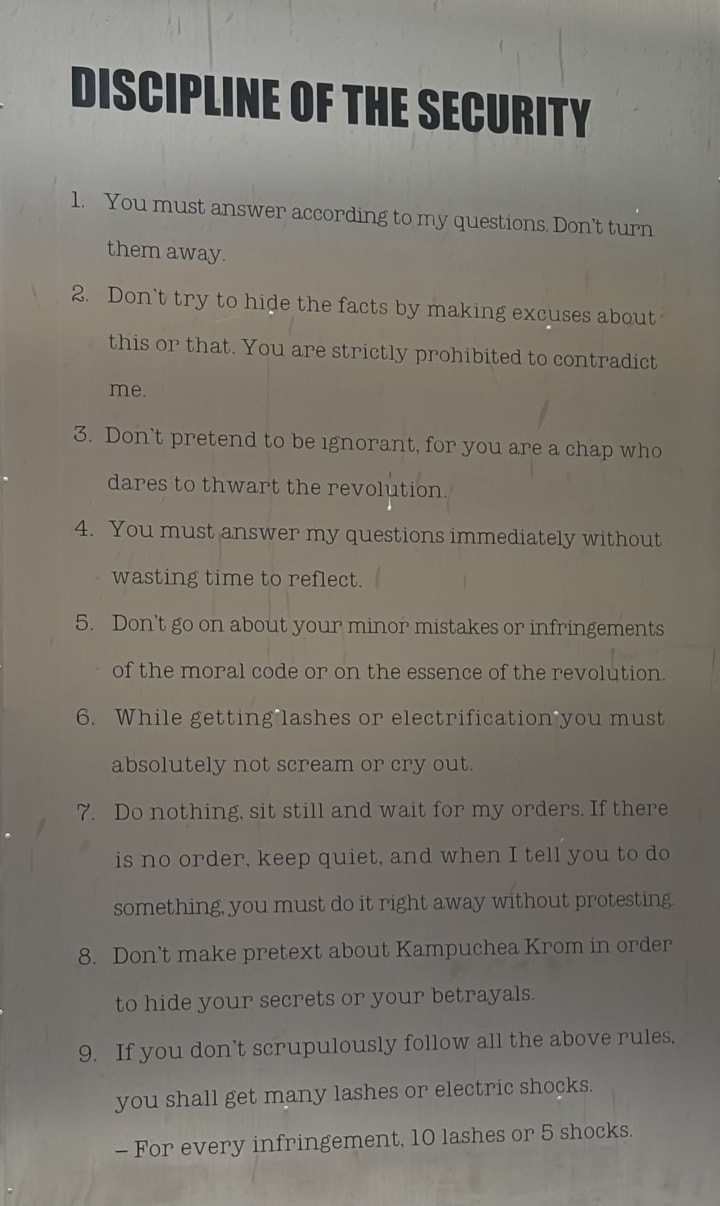
S-21
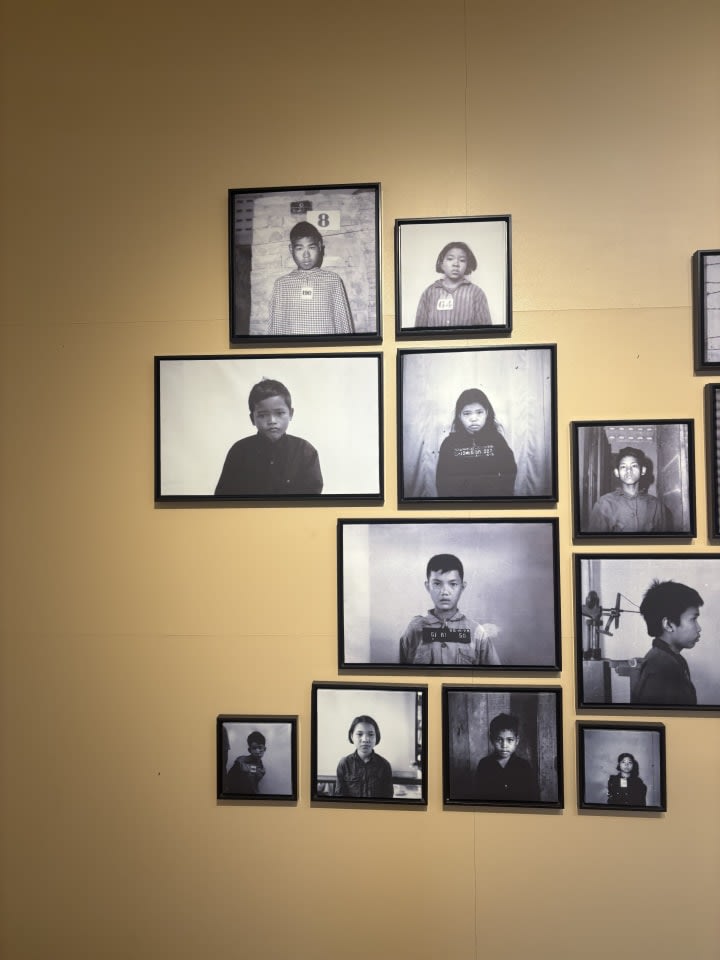
Originally home to Tuol Sleng Primary School as well as Preah Ponhea Yat High School. (later renamed to Tuol Svay Prey High School.) The compound was made up of 4 school buildings which would be known as Building A, Building B, Building C, and Building D. Inside these buildings would be “enemies of the state” throughout the 4 years in operation an estimated 15,000 men, women, and children of all ages would be imprisoned at Tuol Sleng.
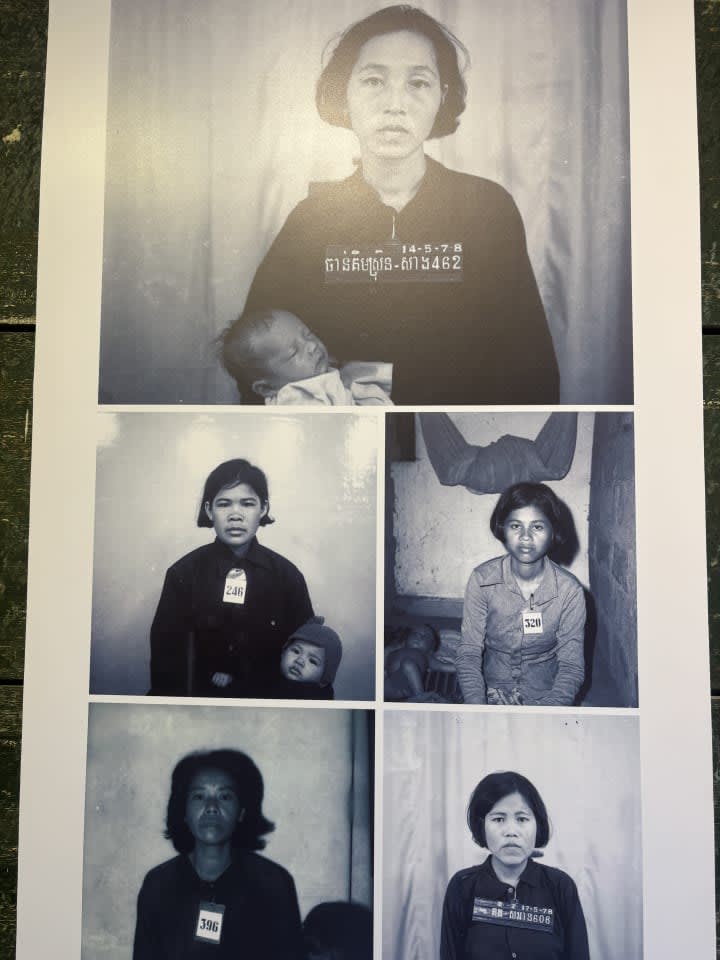
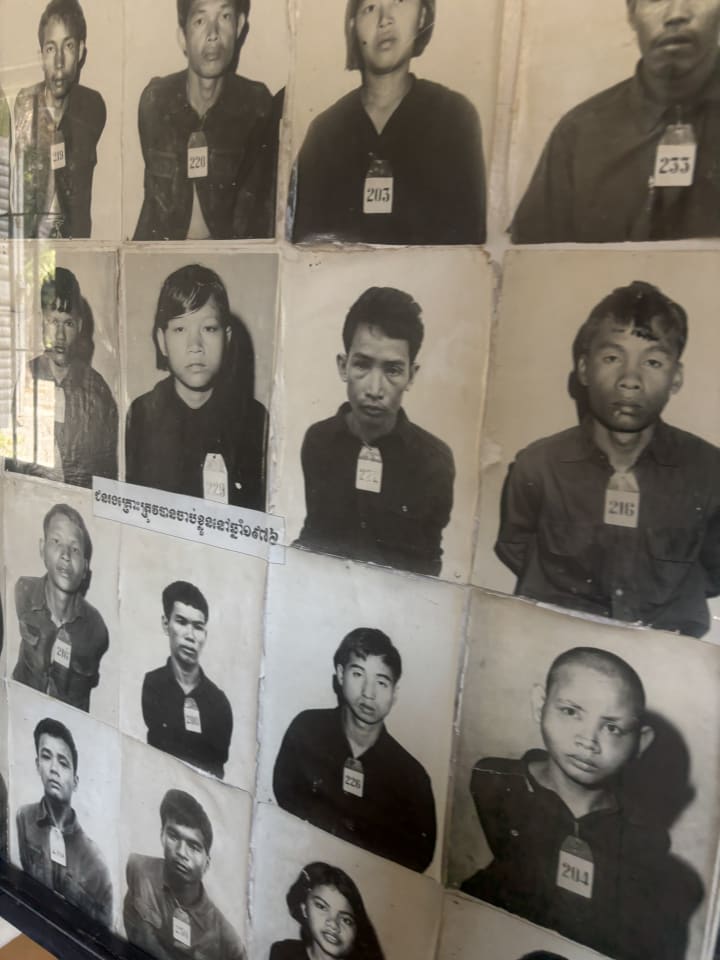
In order to be imprisoned, the regime had a 3 strike rule in which if a person were reported 3 times, they would be sent to a disciplinary facility. This rule would be enforced less and less as time went on. Upon entry, prisoners would be processed by having their pictures taken, forced to write a biography from birth up until arrest. After that they would be interrogated, stripped naked, and sent to their cells.
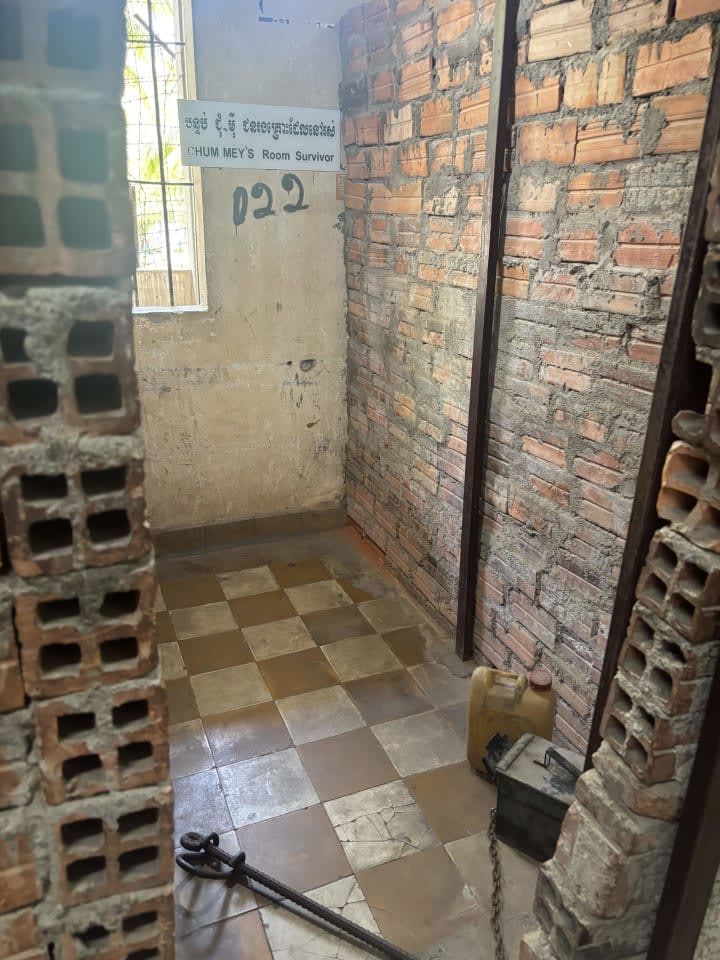
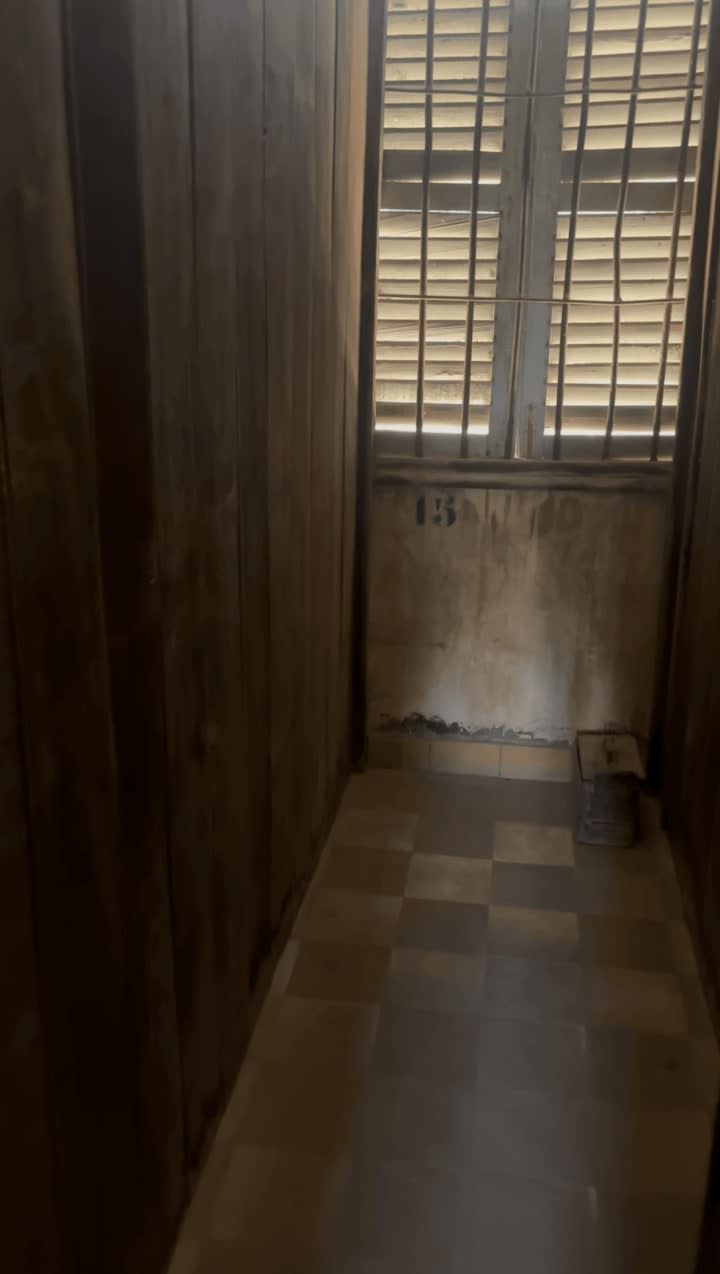
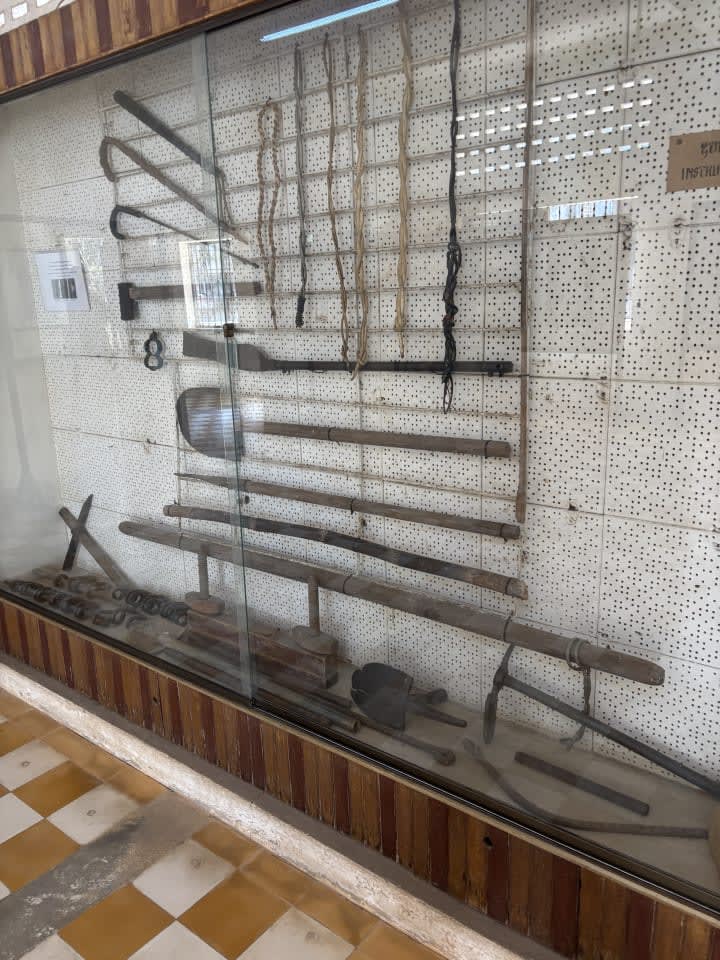
The photos below were taken by myself.

Life while imprisoned.
After an initial interrogation and processing, they would then be escorted to their cells by guards. Once they arrived at their cells, inmates would be chained to the floor by a piece of rebar with two shackles which were connected to an inmate's ankles. In each cell the inmates would be given an empty ammunition box to use as a toilet. The inmates would need to ask permission from the guards to use the facilities.
The boxes would be cleaned anywhere from every couple weeks, months, or even longer. If the box was to overflow, the guards made the inmates lick up the excess. If the inmate refused or hesitated they were subject to beatings or lashings for refusal to comply with direct orders. The cells would be built in old classrooms, typically out of brick and mortar because of the fact that it was the most readily available and quickest to set up. Other cells would consist of wooden walls and doors, adjacent to that of a very small horse stable. Those who were imprisoned in empty classrooms without cells were chained together at the ankles and wrists by a series of iron rods to immobilize prisoners. They would sleep with their heads in different directions as any kind of communication between prisoners was strictly prohibited. All inmates were made to sleep on a tile floor with no mat, blanket, or mosquito net.
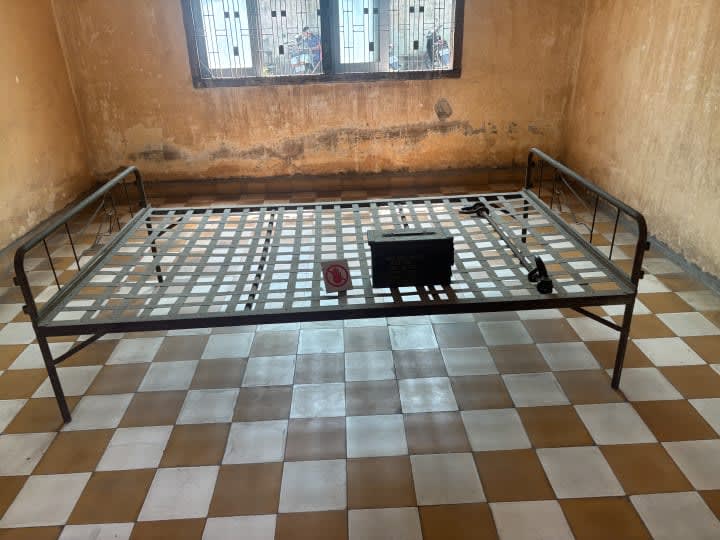
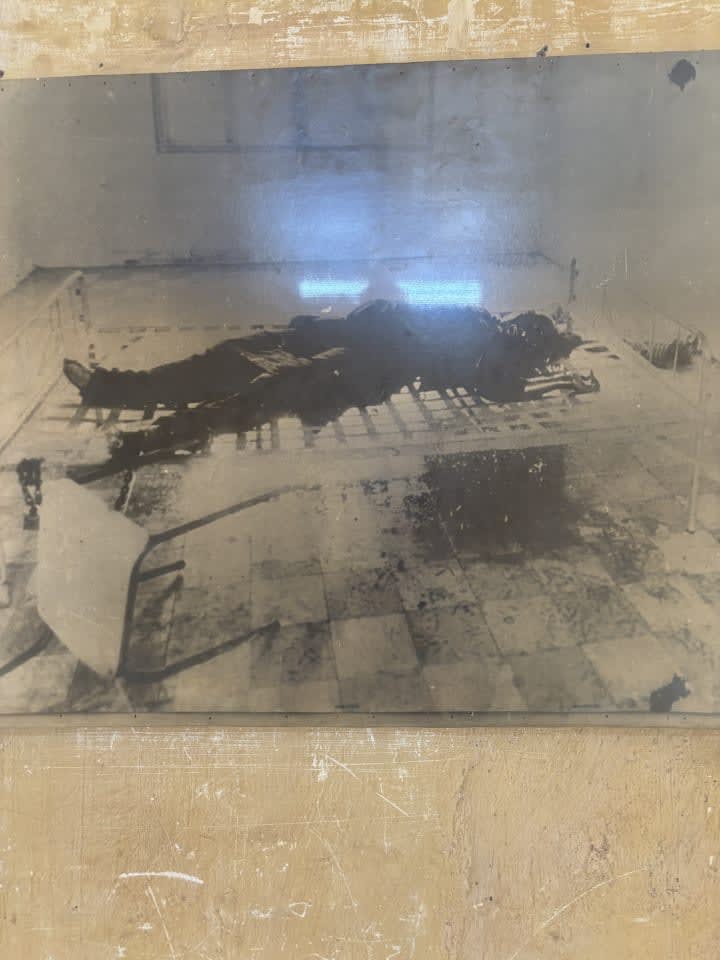
Prisoners would be showered by a guard spraying a garden hose through one window for a few seconds, those who couldn’t move closer would go unwashed for long periods of time with no idea when they would see water again. It was common for showers to come once a month or less. The interrogation rooms were classrooms that had been cleared out with nothing but a bed with a metal frame and no mattress. Prisoners would be chained to the bed by their ankles and wrists, during interrogations if the guards saw inconsistencies in the inmates stories or simply just thought the inmate was not telling the truth, they would be subject to beatings, lashings, or shocks. Electrodes would be put in the inmates ears and would have their heads shocked. Those who screamed in agony or tried to move to relieve themself of any kind of discomfort without permission from the guards would endure a prolonged beating. Each day at 4:30AM, prisoners were made to present themselves to the guards for an inspection in order to see if a prisoner had loose shackles or got ahold of contraband that prisoners could use to commit suicide.
The few that were able to take their own lives were seen as lucky and in this situation, suicide was only that of a dream and was viewed as luxury. As you can imagine with the unclean living situations, lice and other serious diseases ran rampant at this prison. With most prisoners brought in on charges of betraying the regime or revolution, many inmates truthfully had no idea as to why they were there and were typically beaten or tortured into confession. As years went on, many members of the Khmer Rouge grew suspicious of their own comrades, many of those who worked at S-21 ended up “confessing” and being imprisoned there themselves typically on charges of breaking machinery or equipment, beating prisoners to death without permission, or filing lacklustre documents. Those who survived torture would then be marked for execution and killed at nearby Choeung Ek killing field.
The images below were taken by myself and are quite graphic and some may find them extremely disturbing or upsetting. I have spaced them out from the bottom of this article to refrain from being viewed without proper warning.
Choeung Ek.
20 minutes outside of the bustling city centre of Phnom Penh where car horns and roaring engines echo off of skyscrapers, I came upon a quiet and peaceful local area full of rice paddies. In the fields I saw people working, eating, smoking, and taking breaks all with smiles which is quite typical of Khmer people I have come to find. Yet, 5 more minutes and 2 left turns down the slim and bumpy dirt road I had arrived at Choeung Ek or the Phnom Penh killing field. Killing fields were all over the country, but Choeung Ek is the most well known of the estimated 300 fields in which the Khmer Rouge executed over 1 million people collectively. The ex orchard and ex Chinese-Khmer cemetery served as an execution site and overflow prison from 1975-1979. Prisoners marked for execution at S-21 would be sent here, many people from babies to elderly were executed here. There were entire families killed based off the idea of:
“In order to pull the weed, the roots must be removed.”
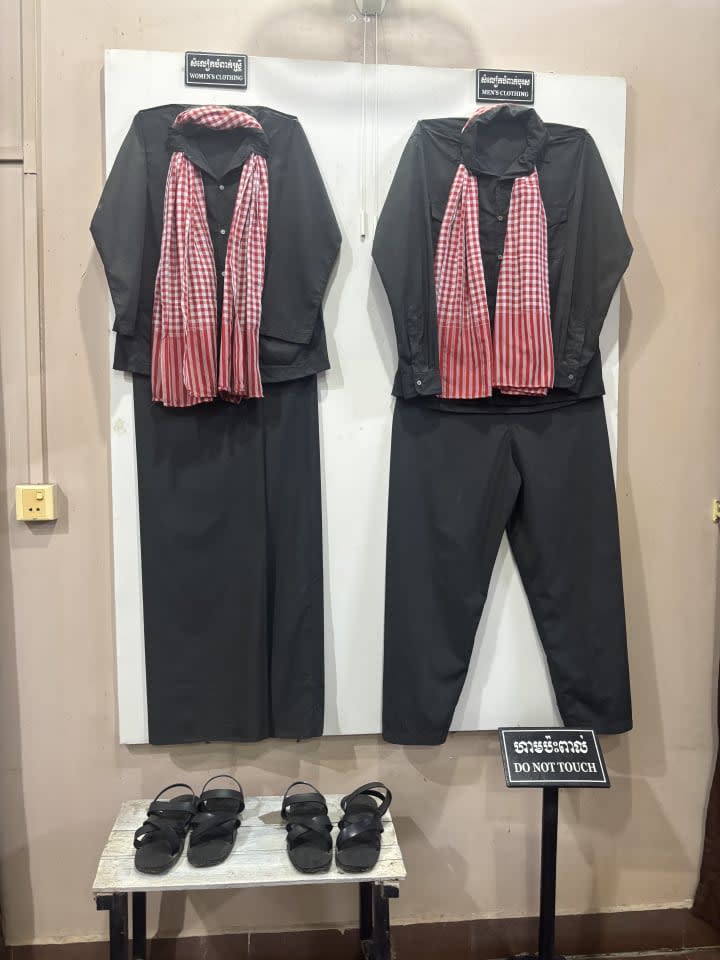
Meaning that if one person from the family wronged, it is likely that other family members will too. Babies were included to eliminate the threat of them growing up and wanting revenge. Those who were held as prisoners or those awaiting execution would be forced to work in the rice fields for extended periods of time with little to no food or water. As conditions hardened, guards were ordered to no longer use ammunition during executions to conserve it. It became common for guards to execute prisoners with machetes, pickaxes, hammers, and axes.
Those in the fields would often see fellow prisoners being beaten to death by spades and hoes ripped from the hands of those working. When execution day came, prisoners would be forced to dig pits for mass graves and would often end up in those they excavated. Those in prison would hear nothing but the hum of a diesel generator and a very loud broadcast of traditional Khmer music coming from a tree called “The magic tree” which was used to drown out the screams or groans from those being beaten and bludgeoned to death. Babies were stripped from their mothers arms as they were forced to watch the heads of their children be smashed against a tree which came to be called “The killing tree” with just cause. If the mother refused to watch she would be beaten before she was killed. Prisoners were stripped of their clothing before execution to conserve resources that by this time, were running quite thin.
The photos below are ones I have taken.
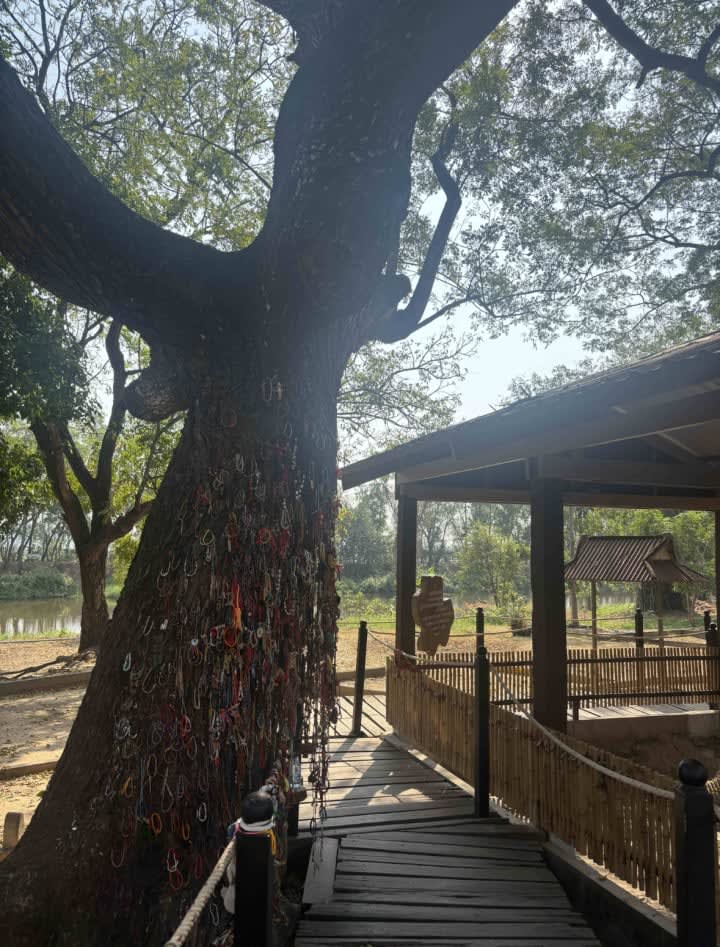

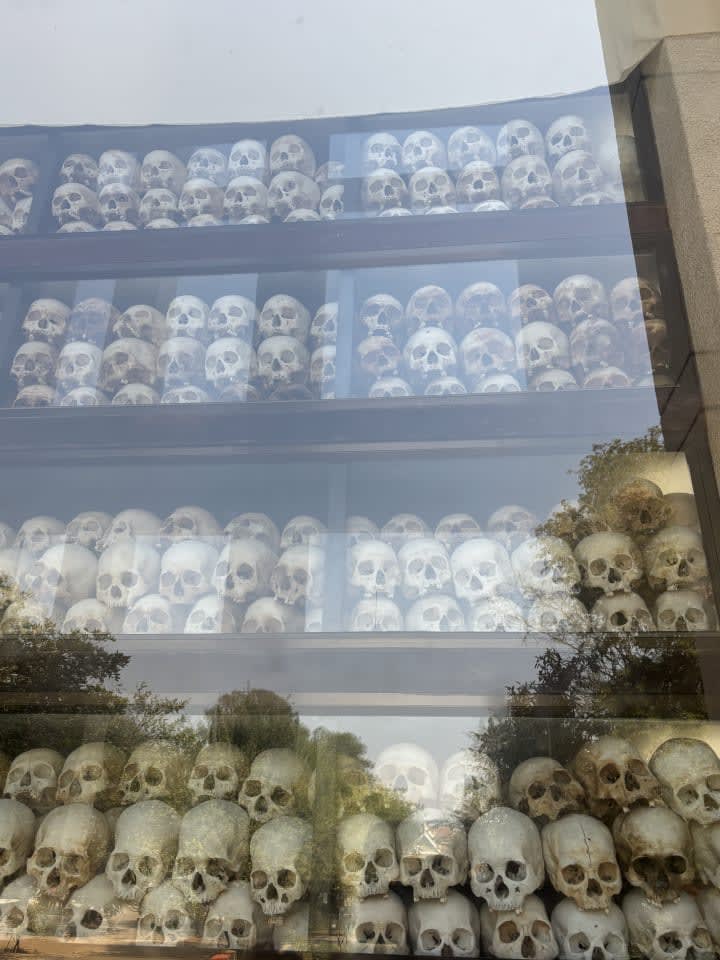
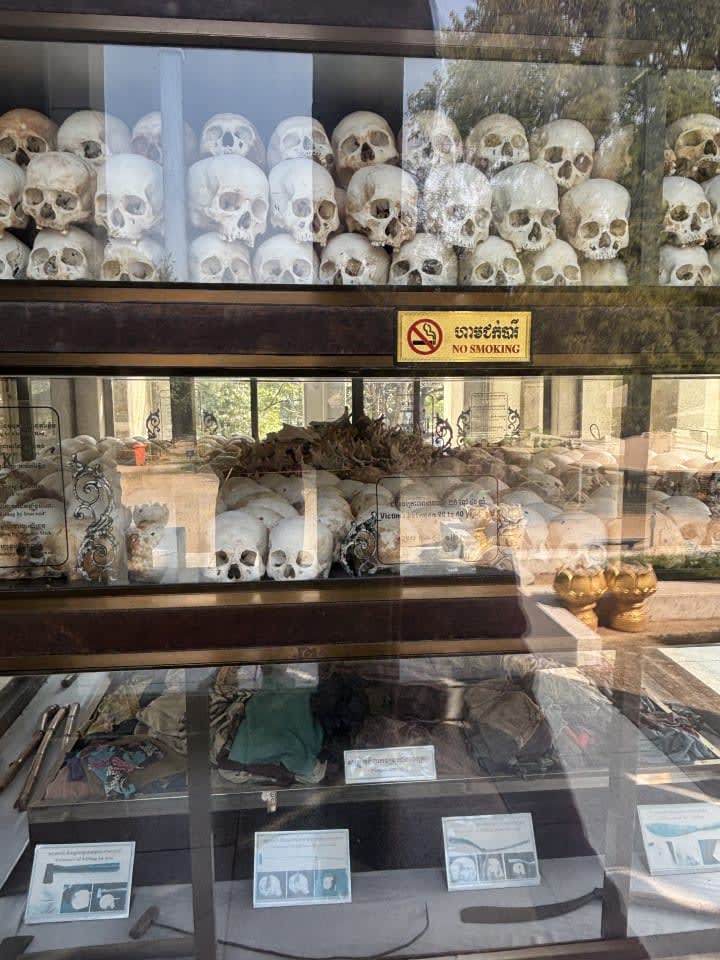
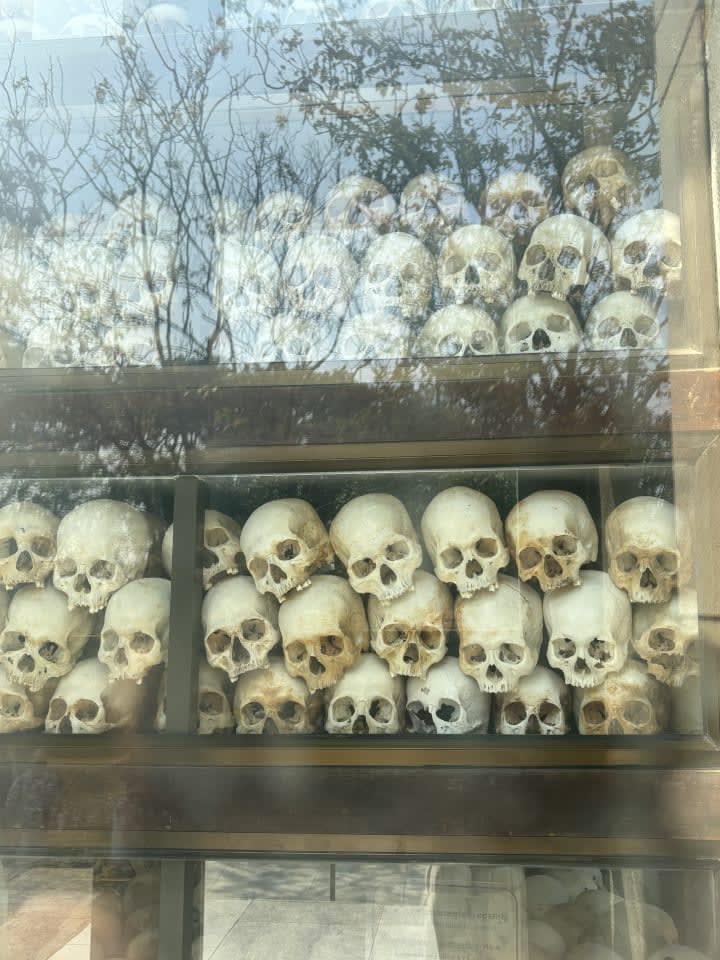
Mass graves fill what was once a flourishing orchard, to this day clothing and bones are still rising to the surface. A dark reminder of what lies beneath the ground of this beautiful area, approximately 8895 bodies have been exhumed from the field, some without heads. Those with skulls intact often display a single hole in the top of the head representing a pickaxe, a thinner long crack representing a machete, and a wider crack or decimation of the skull representing an axe, spade, or hoe. Among the executed were not only Khmer people, but a small handful of “Westerners” had been executed and had their bodies burned.
Duch had admitted to killing 4 on his watch (although there were others) which consisted of 2 Americans, a British teacher named John Dewhurst, and 2 New Zealanders by the name of Kerry Hamill and Stuart Glass. Glass was shot when their boat was captured by Khmer Rouge after accidentally sailing into Cambodian waters while on a trip sailing around the world. Prison guards later said that with Hamill's ability to stay calm and answer clearly while being tortured, it meant he was equipped with proper training and had to belong to some organization. When asked who his commander is, Hamill would repeatedly answer “Colonel Sanders!” Kerry is survived by his parents and brother, John Hamill. John fought for the conviction of his brothers killer but unfortunately the United Nations would ultimately drop genocide charges against 83 year old Meas Muth.
The photos below are ones I have taken. Some may find them disturbing.
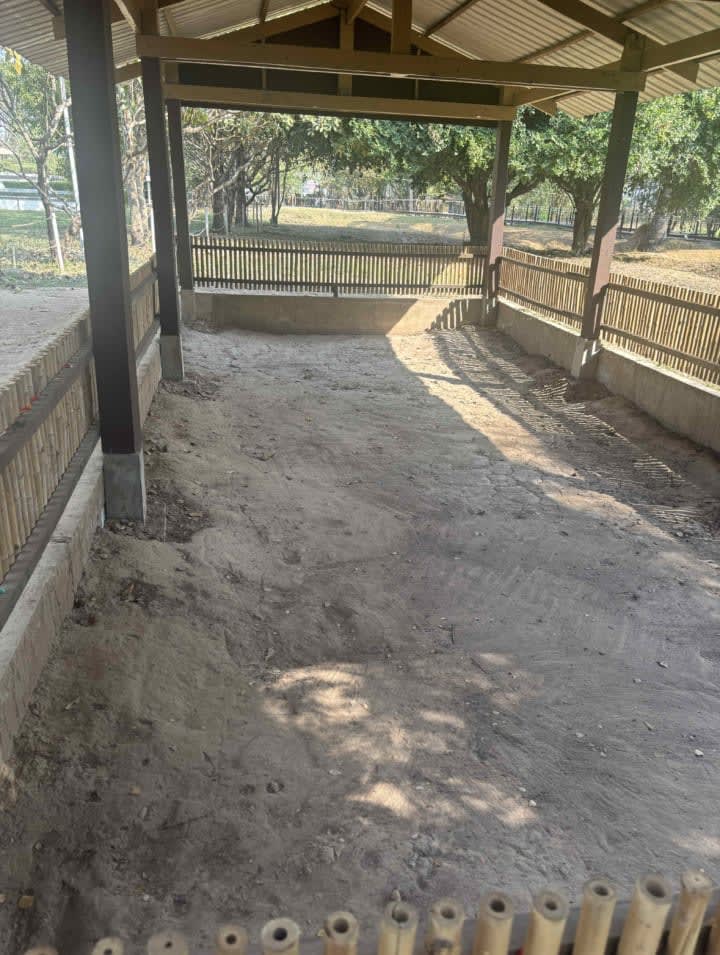
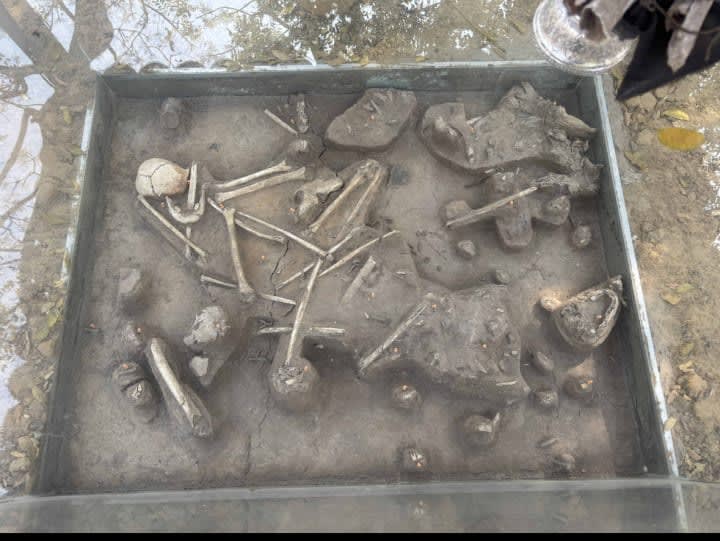
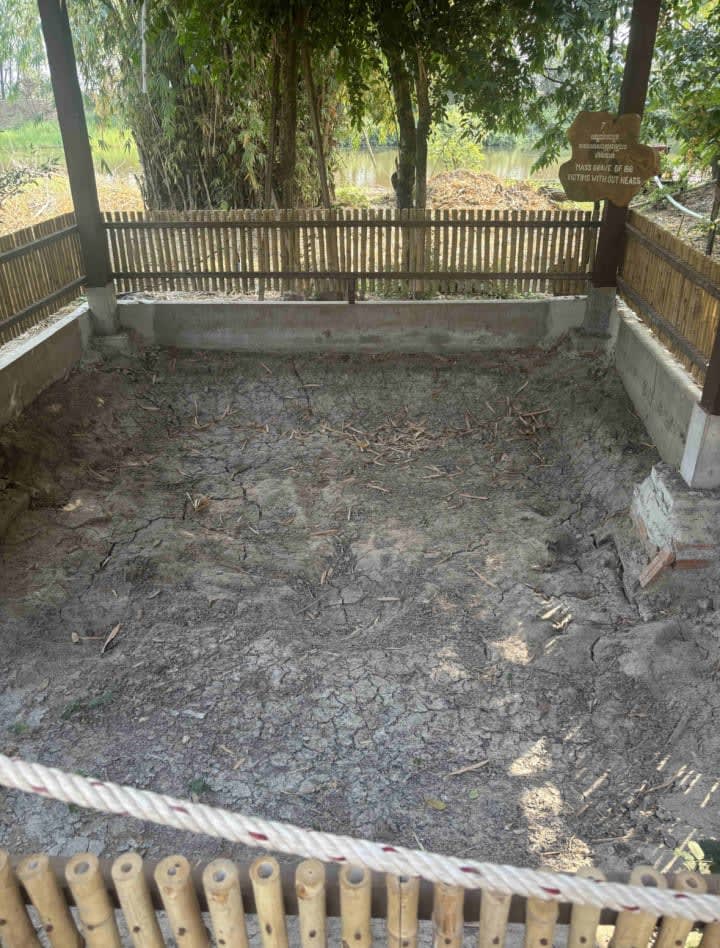
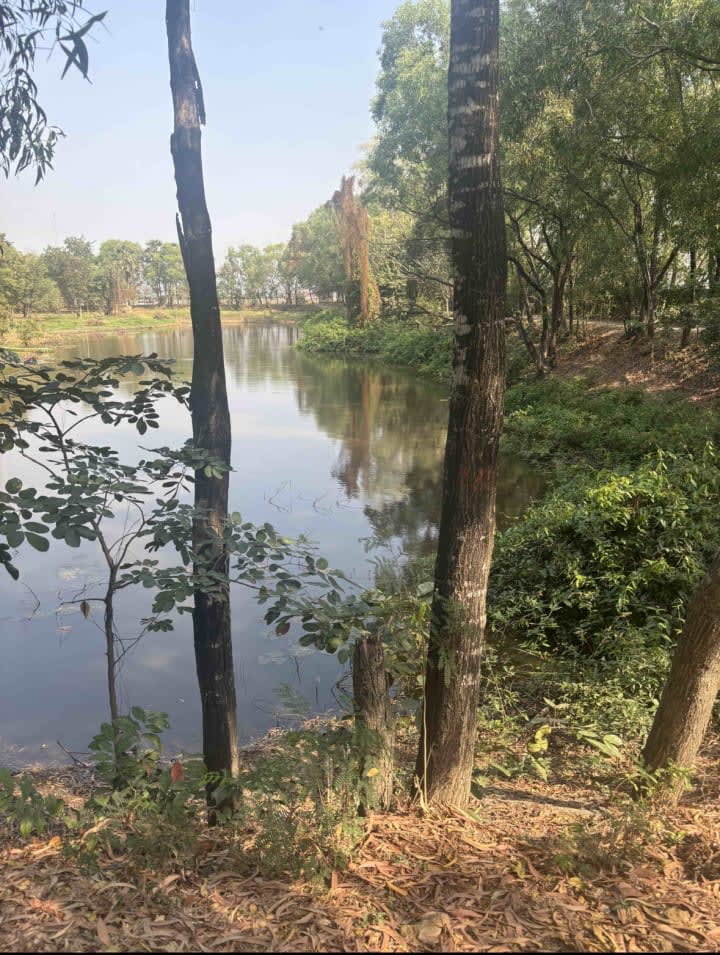
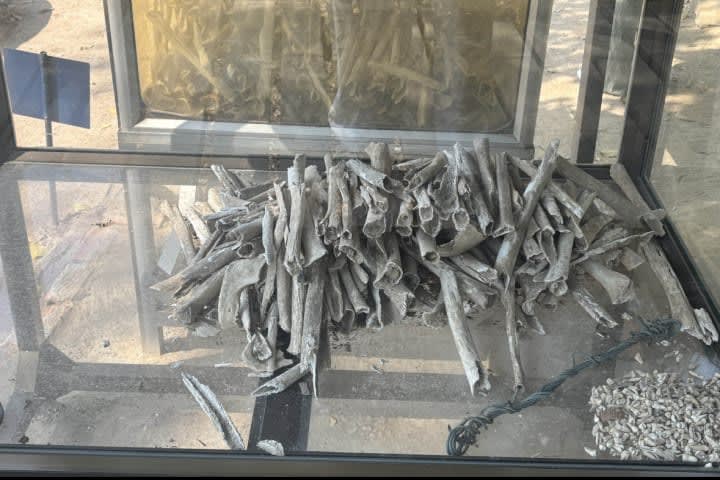
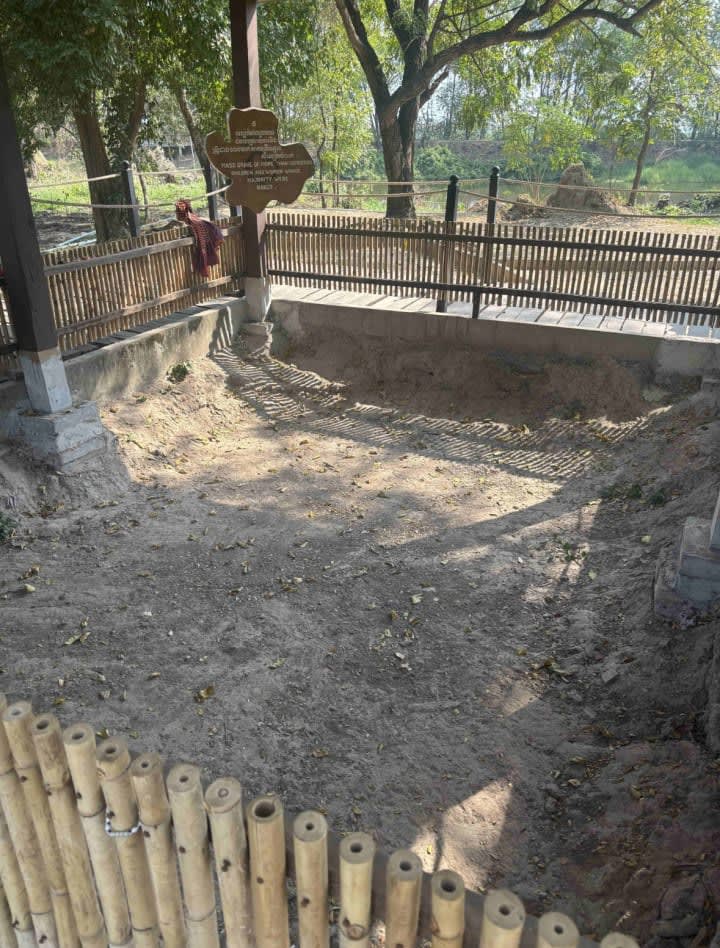
The bodies in the mass graves were covered in lye and a mix of other chemicals, not for the purpose of decomposition nor the fact that the soldiers couldn’t stand to look at them, but solely for the fact they weren’t fans of the smell. Those who didn’t end up in mass graves had their bodies stripped naked and burned. One of the exhibits that Choeung Ek offers is a concrete pagoda in the center of the field, a pagoda is a Buddhist structure typically slender in nature with multiple tiers. Each tier is said to hold something sacred, something that is close to Buddha.
Pagodas are a great display of cultural significance, religious and Southeast Asian architecture. This pagoda is not like any I have seen before and is extremely unique as it houses the remnants of hundreds of those who fell victim to the Khmer Rouge. It is not only meant to represent the atrocities and hardships the Khmer people endured, but to honor and remember the 1.2-2.8 million victims. You are able to give offerings such as water, tea, incense, and a marigold flower. I chose to give the flower because of its meaning in Buddhist culture, which is that of wisdom, compassion, and honor.
These are pictures I took. Some may find them disturbing.
The end is near.
Toward the end of the Khmer Rouge regime, and about 4 years after the Vietnam war, the North Vietnamese army viewed the Khmer Rouge as a threat following multiple attacks on Vietnamese border provinces out of fear that the Vietnamese would use them as a puppet state. After years of skirmishes between the two armies, Vietnam would launch a full scale invasion of Cambodia consisting of 150,000 troops on Christmas Day of 1978. Thus began the Kampuchea-Vietnam war. The Vietnamese would take Phnom Penh in 1979 and topple the Khmer Rouge regime.
The Khmer soldiers working at prisons and killing fields were given direct and strict orders to kill as many prisoners and destroy as much evidence as they could before they should fight to the death to defend Angkar. (Khmer for organization) Those who managed to avoid death in labour camps, prisons, killing fields, and those few survivors in S-21 would all be liberated. The Vietnamese had no idea what they had stumbled upon. Even some of those who served in the Vietnam-American war hadn’t known horror like this. During my visit to S-21, I was fortunate enough to meet a survivor by the name of Norng Chan Phal. Norng and his brother were found by Vietnamese troops. Hiding in piles of blood and bodily fluid soaked clothing were 2 young, malnourished, and confused boys who had lost their parents to the regime. When I listened to Norng speak about how he lost his parents, I couldn’t have even begun to imagine how a young boy would comprehend something of that nature, he said to me:
“I remember hearing yelling, and gunshots. I remember my mother grabbing me with tears in her eyes saying; Hide. Protect your brother and hide.”
That would be the last Norng would ever see of either of his parents.

Conclusion.
I would like to begin my conclusion by saying that the sole purpose of this article is to spread less known hardships into the light to attempt to get them the recognition that they deserve. The Khmer people do not seek financial gain, or the whole world's attention. They would like to see others be educated and pass on the knowledge they have absorbed, the truth is shocking and they do not hold back when explaining every detail and stressing the importance of these events to whoever is willing to listen and learn. Each local I spoke with, seemed to be affected by these events in more ways than one. Whether they were infants, teens, or adults at the time.
They would like to show who and what they have become not only as a country, but as individuals since these events. I have studied these events for a few years but my time in Cambodia was able to teach me more than I ever could have imagined. If you are planning on visiting, please visit these places. It is heavy, it is hard to look at or hear at times, but the importance of knowledge is bigger than anything else.
* Jacob Newson 2025
Resources:
BBC News. “Cambodia Khmer Rouge Leader Admits Killing Four Westerners.” BBC News, 9 June 2016, www.bbc.com/news/world-asia-36491837.amp.
History of the Museum – Tuol Sleng Genocide Museum. tuolsleng.gov.kh/en/museum/building.
Image Resizer. imageresizer.com/resize/download/67bacce90a1773069bfd3d13. Overton, et al.
“Cambodia | History, Map, Flag, Capital, Population, Language, and Facts.” Encyclopedia Britannica, 22 Feb. 2025, www.britannica.com/place/Cambodia/Vietnamese-intervention.
UNESCO World Heritage Centre. Former M-13 Prison/ Tuol Sleng Genocide Museum (Former S-21)/ Choeung Ek Genocidal Centre (Former Execution Site of S-21) - UNESCO World Heritage Centre. whc.unesco.org/en/tentativelists/6461.
About the Creator
Jacob Newson
Canadian. Also found on Medium.
Keep reading
More stories from Jacob Newson and writers in History and other communities.
Just How Effective Were Rhodesian Guerrillas?
Rhodesia, a country that is now divided into Zimbabwe and Zambia, with many people today only knowing of its existence as a result of Leonardo DiCaprio's cutthroat character in the 2006 film, Blood Diamond. One thing that you aren't able to learn from the movie, is the 15 year long civil war that tore apart the country's Southern region (present day Zimbabwe.) The Rhodesian Bush War was the result of a multitude of complex political factors, most notably the majority white government declaring independence from Britain without any kind of consent from the crown in 1965, as the South of Rhodesia was a self-governing colony since 1923.
By Jacob Newson9 months ago in History
Honoring a Pioneer: The Dr. Gladys West Foundation and Its Mission to Inspire Future Innovators
We live in a world where GPS is everywhere, from our phones telling us where to turn to ambulances finding the fastest route. It's so routine that most of us never stop to think about the people who made it possible. But one of the key figures behind it was Dr. Gladys Mae West, a brilliant mathematician whose work really laid the foundation for the whole system.
By Sophie Bullock2 days ago in History
Rage
Content Warning: Domestic Violence, Assault Rage D. A. Ratliff “Who did this?” My voice echoed through the house. All I wanted was a cup of tea, but one of the twins, running through the house like maniacs, knocked it over. My nerves tingled, and every muscle in my body felt coiled like a spring. Survival seemed out of reach.
By D. A. Ratliff6 days ago in Fiction



Comments
There are no comments for this story
Be the first to respond and start the conversation.