
The First Americans
Who were the first humans to arrive in the Americas?

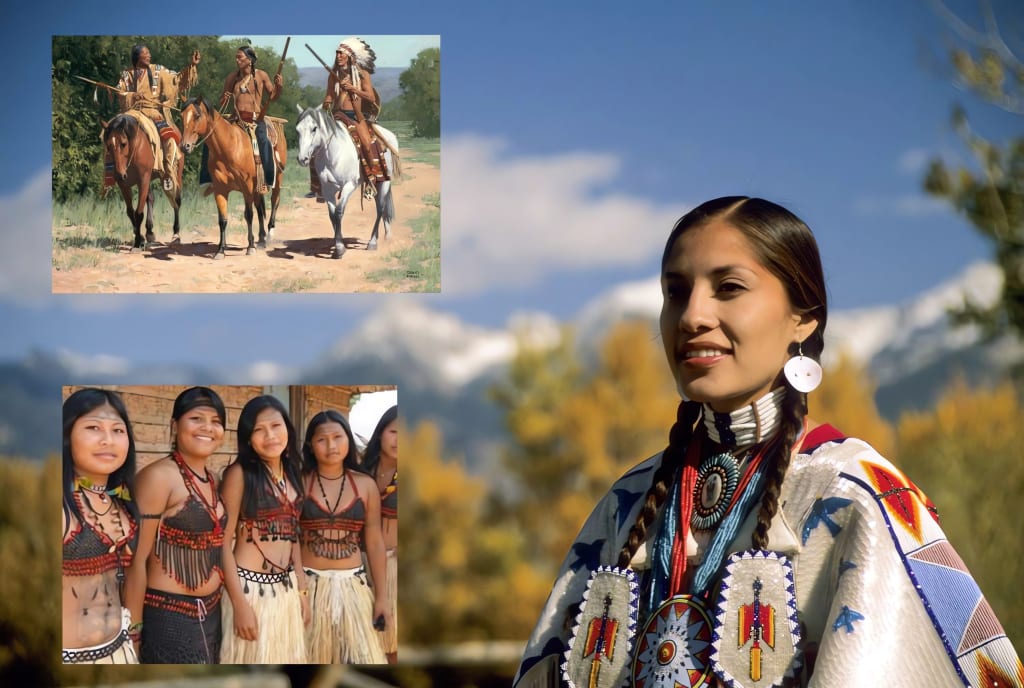
Since the inception of our species' exploration of the world, it has encountered significant challenges, and human adaptation has been a necessary requirement for our survival and proliferation on this planet. The continents of Africa, Asia, Europe, and Oceania bear the marks of human occupation since the beginning of human history. However, the American continent presents some uncertainties. The question of who the First Americans were, when they arrived on the continent, and how the colonization of the continent occurred persists due to its geographic location, far from other continents. The most widely accepted hypothesis is that at the end of the Pleistocene period, a thin strip of land called Beringia connected North America with Asia, as the sea level was approximately 120m below the current level. However, with the changes in climatic conditions that occurred at the end of the Last Glacial Maximum period, which began around 25,000 years ago, the sea level began to rise gradually, and the then layer of land, Beringia, was submerged, leaving only small islands projected further to the east. This caused the populations known as paleo-indigenous to be forced to leave the region, following the herds of animals they hunted or looking for other sources of food and heat, and they were forced to go towards what we now know as Alaska and Canada, down through the Yukon Valley, and also following ice-free corridors between the Laurentide Ice Sheets, which was a great sheet of ice that covered North America until the current Great Lakes region. An alternative migration by coastal navigation is also suggested, where some groups would follow the mainland coast, heading south. In the following millennia, the descendants of these Asians moved south in search of favorable conditions and ended up populating the entire American continent, being known as the first Americans. This is currently the most accepted hypothesis, but there are others that are also considered, such as the idea that the continent was colonized from peoples coming from the Pacific Ocean, from Australian, Malay, and Polynesian aboriginal peoples who would have migrated by accident and colonized the west coast of South America. Many support this idea, with recently discovered ancestral DNA data indicating that there is a higher proportion of Australo-Melanesian ancestry in South American Native Americans, a signature absent in indigenous populations from North and Central America. The Americas were shaped by these migratory phenomena, associated with climatic factors, to lay the foundations of various cultures and peoples that marked the continent. The evidence of the presence of ancient hunting groups in Central America has been found at the El Bosque site, near Pueblo Nuevo, in the Estelí district of northwestern Nicaragua. The stratigraphic features of the site indicate the presence of a lower layer with numerous bones of large mammals identified as belonging to the species of Megalonychids, a type of giant sloth called Ere-motherium, of species of Odocoileus, an extinct type of deer, and also bones of chelonians and small mammals, and the artifacts associated with this fauna were manufactured, being chipped in a very rudimentary way. In South America, peoples originating from the first wave created great cultures and societies as complex as those found in Asia, Africa, and Europe. Some native South American populations, such as the Suruí, Caritiana, Xavante, Guarani-Caioá, and Chutuná, share 3% of their DNA with peoples from Australia and Oceania, suggesting that these individuals descend from one of the first waves to cross Beringia about 15,000 years ago. This ancestral group is known among scientists as the Y population, initial of Ypykuéra, Tupi word for ancestor. However, there is no evidence that the peoples of Oceania crossed the Pacific and arrived directly in South America. What most likely happened, according to the most recent data, is that the migration of these individuals took place to Asia and then to Africa. Beringia, and in this migratory process, they started living in the Americas. Despite the existence of geological, archaeological, and genetic evidence, we still do not have an irrefutable certainty of who the First American was, and we hope that with more research, we can unravel this mystery.
About the Creator
A História
"Hi. My name is Wellington and I'm a passion for general history. Here, I publish articles on different periods and themes in history, from prehistory to the present day.
Keep reading
More stories from A História and writers in History and other communities.
The Aksumites
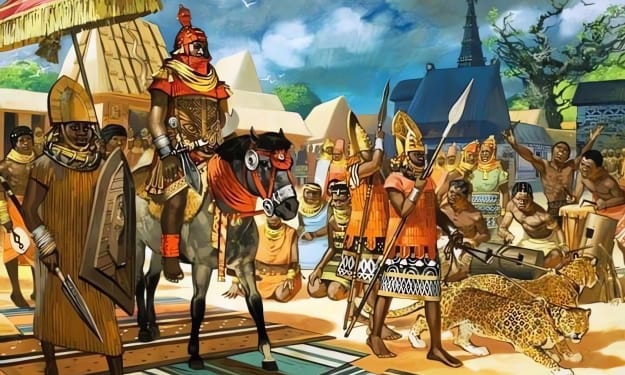
The African continent is renowned for its vastness, diverse cultures, peoples, languages, and rich history. As one of the oldest inhabited regions, Africa has witnessed numerous migratory waves and the rise and fall of powerful kingdoms and empires. However, it is important to note that the concepts of "empire" and "kingdom" may not fully account for the political-military phenomena that existed in Africa. Therefore, the use of these terms must be understood as conventions, and some specialist historians in Africa have already adopted alternative concepts such as "centralized unit" and "political-military unit". In this video, we explore the history of the Axumite Empire, an African kingdom that left a significant mark on history.
By A História3 years ago in History


Comments
There are no comments for this story
Be the first to respond and start the conversation.