
The Fire-Proof Giants: How Dinosaurs Survived the Age of Burning Earth
New scientific discoveries in South Africa reveal that dinosaurs may have walked on lava, lived among poisonous plants, and adapted to extreme heat in ways we never imagined.

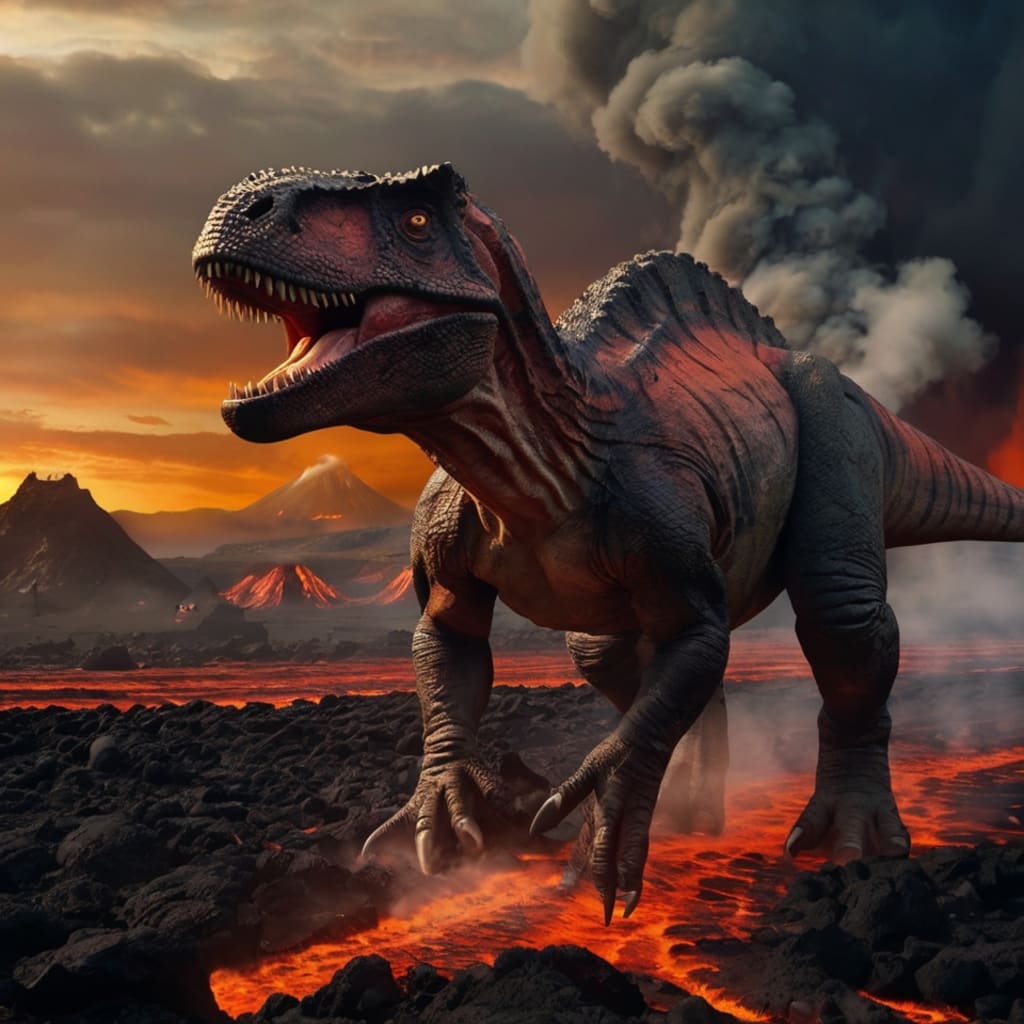
The Fire-Proof Giants: A New Look Into the Hidden World of Dinosaurs
BY: Khan
Children, you have surely heard the name dinosaur. Whenever we imagine the largest, strongest, and most terrifying animals to ever walk the Earth, the first picture that forms in our minds is that of these gigantic creatures. They vanished millions of years ago, long before the first humans appeared. Some scientists believe they died because food became scarce. Hungry and weak, they slowly slipped into extinction. Others argue that a catastrophic shower of meteors, comets, or blazing stars falling from the sky ended their reign, burying them under ashes and debris.
But in recent years, something extraordinary has come forward—discoveries so strange and unexpected that even scientists themselves were astonished. These discoveries tell us that dinosaurs had abilities we never imagined, traits we had neither heard of nor guessed before. And these revelations have opened entirely new doors of thought.
According to the latest scientific research, dinosaurs may have possessed a remarkable natural skill: they were “fire-proof.” Yes, you read that right. Evidence suggests that God created them with the ability to withstand extreme heat. When the Earth grew warmer, they could adjust their bodies to the rising temperature. Some species did not feel pain while walking on scorching ground, nor did they even attempt to avoid fire.
These creatures lived through what geologists call the Age of Volcanism, a time when massive volcanoes erupted without pause. Rivers of lava flowed across valleys, mountains spewed molten rock, and the land trembled under the pressure of fiery explosions. Geologists refer to this terrifying era as the “Volcanism Drakensberg.”
This line of research was included among South Africa’s most important scientific studies. Professor M.C. Bordy, a geology expert at the University of Cape Town, published this discovery across several journals. The magazine Inverse released a detailed report revealing that dinosaurs evolved unusual survival abilities—such as walking directly on hot volcanic surfaces and living among poisonous plants without harm.
In the Karoo Basin of South Africa, scientists discovered dozens of dinosaur footprints running straight through volcanic pathways—places that were once filled with burning lava. These prints were not random or accidental. They were steady, natural foot impressions, perfectly shaped, and belonging to creatures walking confidently across the blistering ground.
Astonishingly, these mighty animals did not burn.
Another surprising detail came from Science Magazine, which reported that dinosaurs had physical and natural preferences far stranger than previously believed. They liked heat. They seemed to enjoy boiling, unstable ground. They lived among poisonous vegetation. There is even evidence that some species built their homes underground, in softer regions of the Earth.
This raises a question: how could any creature walk on lava without fear or injury?
According to the research, the volcanic mountains in this region were active 183 million years ago, constantly filled with molten rock. The paths between them were coated with lava. And yet, dinosaurs wandered there casually, leaving behind clear tracks preserved for millions of years.
Scientists were stunned to find that the tracks remained identical for long distances—steady, natural, and undisturbed. The shape of the toes, the depth of the heel, the placement of the claws—everything showed that the animal walked normally, without caution or pain. It seemed as if fire simply did not affect their feet.
At least 25 sets of dinosaur footprints were found, all in motion. None belonged to a creature that stood still. This indicates that they were not trapped or panicking; they were moving intentionally through a lava-filled environment. On five separate paths, their footprints appeared right in the middle of molten zones, shocking every researcher involved.
Geologists and botanists are still unsure which biological traits allowed dinosaurs to survive such brutal heat. What physical properties protected their skin and feet? What inner adaptations made them comfortable in places where no other animal could live?
No one knows yet.
However, this region of South Africa remains one of the most important volcanic research sites in the world. Long ago, its mountains roared with fire, spilling unimaginable amounts of lava. Today, those volcanoes sleep silently, but beneath their hardened layers lies a story of survival unlike any other.
Professor Bordy originally began his research to study lava composition—the types of rocks, the chemical elements, and what they could reveal about Earth’s deep interior. He never expected to find signs of dinosaurs living side-by-side with active volcanoes. But the soil mixed within the lava layers told a different story. Not only were there footprints, but there were also traces that these animals lived in the area long-term. In geology, such evidence indicates that a place served as a home region.
Imagine that: an entire species living on burning mountains, walking through lava, and resting on poisonous terrain as if it were the most natural thing in the world.
Before they finally died due to an extraterrestrial strike, these giants lived in ordinary landscapes and in deadly zones where no modern animal could survive. Their world was filled with danger, heat, poison, fire—and yet they thrived.
Truly, what extraordinary creatures they were.
About the Creator
Alexander the Great’s Era Workshop Discovered in Peshawar
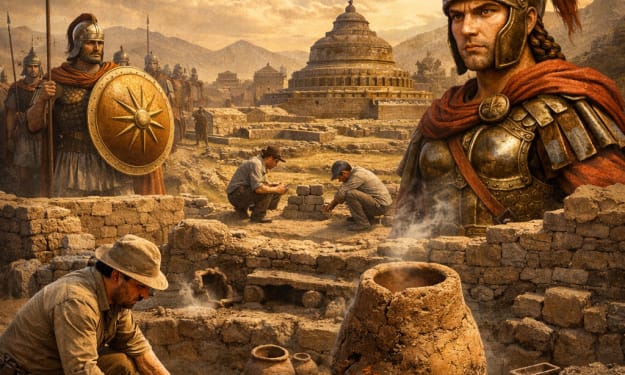
A remarkable archaeological discovery in the historic city of Peshawar has sparked excitement among historians and researchers. Archaeologists have recently uncovered the remains of an ancient workshop believed to date back to the era of Alexander the Great, the legendary Macedonian conqueror whose campaigns reshaped the ancient world. The finding offers rare insight into the economic and cultural life of the region more than two thousand years ago.
By Irshad Abbasi about 9 hours ago in History



Comments
There are no comments for this story
Be the first to respond and start the conversation.