
Alexander the Great — Part 3: The Edge of the World and the Limits of Empire
By the time Alexander the Great reached the northwestern regions of the Indian subcontinent, he had already conquered the Persian Empire and marched thousands of miles across Asia. Yet his campaign in India would become one of the most defining and challenging phases of his life. It revealed both the brilliance of his leadership and the limits of ambition. This period marked the turning point where conquest began to strain the loyalty and endurance of his army, and where Alexander himself began to confront the reality that even the greatest conquerors cannot rule endlessly through war.

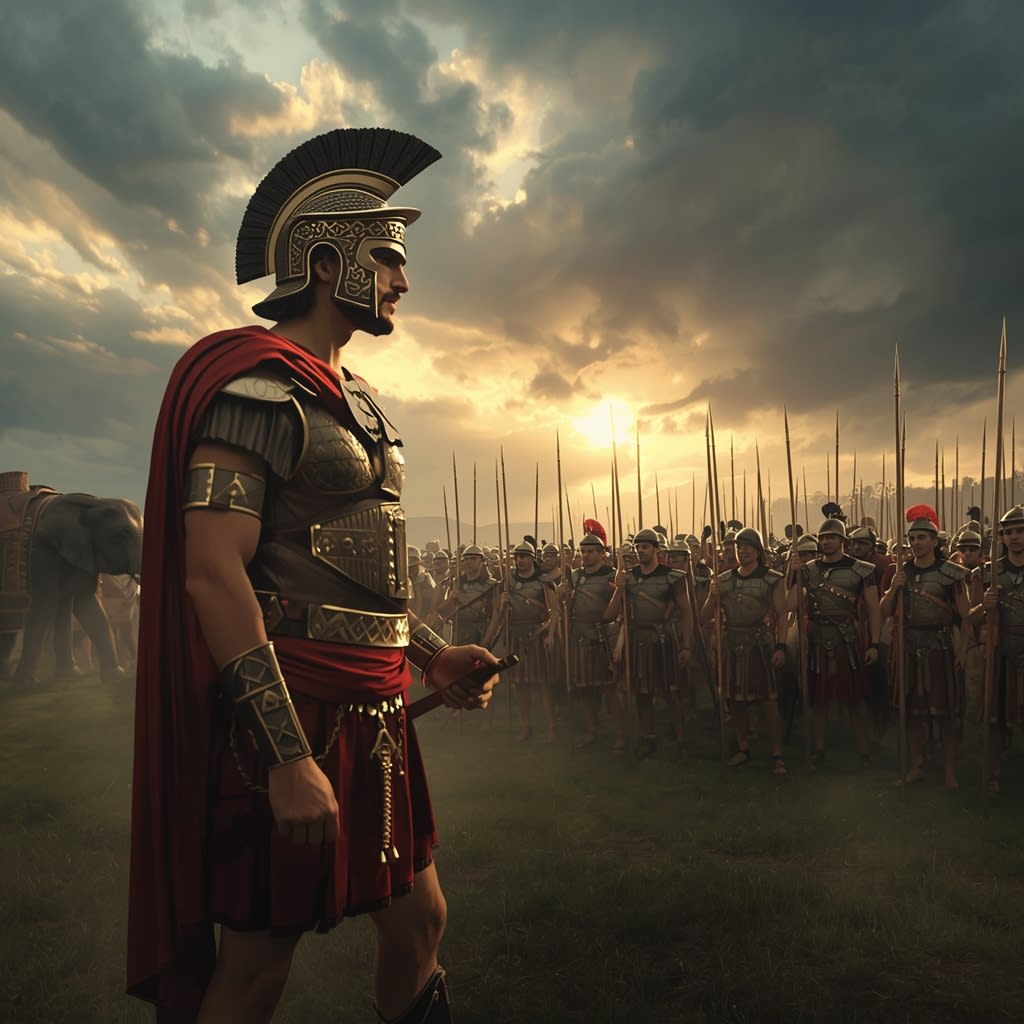
After securing control of Bactria and Sogdiana, Alexander turned his attention eastward. He had long been fascinated by stories of India — a land of immense wealth, powerful kings, and exotic cultures. Greek historians described India as a place where rivers were vast, armies used elephants in battle, and philosophers lived in deep contemplation. For Alexander, it represented the next great frontier and perhaps the edge of the known world.
In 326 BCE, Alexander crossed the Hindu Kush and entered the region of the Punjab. Several local rulers submitted to him, either out of fear or diplomacy. One of these was King Ambhi of Taxila, who welcomed Alexander and provided supplies and troops. However, not all rulers were willing to surrender. The most formidable among them was King Porus, who ruled a territory beyond the Hydaspes River (modern-day Jhelum River).
The Battle of the Hydaspes became one of Alexander’s most famous military engagements. Unlike previous battles, Alexander faced war elephants — massive creatures trained for combat. These animals terrified horses and disrupted formations, making them a unique challenge for the Macedonian army. The battle took place during the monsoon season, with heavy rain and a swollen river complicating troop movements.
Alexander demonstrated his characteristic tactical brilliance. He secretly moved part of his army upstream during a storm and crossed the river at night, catching Porus off guard. The battle that followed was fierce and prolonged. Porus fought with determination, leading his troops from atop an elephant. Even when wounded, he refused to retreat. The elephants caused significant casualties among the Macedonian ranks, but Alexander’s disciplined phalanx and cavalry maneuvers eventually turned the tide.
Impressed by Porus’s bravery and leadership, Alexander chose not to execute or humiliate him. Instead, he asked how Porus wished to be treated. The famous reply, “Treat me like a king,” deeply impressed Alexander. He restored Porus to his throne and even granted him additional territory. This act reflected Alexander’s approach to empire-building: he often retained local rulers who showed loyalty and strength, integrating them into his expanding domain.
Despite victory, the campaign in India pushed Alexander’s army to its limits. The soldiers had marched for years across deserts, mountains, and hostile lands. They faced unfamiliar climates, monsoon rains, and constant warfare. When Alexander proposed marching further east toward the Ganges River, the army finally refused. They had heard tales of even larger kingdoms and armies awaiting them. Exhausted and longing for home, they demanded to return.
This moment marked one of the few times Alexander faced open resistance from his own men. At the Hyphasis River (modern Beas River), the army mutinied. Alexander tried to persuade them, appealing to their sense of glory and destiny, but they remained firm. After days of tension, he reluctantly agreed to turn back. It was a deeply emotional moment for a man who had rarely been denied victory.
On the return journey, Alexander divided his forces. Some traveled by land through harsh deserts, while others sailed along the Indus River. The march through the Gedrosian Desert proved disastrous. Extreme heat, lack of water, and starvation killed thousands of soldiers. Even Alexander suffered greatly, sharing the hardships of his men. This experience revealed the cost of ambition and the fragility of even the most powerful armies.
When Alexander finally returned to Babylon in 323 BCE, he began planning new campaigns. He envisioned conquering Arabia and perhaps even exploring lands beyond. However, his body had been weakened by years of battle, wounds, and exhaustion. Shortly after arriving in Babylon, he fell ill with a fever. Within days, the conqueror who had never lost a battle died at the age of just 32.
Alexander’s death left a massive empire without a clear successor. His generals, known as the Diadochi, divided the territories among themselves, leading to decades of conflict. Yet his legacy endured. He had spread Greek culture across Asia, leading to the Hellenistic era — a period of cultural exchange that influenced art, science, language, and philosophy. Cities he founded, especially Alexandria in Egypt, became centers of learning and trade.
Part 3 of Alexander’s story reveals the complexity of his character. He was a brilliant strategist and visionary, but also a man driven by relentless ambition. His campaign in India demonstrated both his courage and the limits of conquest. He inspired loyalty, fear, admiration, and controversy. Even today, historians debate whether he was a heroic unifier or a ruthless conqueror.
What cannot be denied is the scale of his impact. Alexander reshaped the ancient world in little more than a decade. He connected East and West, created new trade routes, and influenced cultures far beyond his lifetime. His journey to the edge of the known world remains one of history’s most extraordinary adventures — a reminder that ambition can build empires, but it can also test the boundaries of human endurance.
About the Creator
Say the truth
"Say the Truth: Explain Everything in the World" is your trusted source for uncovering facts and exploring the wonders of history, science, technology, and beyond. We simplify complex ideas and reveal truths to inspire curiosity .
Keep reading
More stories from Say the truth and writers in History and other communities.
Alexander the Great – Part 1: Birth, Childhood, and the Making of a Future Conqueror
Birth in a Kingdom on the Rise Alexander was born in 356 BCE in the ancient city of Pella, the capital of the Kingdom of Macedon. At the time, Macedon was not considered the dominant power in Greece. However, this situation was rapidly changing under the rule of Alexander’s father, King Philip II. Philip was a brilliant military reformer and strategist who transformed Macedonia into a formidable kingdom.
By Say the truth 2 days ago in History
Future Wars in the Age of Artificial Intelli
Future Wars in the Age of Artificial Intelligence If the new battlefield is hidden inside a nation’s systems, then Artificial Intelligence is becoming the most powerful weapon within it. Future wars will not begin with tanks crossing borders or fighter jets in the sky. They will begin with algorithms, data, and decisions made at machine speed. AI is changing not only how wars are fought, but also who controls power and how quickly conflicts can spiral out of control.
By Wings of Time 3 days ago in History
Augustus Caesar — The Silent Victor
Augustus Caesar did not conquer Rome with thunder and spectacle. He conquered it with silence, patience, and restraint. Where others seized power through open violence, Augustus mastered something far rarer: the ability to win without appearing to rule. In doing so, he ended a century of civil war and founded an empire that would endure for centuries. His genius was not in dramatic battlefield heroics, but in knowing when *not* to act—and when to let others believe nothing had changed.
By Fred Bradforda day ago in History
The Devil's Triangle
The sails ruffled in the breeze as we cruised along. The Sea Breeze was a mid-size catamaran that sailed out of Royal Naval Dockyard in Bermuda. We had booked this trip weeks in advance and were now looking at our Captain, Spike and two boat hands. Paddy and Wilson seemed like nice guys, joking around with the passengers and telling us some stories about Bermuda that only locals would know. Their island accents sounded almost British but they were pleasant to listen to.
By Barbara Gode Wiles4 days ago in Fiction




Comments
There are no comments for this story
Be the first to respond and start the conversation.