
The Fall of the Cholas: How the Pandyas Rose and Reclaimed a Golden Throne"
This article explores the powerful legacy and eventual downfall of the mighty Chola Empire, one of South India's most iconic dynasties. It details the causes of the decline—from internal strife to weakened leadership—and highlights the aggressive rise of the Pandya Dynasty under Maravarman Sundara Pandyan. The Pandyas not only overthrew the Cholas but also looted their immense wealth, including temple treasures, trade riches, and royal reserves. Modern estimations place the value of the looted treasure between $3–5 billion USD. Through this dramatic power shift, the article uncovers how one empire's fall became another's ascent, reshaping the history of Tamilakam forever.

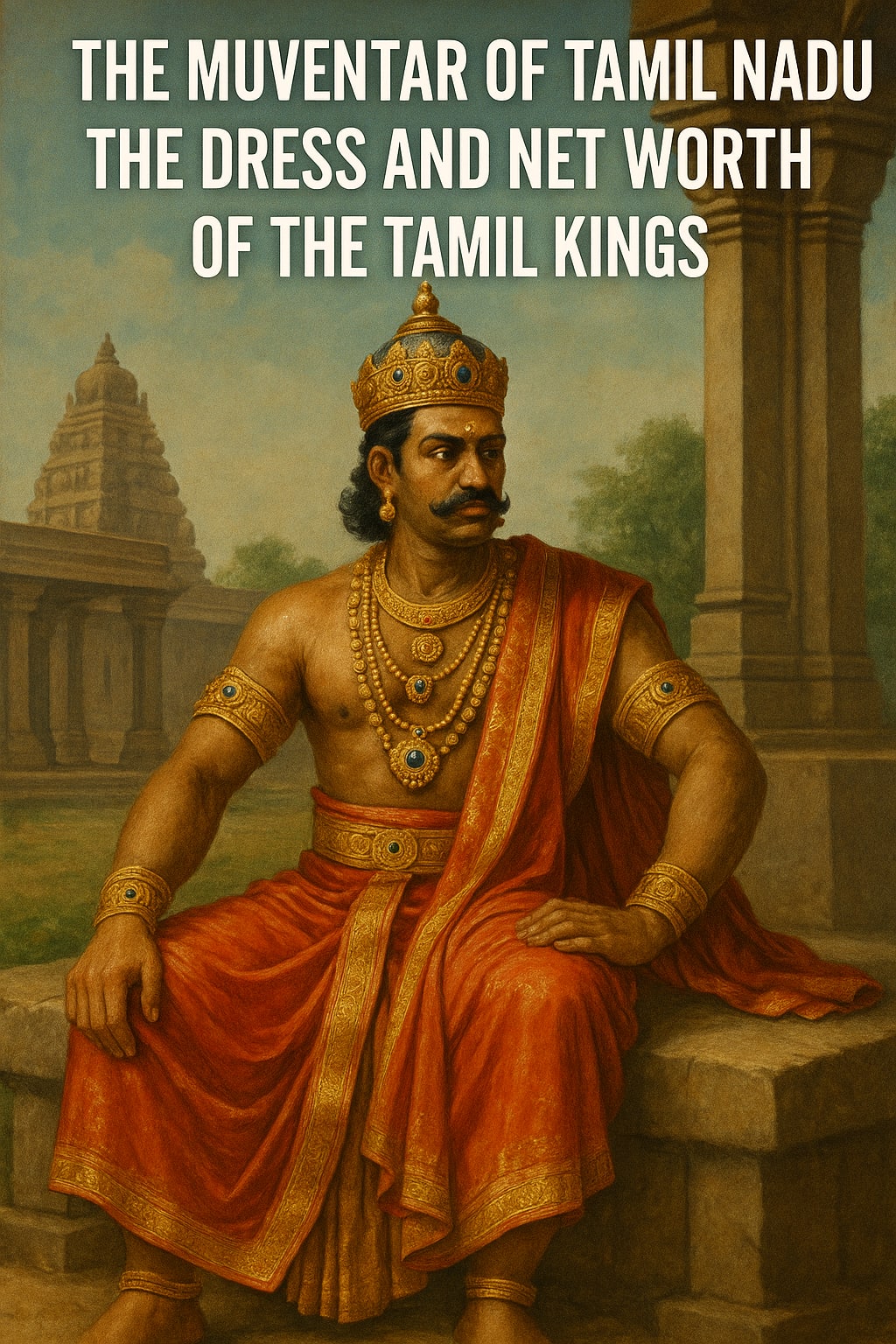
"The Fall of the Cholas: Twilight of a Golden Empire and the Rise of the Pandyas"
Summary:
This article examines the dramatic decline of the Chola Dynasty, once a dominant force in South India, Southeast Asia, and the Indian Ocean trade. It explores the internal weaknesses, political missteps, and external pressures that led to their downfall. A key focus is the Pandya resurgence, particularly under Maravarman Sundara Pandyan, and the massive wealth transfer that occurred when the Pandyas looted Chola territories—including temples, treasuries, and ports. Historical estimates, adjusted for modern valuation, suggest looted assets could equate to billions in today’s currency. The article also highlights how the shift in power reshaped the socio-political fabric of Tamilakam and left a lasting imprint on the region’s heritage.
Article:
The Fall of the Cholas: Twilight of a Golden Empire and the Rise of the Pandyas
The Chola Dynasty, one of the longest-ruling dynasties in world history, was at its zenith between the 9th and 13th centuries. From the reign of Raja Raja Chola I to Rajendra Chola I, the empire expanded its influence across South India, Sri Lanka, the Maldives, and parts of Southeast Asia. Their naval prowess, architectural achievements, and administrative systems were unparalleled in their time. However, even mighty empires fall. The decline of the Cholas was a gradual yet complex unraveling of power, weakened by succession disputes, overextended military campaigns, and a resurgent Pandya Dynasty ready to reclaim its place in history.
Seeds of Decline
The first signs of decay within the Chola empire emerged after the reign of Kulothunga Chola III (1178–1218 CE). His successors failed to assert strong leadership or maintain the vast network of vassals and allied states. Rebellions in the outer provinces—like Vengi and Karnataka—strained resources and diverted attention from southern threats.
Economic mismanagement and frequent wars depleted the royal treasury. The powerful merchant guilds that had once supported Chola expansion began to operate more independently, undermining centralized control. Meanwhile, their age-old rivals—the Pandyas—were steadily regaining power from their capital at Madurai.
The Rise of the Pandyas
Under Maravarman Sundara Pandyan I (r. 1216–1238 CE), the Pandya Dynasty launched a series of aggressive military campaigns aimed at breaking Chola supremacy. The Chola capital of Gangaikonda Cholapuram, once a beacon of wealth and power, became a prime target.
In 1216 CE, the Pandyas decisively defeated the Chola army at the Battle of Kannanur, forcing Chola king Rajaraja Chola III to flee. The Pandyas marched on the capital, looting temples, royal treasuries, and grain reserves. Chola administration collapsed across the empire, with many provinces switching allegiance or falling into chaos.
The Looting of Chola Wealth: An Estimated Net Worth
The Pandyas, with a clear strategy to consolidate power and showcase dominance, systematically dismantled Chola influence. Temples such as the Brihadeeswarar Temple in Thanjavur—an architectural wonder and religious heart of the Chola empire—were plundered for gold, jewels, and sacred relics.
What exactly was looted?
Temple treasures: Massive quantities of gold, silver, bronze, and gemstones.
Trade goods: Spices, textiles (notably fine cotton and silk), ivory, and pearls stockpiled in ports like Nagapattinam.
War booty: Elephants, weapons, chariots, and ornaments from the royal palace.
While ancient sources do not provide precise figures, historians estimate that the combined looted assets (if valued today) would easily exceed $3–5 billion USD, considering temple donations over centuries, international trade tax revenues, and hidden royal reserves. The sheer scale of temple endowments alone—recorded in inscriptions—suggests an opulence rarely matched in medieval South Asia.
Cultural and Political Impact
The Chola dynasty continued in name for several more decades, but without real power. The Pandyas, flush with wealth and reinvigorated by their victory, reestablished themselves as the cultural and economic superpower of the Tamil region. They sponsored new temple constructions, revived trade with Southeast Asia, and patronized literature in Tamil.
However, their rule, too, was eventually challenged—by the Delhi Sultanate, the rise of the Vijayanagara Empire, and other regional powers. But for a brief, resplendent moment, the Pandyas stood at the pinnacle, basking in both inherited and seized glory.
Legacy
The fall of the Cholas marked the end of a classical age in Tamil history. It was a twilight brought on not just by Pandya aggression, but also by internal decline and changing political tides. Yet, the grand temples, inscriptions, and administrative innovations left behind endure to this day.
The looting by the Pandyas, while devastating to the Cholas, was part of the cyclical nature of history—where power shifts hands, and wealth becomes both the prize and the burden of empires.
Would you like a picture or wallpaper-style illustration to match this article?
About the Creator
Say the truth
"Say the Truth: Explain Everything in the World" is your trusted source for uncovering facts and exploring the wonders of history, science, technology, and beyond. We simplify complex ideas and reveal truths to inspire curiosity .
Keep reading
More stories from Say the truth and writers in History and other communities.
Madheena: The Sacred City of Light – A Timeless Legacy of Faith and Civilization
Madinah al-Munawwarah: The Enlightened City of Prophets and Tranquility Madinah, one of the most revered cities in Islam, possesses an enduring heritage that extends back millennia. Referred to as "The City of the Prophet," it became the epicenter of the Islamic realm following the Hijrah (migration) of Prophet Muhammad (PBUH). This article examines the ancient origins of Madinah, its evolution throughout Islamic history, and its spiritual and historical significance.
By Say the truth 9 months ago in History
The Evolution of Aircraft Design Through Failure and Innovation
Aircraft design did not emerge fully formed or flawlessly engineered. Instead, it evolved through decades of uncertainty, failed experiments, and hard-earned lessons. Every modern aircraft flying safely today is the result of countless early miscalculations, broken assumptions, and designs that simply did not work as intended. Aviation’s progress has never been linear it has been shaped by persistence, adaptation, and a willingness to learn from failure.
By Beckett Dowhan28 minutes ago in History
Stanislav Kondrashov Oligarch Series: The Roots of Oligarchy in the Mediterranean
When people hear the word “oligarchy,” they often think of modern contexts. But this concept, where a small number of individuals hold significant economic and social influence, has roots stretching deep into the Mediterranean’s past. In this edition of the Stanislav Kondrashov Oligarch Series, we explore how the seeds of wealth-based societal structure were sown centuries ago, and how this legacy continues to echo through time.
By Stanislav Kondrashov7 days ago in History
Miss Persephone's Manual to a Seemingly Ordinary Life
Miss Persephone was found at the dining table, her blue eyes swollen, her tears arriving and retreating like the tides of the ocean. Earlier that day, her family had visited her in the retirement home where she had lived for eight years. It was her eightieth birthday.
By Imola Tóth5 days ago in Fiction



Comments
There are no comments for this story
Be the first to respond and start the conversation.