
The Evolving Iran–Israel Conflic
How Far Will Iran and Israel Go?

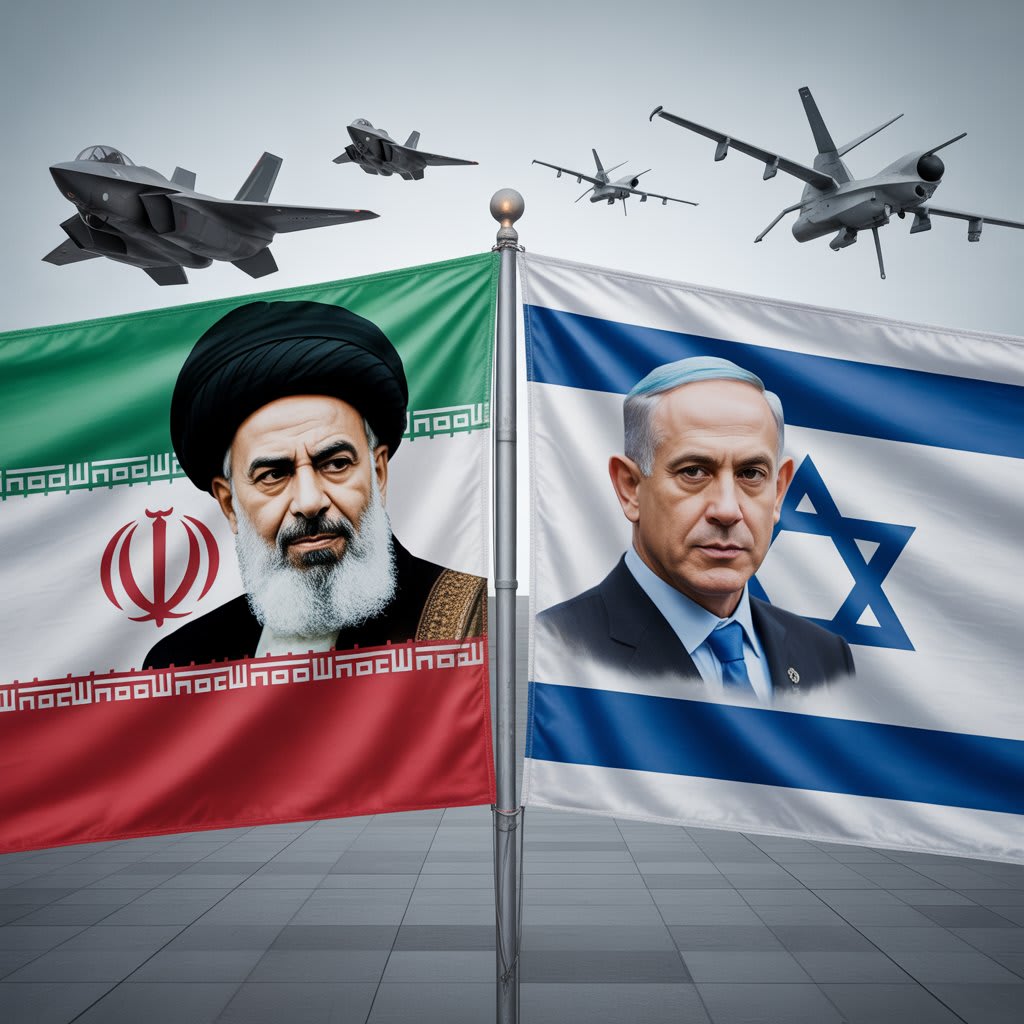
The Ongoing Conflict Between Iran and Israel: From Israel’s Independence to the Present
The conflict between Iran and Israel is a complex, multifaceted struggle that has evolved significantly since the founding of the State of Israel in 1948. While the two nations once maintained diplomatic ties, the relationship has deteriorated over decades due to ideological, political, and strategic differences, culminating in an intense and ongoing geopolitical confrontation that continues to shape Middle Eastern and global politics.
Early Relations: A Period of Cooperation
When Israel declared independence in 1948, Iran was one of the few Muslim-majority countries to recognize the new state de facto, though it did not officially establish diplomatic relations. During the rule of Shah Mohammad Reza Pahlavi, Iran and Israel maintained relatively close ties. The two countries collaborated economically and militarily, particularly in areas such as oil trade and intelligence sharing. Both were non-Arab states surrounded by often-hostile neighbors and viewed each other as important strategic partners in a volatile region.
This cooperation extended through the 1950s to the 1970s. Israel helped develop Iran’s military and intelligence capabilities, and the Mossad worked with Iran’s SAVAK (the Shah's secret police) during this period. However, this cooperative relationship was dramatically reversed with the 1979 Iranian Revolution.
The Islamic Revolution and a Shift in Policy
The Islamic Revolution of 1979 marked a turning point. Ayatollah Ruhollah Khomeini’s rise to power introduced a theocratic regime with an explicitly anti-Israel ideology. The new Iranian leadership condemned Israel as an illegitimate state and referred to it as the “Zionist regime,” calling for its destruction. Iran severed all ties with Israel, closed the Israeli embassy in Tehran, and handed it over to the Palestinian Liberation Organization (PLO).
From this point on, Iran began supporting various militant groups opposed to Israel, most notably Hezbollah in Lebanon and, later, Hamas in the Gaza Strip. These organizations have received financial, military, and logistical support from Iran, enabling them to carry out attacks against Israel. Iran’s backing of these groups became a cornerstone of its strategy to confront Israel indirectly.
Proxy Wars and Regional Tensions
The Israel-Iran conflict has increasingly played out through proxy wars and indirect confrontations, especially in Lebanon, Syria, and Gaza. Hezbollah, which emerged in the 1980s during Israel’s invasion of Lebanon, has become a powerful paramilitary force with a vast arsenal of rockets pointed at Israel’s northern border. Iran’s influence in Syria, especially during the Syrian Civil War, has further alarmed Israel, which has conducted hundreds of airstrikes targeting Iranian military infrastructure and weapons shipments to Hezbollah.
Meanwhile, Hamas, though Sunni and ideologically distinct from Shiite Iran, has received substantial support from Tehran, contributing to frequent escalations in Gaza, including the major conflicts in 2008, 2014, and more recent clashes.
The Nuclear Issue
The most dangerous aspect of the Iran-Israel conflict centers on Iran’s nuclear program. Israel views the possibility of a nuclear-armed Iran as an existential threat. This fear has driven Israel to lobby against the Joint Comprehensive Plan of Action (JCPOA), the 2015 nuclear deal between Iran and world powers, which aimed to curb Iran’s nuclear activities in exchange for sanctions relief.
Israel opposed the deal, arguing it did not do enough to permanently prevent Iran from acquiring nuclear weapons. Following the U.S. withdrawal from the agreement in 2018 under President Donald Trump, tensions escalated further. Israel has allegedly been behind several covert operations targeting Iran’s nuclear program, including the assassination of nuclear scientists and cyberattacks, such as the 2010 Stuxnet virus.
Escalations in the 2020s
The 2020s have seen increasing direct confrontations. Shadow warfare in the form of cyberattacks, sabotage operations, and maritime incidents involving oil tankers in the Persian Gulf and the Red Sea has become more frequent. Iran has blamed Israel for mysterious explosions and assassinations within its territory, while Israel has intercepted Iranian weapons shipments and foiled alleged terror plots.
Recent escalations include drone and missile attacks exchanged between the two nations and between Israel and Iranian-backed groups across the Middle East. Tensions soared in 2023 and 2024, with Iranian retaliatory strikes following Israeli raids in Syria and Lebanon. The conflict now threatens to spill over into a wider regional war, especially as Iran expands its influence in Iraq, Yemen, and beyond.
Conclusion
The Iran-Israel conflict is not merely a bilateral dispute but a central axis in the broader struggle for power in the Middle East. Rooted in ideological opposition, strategic rivalry, and proxy warfare, the hostility between these two nations shows no sign of abating. While diplomatic efforts have occasionally aimed to contain the nuclear issue or reduce regional tensions, the underlying animosity and mutual distrust remain potent forces. As the conflict enters a new era of technological warfare and shifting alliances, the potential for escalation continues to pose a serious threat to regional and global stability.
About the Creator
shoaib khan
Geopolitics writer, fiction storyteller, and biographer. I explore global affairs, craft imaginative tales, and bring real-life stories to life through words.
Keep reading
More stories from shoaib khan and writers in History and other communities.
Whispers Behind the Black Curtain
They say Le Cirque des Rêves appears without warning, arriving like a whisper in the wind—one moment, a bare field beneath a quiet sky; the next, a maze of black-and-white tents blooming in the moonlight. No announcements. No posters. Only rumors and dreamers’ tales.
By shoaib khan8 months ago in BookClub
The Years 1830 to 1839 Unveiled: Intriguing Facts and Landmark Events
This quick read is a collection of fun facts, trivia, and historical events from the years 1830 to 1839. Discover the decade’s top news stories, most influential people, notable inventions, historic firsts, retail prices, and much more.
By Gregory DeVictora day ago in History
Author’s Advice
If you would’ve asked me 20 years ago did I know I’d become a writer and an author, I would’ve said “nope, ain’t happening”. As fate would have it I did become an author and I can honestly say I’m loving it so far. It really does feel good to be a writer. I’ve learned a lot on this journey and I feel like with even me being as new to this world as I am, there’s some wisdom I need to share with every other aspiring author.
By Joe Patterson3 days ago in Journal



Comments
There are no comments for this story
Be the first to respond and start the conversation.