
The Evolution of Japanese Cities: Tokyo’s Rise to Global Fame
Discover how a quiet fishing village named Edo transformed over centuries into Tokyo — one of the world’s most advanced, resilient, and influential cities.

You said:
The Evolution of Japanese Cities: Tokyo’s Rise to Global Fame
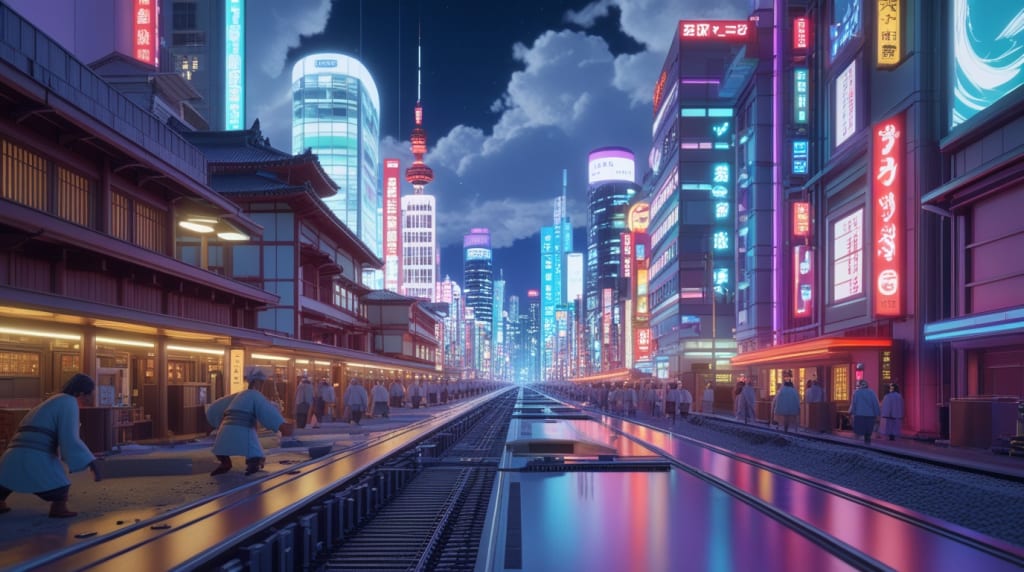
Imagine a small fishing village turning into a dazzling global metropolis in just a few centuries. Sounds like a fantasy, right? Yet, this is the real story of Tokyo — a city that rose from quiet obscurity to become the beating heart of Japan and a global icon of futuristic ambition. Its journey, however, was anything but smooth. Tokyo’s transformation is a gripping tale of power, war, natural disasters, and unstoppable human resilience. This is not just a city's history — it's an evolution that continues to inspire the world.
From Edo to Tokyo: A Humble Beginning
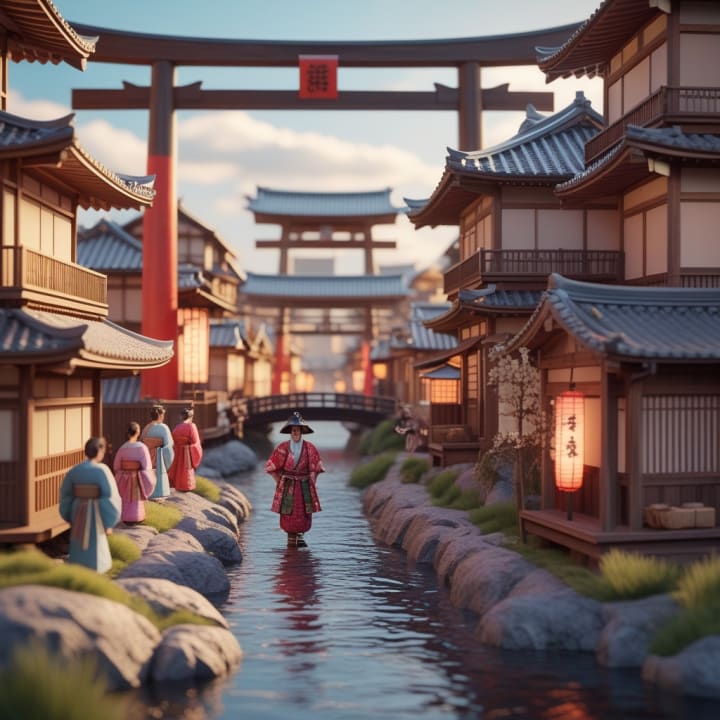
Long before the shimmering skyline and high-speed bullet trains, Tokyo was known as Edo — a modest town nestled beside the Sumida River in the 15th century. At the time, it was an unremarkable village governed by feudal lords, far from being a political or economic hub.
This quiet existence changed dramatically in 1603 when Tokugawa Ieyasu, one of Japan’s most influential shoguns, chose Edo as the center of his military government. That moment sparked a new chapter in Japan’s history. Under Tokugawa rule, Edo expanded rapidly, with fortified castles, vibrant merchant quarters, and a booming population.
By the 18th century, Edo had grown into one of the most populous cities in the world, even outnumbering major European cities like London and Paris. Despite being closed off to much of the world during Japan’s isolationist policy (Shikoku), Edo thrived through domestic trade, art, and innovation.
Tragedy and Transformation
In 1868, a monumental political shift swept through Japan. The Meiji Restoration ended centuries of feudal rule and returned power to the emperor. Edo was renamed Tokyo — meaning “Eastern Capital” — and was officially declared the nation’s new capital, replacing Kyoto.
This symbolic change reflected something much bigger: Japan was opening up to the world and charging toward modernization. Tokyo became a testing ground for new ideas and technologies. Western-style buildings replaced wooden homes, gas lamps lit up the streets, and the first railroads connected Tokyo to the countryside.
However, progress came with pain. In 1923, the Great Kanto Earthquake struck, killing over 100,000 people and reducing Tokyo to rubble. Fires raged, homes crumbled, and infrastructure collapsed. Yet, the city's people responded with unmatched courage and determination, rebuilding their lives brick by brick.
Then came an even darker chapter — World War II. Tokyo was bombed mercilessly during air raids in 1945, with nearly half the city destroyed. But like the mythical phoenix, Tokyo rose again — stronger, smarter, and more determined than ever before.
Post-War Boom and Technological Revolution
The decades following the war were transformational. In the 1950s and 60s, Tokyo experienced an economic miracle. The 1964 Summer Olympics became a symbol of Japan’s rebirth, and Tokyo dazzled the world with its resilience and modernity. The city introduced futuristic infrastructure, including expressways, subways, and the revolutionary Shinkansen — the world’s first high-speed train.
During this time, Tokyo also became a magnet for global businesses, fashion, pop culture, and innovation. Skyscrapers shot up, electronic districts like Akihabara bloomed, and Tokyo began to shape global trends in technology and lifestyle.
By the 1980s, Tokyo had established itself as a financial titan. It wasn’t just a rebuilt city — it was now a global player, a symbol of efficiency and innovation.
The Global Icon
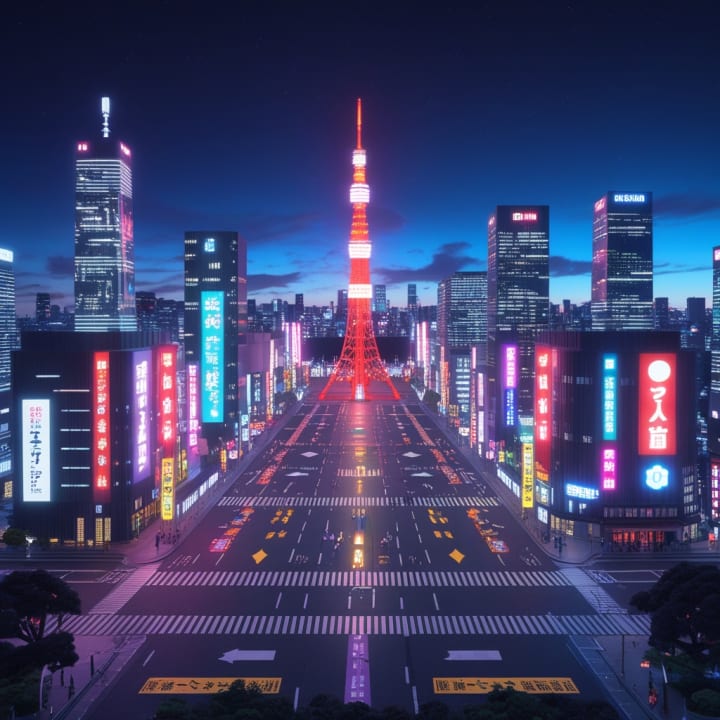
Today, Tokyo is a city where ancient traditions and cutting-edge technology coexist in perfect harmony. It’s a place where you can visit a centuries-old temple in the morning, and by afternoon, walk through the digital wonderland of Shibuya’s scramble crossing.
Tokyo has the most Michelin-starred restaurants of any city, yet also retains its soul through places like Asakusa, Ueno Park, and the Meiji Shrine. Districts like Shinjuku and Roppongi offer a look at Tokyo’s modern nightlife, while Tsukiji Market and old alleyways preserve its traditional flavors.
Its world-class public transport, punctuality, safety, and cleanliness make Tokyo a model for urban excellence. Even with challenges like overpopulation and frequent earthquakes, the city constantly adapts — always evolving, always inspiring.
Conclusion: The City That Never Stops
Tokyo’s story isn’t just about buildings or trains. It’s about the spirit of a city that refuses to be broken. From a forgotten fishing village to a metropolis of over 37 million people, Tokyo is a living lesson in resilience, vision, and human progress.
As the world shifts toward smart cities and AI-driven innovation, Tokyo remains a pioneer — embracing change while honoring its roots. It continues to rise, to evolve, and to lead — not just as Japan’s capital, but as a city of the future for the entire world.
About the Creator
MystiTech Hub
MystiTech Hub brings history, science, and mystery to life with engaging, well-researched content. Uncover hidden truths, explore scientific wonders, and dive into historical mysteries that shape our world.
Keep reading
More stories from MystiTech Hub and writers in History and other communities.
Japan’s Corporate Culture: Key to Its Rapid Development?
Japan’s Corporate Culture: Key to Its Rapid Development? Introduction When people think of Japan, what often comes to mind is high-speed trains, advanced robotics, and a deep sense of tradition fused with futuristic innovation. But behind Japan’s post-war economic miracle lies a lesser-known yet powerful engine: its unique corporate culture. From lifetime employment to the ritual of after-work drinking, Japan’s business ethos has fascinated economists and sociologists for decades. But is it truly the key to Japan’s rapid development? Let’s take a closer look.
By MystiTech Hub10 months ago in History
Dust
It was dust. Dust had weight there. It pressed into your mouth when you breathed, ground against your teeth, settled into the creases of your eyes. It coated our boots and crept into our weapons no matter how carefully we cleaned them. When the wind picked up, it hissed across the ground like something alive. Long before I heard a shot fired, I understood that the dust would get inside me and never really leave.
By Gaofeng Wang8 days ago in History
Ludacris and Nelly draw backlash over bookings at MAGA-coded music festival
Ludacris and Nelly headlining a mostly right-wing event is good for them. It’s also great for the genre of hip hop. The two rap veterans have showcased their talents on other stages. Why can’t they perform for mostly MAGA folks and grab that bag?
By Skyler Saunders4 days ago in Beat


Comments (1)
welcome