
Japan’s Corporate Culture: Key to Its Rapid Development?
Discover how Japan’s unique corporate traditions like lifetime employment, Kaizen, and team harmony fueled its post-war economic miracle and global business success

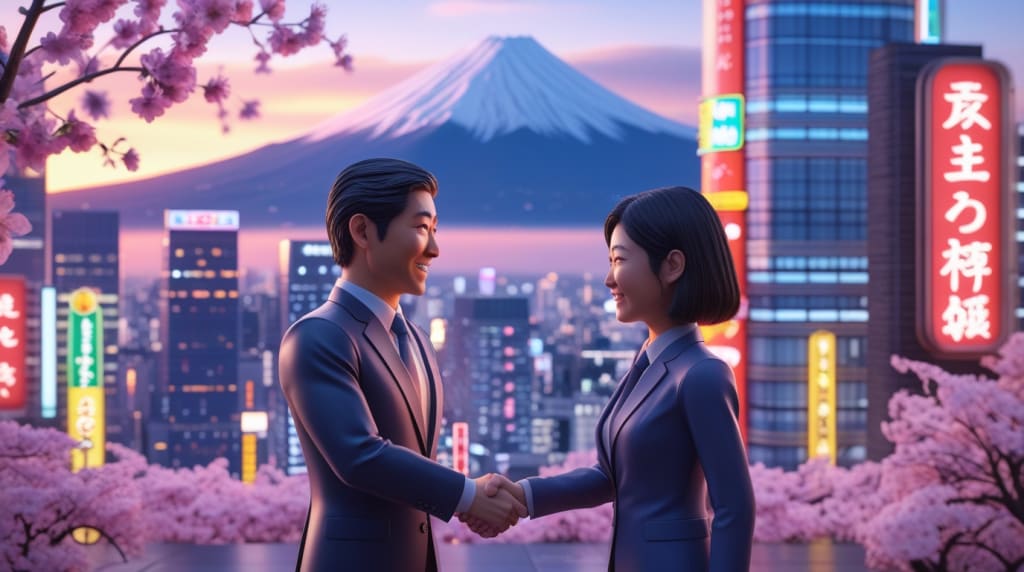
Japan’s Corporate Culture: Key to Its Rapid Development?
Introduction
When people think of Japan, what often comes to mind is high-speed trains, advanced robotics, and a deep sense of tradition fused with futuristic innovation. But behind Japan’s post-war economic miracle lies a lesser-known yet powerful engine: its unique corporate culture. From lifetime employment to the ritual of after-work drinking, Japan’s business ethos has fascinated economists and sociologists for decades. But is it truly the key to Japan’s rapid development? Let’s take a closer look.

The Post-War Economic Miracle: A Brief Overview
After the devastation of World War II, Japan’s economy was left in ruins. Yet, by the 1960s, it had become the second-largest economy in the world. This transformation was not just a result of foreign aid or market reforms—it was rooted in a collective national effort, heavily influenced by the culture of discipline, loyalty, and community within Japanese corporations.
This was the era when terms like “Kaizen” (continuous improvement), “Keiretsu” (corporate group networks), and “Shūshin-Koyō” (lifetime employment) started shaping the identity of Japanese work culture.
Lifetime Employment: Loyalty Beyond Paychecks
One of the core pillars of Japanese corporate culture is lifetime employment, especially in large companies. Employees were often hired straight out of university and expected to stay with the company until retirement. In return, the company provided job security, training, promotions based on seniority, and a sense of belonging.
This practice built unshakable loyalty and reduced turnover, fostering long-term planning and stability within organizations. While the global workforce was becoming increasingly mobile, Japan focused on building careers instead of filling positions.
Group Harmony Over Individual Glory
In the West, success is often celebrated individually. In Japan, it’s the group that wins. The concept of “wa” (harmony) is central to all corporate interactions. Decisions are made through consensus, and teamwork is prioritized over personal ambition. This cultural trait made Japanese teams highly cohesive, reducing internal conflicts and improving productivity.
Meetings might be longer, and decisions slower, but once made, they are implemented with unified commitment. This smooth coordination contributed immensely to efficient execution—key to Japan’s manufacturing dominance.
Kaizen: The Culture of Continuous Improvement
Introduced widely in Toyota and now used globally, “Kaizen” refers to small, incremental improvements that lead to significant progress over time. In Japanese companies, every employee—from the CEO to the janitor—is encouraged to contribute ideas for improvement.
This approach empowered workers, fostered innovation at every level, and created a self-sustaining engine of progress. Instead of waiting for a breakthrough invention, Japanese companies focused on refining processes, reducing waste, and improving quality—one step at a time.

Corporate Rituals: More Than Just Work
In Japan, work relationships go far beyond the office. After-hours activities, especially “Nomikai” (drinking gatherings), play a critical role in team bonding. These social rituals might seem unusual to outsiders but serve a vital purpose: they allow employees to speak freely, build trust, and form stronger connections.
Even hierarchical barriers loosen during such events, enabling open communication. These unwritten traditions strengthened internal networks and increased collaboration, which proved valuable in times of crisis or change.
Work Ethic and Discipline
Japanese workers are globally admired for their discipline, punctuality, and attention to detail. From the precision of bullet trains to the hospitality of hotel staff, this work ethic is deeply ingrained in the culture. Phrases like “Gambaru” (doing one's best) and “Shinrai” (trust) reflect values that go beyond job descriptions.
This deep commitment was especially visible during Japan’s rapid industrialization, where employees willingly worked long hours not for personal gain but for the greater good of their company and country.
Challenges in the Modern Era
However, the same corporate culture that powered Japan’s rise has also drawn criticism in recent decades. The pressure to conform, the absence of work-life balance, and resistance to change have made it harder for younger generations to thrive. “Karoshi”, or death from overwork, has sparked national debate.
Moreover, as the global business environment evolves, Japan faces challenges in adapting its traditional model to the demands of modern innovation and flexibility.
Adapting While Preserving Core Values
Today, many Japanese companies are trying to modernize their workplace culture—introducing remote work, reducing overtime, and promoting gender diversity. Yet, they also aim to retain the positive elements that fueled decades of success: teamwork, trust, and a drive for excellence.
Global firms are now studying Japanese management practices to blend efficiency with empathy, and tradition with innovation.
Conclusion: A Cultural Engine of Growth
So, was Japan’s corporate culture the key to its rapid development? The answer lies somewhere between a “yes” and a “not entirely.” While it wasn’t the only factor, it undeniably played a crucial role in shaping the nation’s economic trajectory.
Japan’s story proves that culture—when aligned with purpose—can be a powerful force. As the world navigates a future of uncertainty, perhaps it’s time to look East and learn how unity, discipline, and continuous improvement can still drive lasting success.
About the Creator
MystiTech Hub
MystiTech Hub brings history, science, and mystery to life with engaging, well-researched content. Uncover hidden truths, explore scientific wonders, and dive into historical mysteries that shape our world.
Keep reading
More stories from MystiTech Hub and writers in History and other communities.
The Forgotten Signal: When Earth Heard a Whisper from the Stars
The Forgotten Signal: When Earth Heard a Whisper from the Stars In the summer of 1977, something extraordinary happened at the Ohio State University’s Big Ear radio telescope. A mysterious signal, lasting just 72 seconds, was detected—brief, powerful, and unlike anything heard before. It came from the Sagittarius constellation and carried a strength far above the usual background noise. The astronomer on duty, Jerry Elman, so astonished by the clarity of the transmission, circled the signal's reading on the computer printout and wrote a single word beside it: “Wow!”
By MystiTech Hub11 months ago in History
India’s Biggest Bank Fraud: Vijay Mallya
An Indian man who was once called the “King of Good Times” in his era lived a life like a king. He would throw parties worth millions of rupees in a single night. While billionaires around the world owned private jets, he even had his own Boeing 727.
By Imran Ali Shah6 days ago in History


Comments (1)
wlecome