
The Enigma of China’s Debt Crisis — Explained
How China's Rising Debt, Struggling Property Market, and Local Government Loans Are Shaping a Global Economic Risk


China’s Debt Crisis Made Simple: What’s Going On and Why It Matters
China, one of the world’s biggest economies, is dealing with a serious problem — a massive debt crisis. While the word “debt” might sound boring or confusing, this issue is a big deal. It affects everyday people in China and could even shake up the global economy.
Let’s break it all down in a way that’s easy to understand.
What Is the Debt Crisis?
A debt crisis happens when a country owes more money than it can handle. In China’s case, the country has borrowed so much that its total debt is now bigger than the entire value of what it produces in a year (its GDP). Experts estimate China’s total debt is around 130 trillion yuan — that’s about $18 trillion!
But here’s the catch: instead of borrowing to build new things or create jobs, much of the money is being used just to pay back old loans. That’s like taking out a new credit card to pay off your old one — it doesn’t really fix the problem.
Local Governments and Hidden Debt
A big chunk of this debt comes from local governments. These local authorities often use something called Local Government Financing Vehicles (LGFVs). These are companies created by local governments to borrow money for big projects like roads, bridges, or housing.
At first, this seems like a smart move to grow the economy. But many of these projects didn’t bring in enough money to cover their costs. So now, local governments are stuck with huge bills and not enough income.
Even worse, some of this borrowing was kept off the books — kind of like secret debts. Now that those are coming to light, the situation looks even more serious.
Real Estate Trouble
The property sector is another major problem. This industry makes up over a quarter of China’s economy, so when it struggles, the whole country feels it.
Giant property developers like Evergrande and Country Garden have fallen into crisis. They borrowed heavily, sold homes before they were built, and now many of those homes are still unfinished. Homebuyers are angry, construction workers are unpaid, and confidence in the housing market is at an all-time low.
Many families in China put their savings into buying homes, expecting prices to keep going up. Now, with the market collapsing, they’re stuck with homes that are worth less than what they paid — or worse, homes that don’t even exist yet.
What Is the Government Doing?
The Chinese government knows things are serious, and they’ve tried a few things to help:
Spending Packages: The government has pumped money into the economy. But instead of creating new growth, much of that money is just being used to pay back old debt.
Changing Rules: They’re also letting cities manage their housing markets more freely and giving local governments more power to make decisions.
Debt Restructuring: China is trying to help local governments manage their loans better, possibly by giving them more time to pay or helping them refinance.
But solving this won’t be easy. China is also dealing with other problems, like falling prices (deflation), low consumer spending, and growing unemployment.
How This Affects Ordinary People
This crisis isn’t just about big numbers and government decisions — it’s hurting real people:
Unfinished Homes: Millions of people paid for homes that haven’t been built.
Lost Jobs: Construction and property-related jobs are disappearing.
Less Support: The government may need to cut spending on things like healthcare and pensions, and that’s making people upset.
In some cities, people have protested because of cuts to medical benefits and plans to raise the retirement age.
Why the World Should Care
China is a major player in the global economy. It buys and sells goods with almost every country, including the U.S. and Europe. If China’s economy slows down, it could cause ripple effects worldwide — from lower exports to shaky stock markets.
Final Thoughts
China’s debt crisis is complex, but at its core, it’s about borrowing too much and not getting enough back. Fixing it will take time, tough choices, and smart planning. While the Chinese government is trying to get things under control, people both inside and outside China are watching closely.
This crisis is a reminder that even the biggest economies can run into trouble — and when they do, it can affect everyone.
About the Creator
Keep reading
More stories from Abjol Hussain Laskar and writers in History and other communities.
Trump says he will cut prescription drug prices by 59% as shares drop
Trump's Bold Prescription Drug Price Cut: A 59% Reduction Amid Market Turmoil On May 12, 2025, President Donald Trump announced a sweeping initiative to reduce prescription drug prices in the United States by up to 59%. This move, which he plans to implement through an executive order adopting a "Most Favored Nation" (MFN) pricing model, aims to align U.S. drug prices with those of other developed nations, ensuring Americans pay no more than the lowest price paid abroad.
By Abjol Hussain Laskar10 months ago in History
The London Smog of 1952: The "Great Smog" that killed 12,000 people in four days of absolute, yellow darkness.
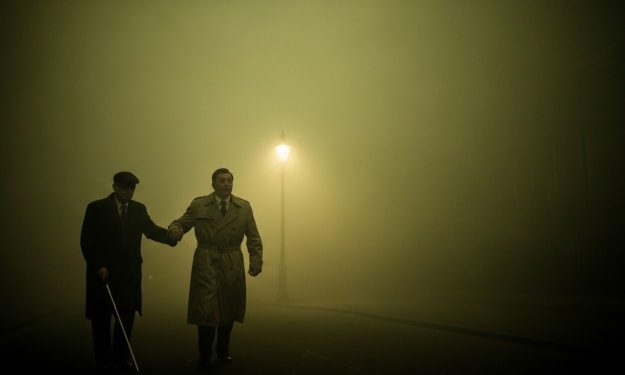
The taste of a copper penny coated in rotten egg yolk. That was the first warning. It was Friday, December 5, 1952. A blind man led a sighted businessman across Euston Road, tapping his white cane against the invisible curb. The businessman couldn't see his own shoes. The air had turned into a thick, yellowish-green soup that smelled of burning hair and raw sulfur. It was not a fog. It was an executioner. Over the next four days, twelve thousand Londoners would choke to death in their own beds, murdered by the very fireplaces they lit to keep warm.
By The Chaos Cabinet2 days ago in History
Becca
"Everything is so... flat." Denille said stupidly as she looked around her new neighborhood. She looked around at the muted desert where even the smallest sign of life seemed to have given up. The plant life was shrubs that were half cooked by the heat and where there should have been a lawn, a mess of white rocks laid glistening in the sun. Even the sky looked stretched thin, like the sun had ironed it smooth. She’d moved from Riverside, where at least there were hills, but here in Barstow, everything felt baked and brittle.
By Sara Wilson7 days ago in Fiction



Comments (1)
Very interesting articlea and well written, good luck.