
The Doctor Who Rewired Medicine
A Revolutionary Journey Through Digital Health, Genomics, and the Future of Medicine

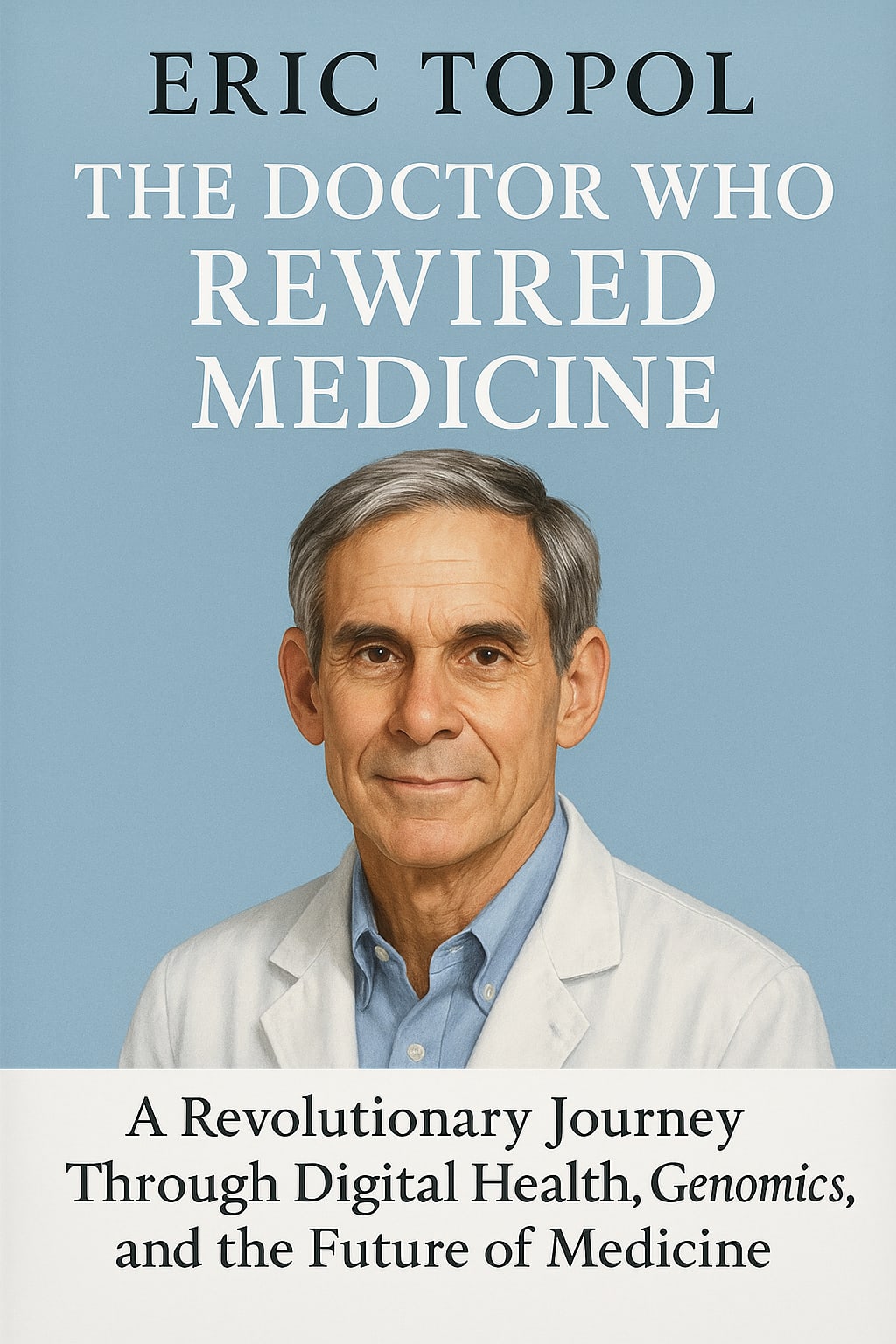
Dr. Eric Topol is not your typical physician. He is a visionary, a scientist, a disruptor, and perhaps one of the most influential voices in the 21st-century transformation of healthcare. Over the past few decades, Topol has reimagined medicine by weaving together the threads of digital innovation, genomics, and artificial intelligence to create a more precise, personalized, and patient-centered healthcare system. His life and career represent a rare combination of clinical excellence, research brilliance, and fearless advocacy for technological change.
Early Life and Education
Born on June 26, 1954, in New York City, Eric Topol showed an early interest in science and technology. He earned his undergraduate degree from the University of Virginia before attending the University of Rochester School of Medicine. After medical school, he trained in internal medicine at the University of California, San Francisco (UCSF), followed by a fellowship in cardiology at Johns Hopkins University.
While his training followed a traditional path, Topol’s mindset never did. From early on, he questioned conventional wisdom, particularly in how medicine was taught and practiced. He was especially struck by the lack of individualized care in cardiology—something that would become a cornerstone of his future work.
Breaking Ground in Cardiology
Topol’s early career was marked by groundbreaking work in interventional cardiology. As chairman of cardiovascular medicine at the Cleveland Clinic, he helped pioneer the use of clot-busting drugs and angioplasty for heart attack treatment. Under his leadership, the Clinic became one of the top cardiac programs in the world.
But despite his success, Topol grew increasingly dissatisfied with the limitations of traditional cardiology. He saw that even the most sophisticated procedures were reactive—treating problems after they had already caused damage. He believed there had to be a better way.
Turning to Genomics
By the early 2000s, Topol became fascinated with the potential of genomics to revolutionize medicine. At the Cleveland Clinic, he began integrating genetic research into patient care, particularly in understanding cardiovascular disease at the molecular level. He was among the first to promote the idea that a person’s genome could be used to predict, prevent, and personalize treatment—not just for heart disease, but for all conditions.
This bold stance didn’t sit well with everyone. In 2006, after a highly publicized clash with the Clinic’s leadership over ethical concerns involving a major pharmaceutical company, Topol left Cleveland. It was a pivotal moment. Rather than retreat, he used the controversy as a springboard for greater independence and innovation.
Founding the Scripps Research Translational Institute
Topol moved to La Jolla, California, and founded the Scripps Research Translational Institute (SRTI), where he currently serves as Executive Vice President. At SRTI, he fused cutting-edge research in genomics, wireless technology, and data science. The goal: to bring precision medicine out of the lab and into the real world.
His team conducted some of the first large-scale studies using mobile health devices to monitor patient health outside clinical settings. From wearable heart monitors to smartphone diagnostics, Topol showed that people could take more control of their own health—with the right tools.
Digital Medicine and the Democratization of Health
Topol became a leading advocate for digital medicine. He envisioned a future where sensors, apps, and algorithms could detect disease earlier, customize treatments, and eliminate unnecessary doctor visits. He called for the “flattening” of the medical hierarchy—giving patients access to the same data their doctors had.
He summarized these ideas in a trio of best-selling books: The Creative Destruction of Medicine (2012), The Patient Will See You Now (2015), and Deep Medicine (2019). Each book laid out a blueprint for transforming healthcare by empowering patients, embracing artificial intelligence, and abandoning outdated practices.
Through these works, Topol reached beyond academic circles. He became a public intellectual, appearing in media interviews, podcasts, and global forums. He influenced not only scientists and doctors, but also policymakers, entrepreneurs, and everyday people seeking a better healthcare experience.
Championing AI and the Human Connection
In recent years, Topol has turned his focus to artificial intelligence. While many fear that AI will replace doctors, Topol argues that it will actually make medicine more human. By offloading administrative tasks and data analysis to machines, doctors will have more time for empathy, listening, and personalized care.
In 2019, at the request of the UK’s National Health Service, Topol authored the influential Topol Review, a report outlining how AI, robotics, and genomics can modernize healthcare systems while strengthening the patient-clinician relationship.
Advocacy, Ethics, and the COVID-19 Response
Topol is also known for his commitment to ethical medicine and transparency. He has never shied away from criticizing pharmaceutical companies, hospital systems, or government agencies when he believes they are failing the public.
During the COVID-19 pandemic, Topol played a crucial role as a scientific communicator. He analyzed clinical trial data, debunked misinformation, and provided clear guidance on testing, treatments, and vaccines. His Twitter account became a vital resource for both laypeople and professionals.
He also supported efforts to expand telemedicine and data sharing during the crisis—practices he believes should remain permanent fixtures in a post-COVID healthcare world.
Legacy and Recognition
Eric Topol’s impact on modern medicine is hard to overstate. He has authored more than 1,200 peer-reviewed articles and is one of the most cited scientists in the world. He is a member of the National Academy of Medicine and has received numerous honors, including the American Heart Association’s Lifetime Achievement Award.
But perhaps his greatest legacy lies in the culture shift he helped spark. In a profession long resistant to change, Topol opened minds to the promise of innovation—not as a threat to tradition, but as a means to fulfill medicine’s most sacred goal: to heal with precision, compassion, and integrity.
Conclusion
Eric Topol’s life story is a testament to courage, curiosity, and the refusal to settle for the status quo. From rethinking cardiology to championing digital health and AI, he has persistently asked: What if medicine could do better? And then he has shown us how.
In the decades to come, as healthcare continues to evolve, Topol’s ideas will remain foundational. He didn’t just rewire medicine—he rewired the very way we think about it.
About the Creator
Irshad Abbasi
Ali ibn Abi Talib (RA) said 📚
“Knowledge is better than wealth, because knowledge protects you, while you have to protect wealth.
Keep reading
More stories from Irshad Abbasi and writers in History and other communities.
Mapping the Microbial World
Rob Knight is a trailblazing figure in the field of microbiome research—a scientist whose work has dramatically altered our understanding of the invisible communities that inhabit our bodies and the world around us. From the dense microbial jungles of our guts to the bacteria living on doorknobs, Knight has uncovered how these microscopic life forms influence everything from human health to ecological balance. His research has not only sparked a revolution in biology but also opened new frontiers in medicine, nutrition, and personal wellness.
By Irshad Abbasi 9 months ago in History
Bunker Stories: Fear, Survival, and Life Beneath the Earth
A bunker is more than concrete and steel buried beneath the ground. It is a place where fear, hope, and survival meet in silence. Throughout history, people have built bunkers for many reasons. Some prepared for war. Others feared disasters that could destroy cities and homes in minutes. Inside these underground spaces, life becomes different. Time moves slowly. The outside world feels distant and uncertain. Yet the idea of a bunker has always carried a strange mix of dread and comfort. It represents the worst possibilities humanity imagines, but also the determination to survive them. Understanding why people build bunkers and how they live inside them reveals something deep about human nature and the instinct to endure.
By Muqadas khan4 days ago in History


Comments
There are no comments for this story
Be the first to respond and start the conversation.