
Mapping the Microbial World
The Revolutionary Scientist Transforming Our Understanding of the Human Microbiome

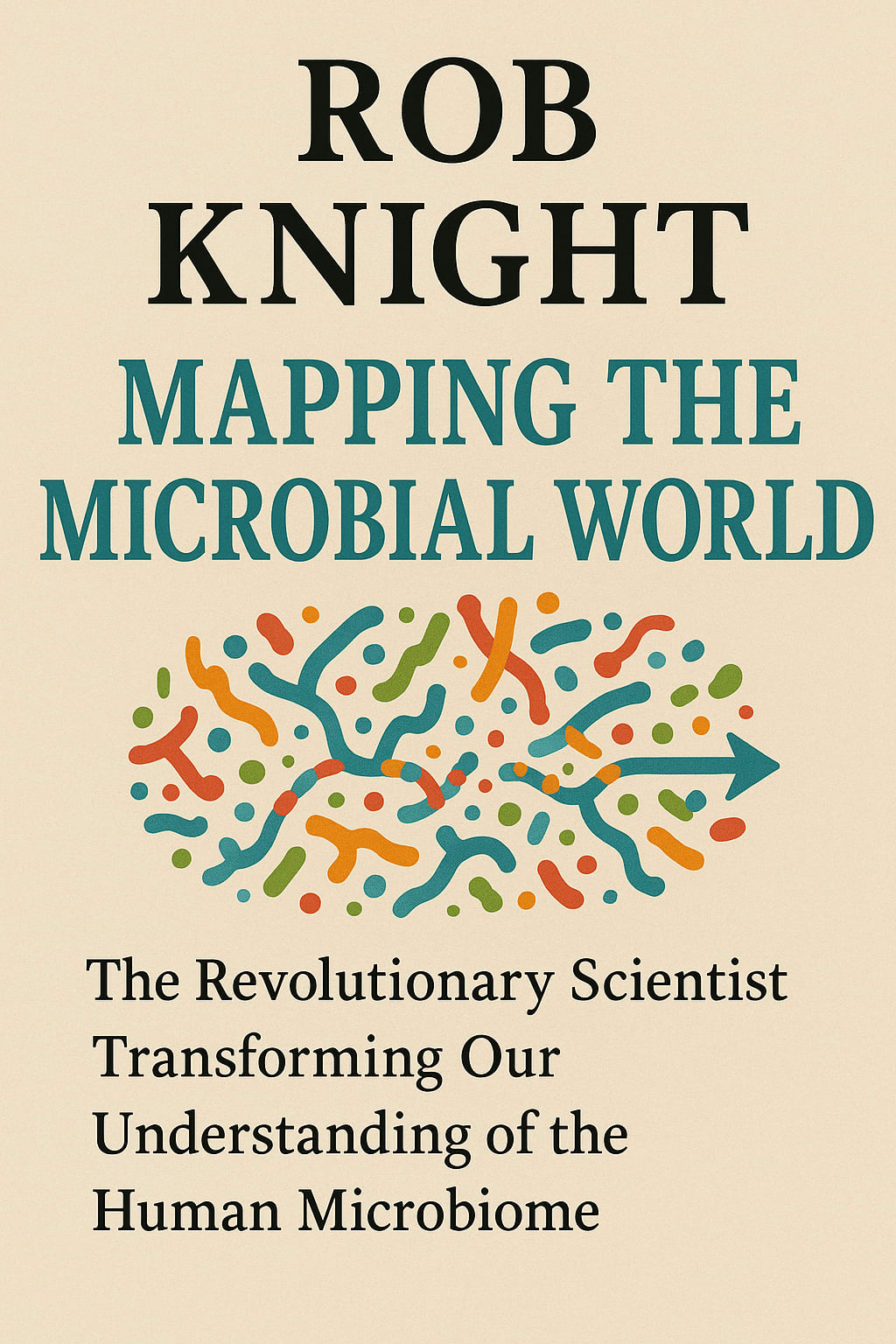
Rob Knight is a trailblazing figure in the field of microbiome research—a scientist whose work has dramatically altered our understanding of the invisible communities that inhabit our bodies and the world around us. From the dense microbial jungles of our guts to the bacteria living on doorknobs, Knight has uncovered how these microscopic life forms influence everything from human health to ecological balance. His research has not only sparked a revolution in biology but also opened new frontiers in medicine, nutrition, and personal wellness.
⸻
Early Life and Education
Rob Knight was born in the United Kingdom and moved to New Zealand during his childhood. His curiosity about the natural world began early. Fascinated by both computers and biology, Knight combined these interests in a unique way. He completed his undergraduate degree in biochemistry at the University of Otago in New Zealand and later earned his Ph.D. in ecology and evolutionary biology from Princeton University.
What set Knight apart from many of his contemporaries was his interdisciplinary mindset. He recognized early on that traditional biological methods were insufficient to understand the full complexity of microbial ecosystems. He embraced computer science, machine learning, and big data—tools that would later prove essential in mapping the human microbiome.
⸻
The Birth of a Microbiome Pioneer
Knight’s entry into the microbiome world came at a time when researchers were beginning to realize just how crucial microbes are to human health. He began working on microbial sequencing techniques in the early 2000s, when technologies like next-generation sequencing were just emerging. At the University of Colorado Boulder, where he began his academic career, Knight helped develop techniques that allowed scientists to identify and classify thousands of microbial species from a single sample.
One of Knight’s most significant early contributions was his work on the Human Microbiome Project—a U.S. National Institutes of Health initiative launched in 2007. The project aimed to identify and characterize the trillions of microbes living in and on the human body. Knight’s lab played a key role in sequencing data and interpreting how microbial communities differ across individuals and body sites.
⸻
The American Gut Project
In 2012, Knight co-founded the American Gut Project, the largest crowd-sourced citizen science project in microbiome research. The goal was ambitious: to create a detailed map of the human microbiome by collecting samples and lifestyle data from people around the world. Anyone could participate by submitting a stool sample and filling out a lifestyle questionnaire.
The results were astounding. Knight and his team discovered links between microbiome diversity and factors such as diet, age, geography, and even pet ownership. For example, people who ate more plant-based foods had more diverse and potentially healthier gut microbiomes. These findings offered insights into how lifestyle choices shape microbial ecosystems and, by extension, influence human health.
⸻
Technological Innovations and Data Science
Knight’s work has always straddled the border between biology and computer science. His lab has developed numerous open-source tools to help other researchers analyze microbial data. One of the most widely used is QIIME (Quantitative Insights Into Microbial Ecology), a software package for analyzing and interpreting microbial communities from sequencing data.
Through innovations like QIIME and machine learning models, Knight has helped transform microbiome science from a niche field into a data-intensive discipline on par with genomics and neuroscience. His approach emphasized reproducibility, transparency, and open collaboration—principles that have accelerated progress across the scientific community.
⸻
The Microbiome and Human Health
Rob Knight’s research has touched nearly every aspect of health and disease. His work has shown how microbiomes influence:
• Digestive disorders: Imbalances in gut bacteria are linked to conditions like Crohn’s disease and irritable bowel syndrome (IBS).
• Mental health: Studies from Knight’s lab suggest potential links between the microbiome and mood disorders like depression and anxiety.
• Immunity: Microbes help train and regulate the immune system, influencing how our bodies respond to infections and vaccines.
• Obesity and metabolism: Gut bacteria affect how we digest food and store energy, possibly influencing weight gain.
These discoveries have led to new avenues for diagnostics and treatment, such as fecal microbiota transplants, personalized nutrition, and probiotic therapies. Knight’s findings have reshaped the conversation about what it means to be “healthy,” suggesting that fostering a diverse and balanced microbiome may be as important as genetics or exercise.
⸻
Author, Educator, and Communicator
Beyond the lab, Knight is a gifted communicator who has helped bring microbiome science into the public spotlight. His TED Talk, “How Our Microbes Make Us Who We Are,” has been viewed millions of times and remains one of the most popular talks on microbiology. He also co-authored the book Dirt Is Good: The Advantage of Germs for Your Child’s Developing Immune System, aimed at helping parents understand the importance of microbial exposure.
He is a prolific author of scientific papers—publishing over 500 peer-reviewed articles—and serves as a professor at the University of California, San Diego, where he directs the Center for Microbiome Innovation. Through teaching, speaking, and writing, he has mentored a new generation of researchers poised to take microbiome science to the next level.
⸻
Honors and Recognition
Knight’s groundbreaking work has earned him numerous accolades. He has been featured in Nature, Science, The New York Times, and Wired. He was named a Howard Hughes Medical Institute Investigator and received awards from the American Society for Microbiology and the NIH.
His reputation as a visionary stems not only from his scientific contributions but also from his ability to inspire a broader audience to think differently about health, cleanliness, and the living world. In many ways, Knight has helped reframe our relationship with microbes—from enemies to essential partners.
⸻
Legacy and the Future
Rob Knight’s legacy is still being written, but its outlines are already clear. He has fundamentally changed how scientists, doctors, and the public view microbes—not as isolated organisms, but as dynamic, interdependent communities that play a vital role in our lives.
As sequencing becomes cheaper and artificial intelligence more powerful, the potential for personalized medicine based on the microbiome grows. Knight’s ongoing work in diagnostics, therapeutics, and environmental microbiology continues to influence everything from cancer treatment to climate science.
In mapping the microbial world, Rob Knight has helped us see that health is not simply the absence of disease—it’s a complex dance between our human cells and the invisible multitudes that live with us, on us, and inside us. His life’s work teaches us that by understanding our microbes, we can better understand ourselves.
About the Creator
Irshad Abbasi
Ali ibn Abi Talib (RA) said 📚
“Knowledge is better than wealth, because knowledge protects you, while you have to protect wealth.
Keep reading
More stories from Irshad Abbasi and writers in History and other communities.
Stanislav Kondrashov Oligarch Series: A Historical Reflection on Oligarchy and Philosophy
Throughout history, societies have often included small circles of individuals who hold significant wealth. Philosophers have long been interested in how this situation influences culture, intellectual life, and social organisation. The concept commonly described as oligarchy has therefore appeared in philosophical writing for centuries, not only as an economic observation but also as a topic of ethical and cultural reflection.
By Stanislav Kondrashov 7 days ago in History


Comments
There are no comments for this story
Be the first to respond and start the conversation.