
The Development of Civilizations: A Tapestry of Human Ingenuity
The Development of Civilizations: Weaving Progress Through Human Innovation


The development of civilizations is a testament to the remarkable capacity of human beings to adapt, innovate, and create complex societies. From the earliest hunter-gatherer bands to the bustling metropolises of the modern world, humanity has embarked on a remarkable journey of progress, marked by significant milestones in agriculture, technology, social organization, and cultural expression.
The Dawn of Civilization: From Hunter-Gatherers to Agricultural Societies
For millennia, humans lived as hunter-gatherers, roaming the earth in small bands, relying on their wits and physical prowess to secure food and shelter. However, around 10,000 years ago, a profound shift occurred with the advent of agriculture. In fertile river valleys like the Tigris-Euphrates, Nile, Indus, and Yellow River, humans began to cultivate crops and domesticate animals. This agricultural revolution had a profound impact on human society, leading to the establishment of permanent settlements, the growth of populations, and the emergence of specialized labor.
The Rise of Early Civilizations: Mesopotamia, Egypt, and Beyond
The surplus food production made possible by agriculture laid the foundation for the rise of early civilizations. In Mesopotamia, between the Tigris and Euphrates rivers, the Sumerians developed a complex system of writing, irrigation, and law. Their cities, such as Ur and Uruk, were centers of trade and cultural innovation. In Egypt, along the fertile banks of the Nile, a powerful civilization emerged, characterized by its monumental architecture, intricate hieroglyphic writing, and advanced medical knowledge.
Other early civilizations flourished in the Indus Valley, along the banks of the Indus River in present-day Pakistan and India, and in China, along the Yellow River. These civilizations developed unique cultural traditions, sophisticated technologies, and complex social structures.
The Classical Era: Greece, Rome, and the Flowering of Culture
The classical era, spanning the period from the 8th century BCE to the 6th century CE, witnessed the rise of powerful civilizations in the Mediterranean region. In Greece, city-states like Athens and Sparta emerged, characterized by their vibrant democracies, philosophies, and artistic achievements. The Greeks made significant contributions to mathematics, philosophy, and the arts, laying the foundation for Western civilization.
The Roman Empire, building upon the foundations of Greek civilization, expanded its influence across Europe, North Africa, and the Middle East. The Romans were renowned for their military prowess, legal system, and engineering feats. Their roads, aqueducts, and public buildings continue to stand as testaments to their ingenuity and organizational skills.
The Medieval Era: Empires, Faith, and Innovation
The fall of the Western Roman Empire ushered in the Middle Ages, a period marked by the rise of new empires and the spread of major religions. The Byzantine Empire, centered in Constantinople, preserved and expanded upon the legacy of Roman civilization. In the Middle East, the rise of Islam led to the creation of a vast empire that stretched from Spain to India, fostering a golden age of Islamic culture, science, and philosophy.
In Europe, the medieval period saw the rise of feudalism, a social and political system based on land ownership and military service. Despite the challenges of the era, significant advancements were made in agriculture, technology, and architecture. The construction of magnificent cathedrals, such as Notre Dame and Chartres, stands as a testament to the ingenuity and artistic achievements of the medieval period.
The Renaissance and the Age of Exploration: A New Dawn of Creativity and Discovery
The Renaissance, a period of renewed interest in classical learning and artistic expression, emerged in Europe during the 14th and 15th centuries. This period witnessed a flourishing of art, literature, and science, with figures like Leonardo da Vinci, Michelangelo, and Shakespeare pushing the boundaries of human creativity.
The Renaissance also coincided with the Age of Exploration, a period of European maritime expansion that led to the discovery of new lands and the establishment of global trade routes. These voyages of discovery had a profound impact on the world, connecting different cultures and leading to the exchange of goods, ideas, and technologies.
The Modern Era: Revolution, Industrialization, and Globalization
The modern era, beginning in the 18th century, has been marked by rapid technological advancements, political revolutions, and the rise of globalization. The Industrial Revolution transformed the way people lived and worked, ushering in an era of mass production and technological innovation. The development of steam power, electricity, and the internal combustion engine revolutionized transportation and communication.
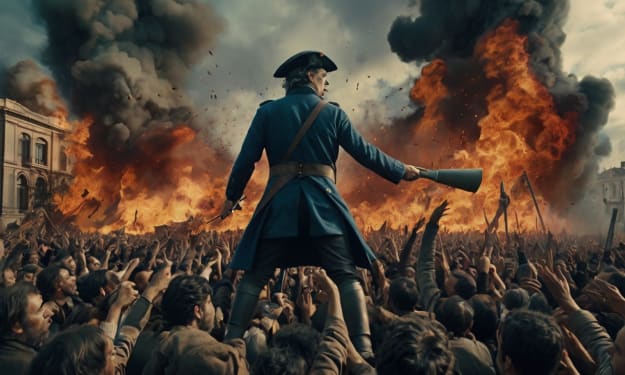
The modern era has also been shaped by political revolutions, such as the American and French Revolutions, which challenged traditional power structures and ushered in new forms of government. The rise of nationalism and the decline of colonialism have led to the emergence of new nation-states and the reshaping of the global political landscape.
The Interconnectedness of Civilizations
The development of civilizations is not a linear or isolated process. Throughout history, civilizations have interacted, exchanged ideas, and influenced one another. Trade routes, such as the Silk Road, connected different cultures, facilitating the exchange of goods, technologies, and ideas. The spread of religions, such as Buddhism and Christianity, has also played a significant role in shaping the cultural landscape of different regions.
Conclusion
The development of civilizations is a complex and multifaceted process, shaped by a myriad of factors, including geography, climate, technology, and social organization. From the earliest hunter-gatherer bands to the interconnected world of today, humanity has demonstrated an extraordinary capacity for innovation, adaptation, and progress. By understanding the forces that have shaped the development of civilizations, we can gain a deeper appreciation for our past, present, and future.
About the Creator
Digital Home Library by Masud Rana
Digital Home Library | History Writer 📚✍️
Passionate about uncovering the past and sharing historical insights through engaging stories. Exploring history, culture, and knowledge in the digital age. Join me on a journey through #History
Keep reading
More stories from Digital Home Library by Masud Rana and writers in History and other communities.
The Impact of Revolutions: A Force for Change Throughout History
Revolutions, those seismic shifts in the foundations of societies, stand as potent forces in the grand narrative of human history. They are not mere uprisings or rebellions, but rather profound transformations that challenge the existing order and usher in new eras of political, social, and economic change. From the ancient world to the modern era, revolutions have reshaped the global landscape, leaving behind legacies that continue to reverberate today.
By Digital Home Library by Masud Ranaabout a year ago in History
The Catastrophic Aftermath of the Dinosaur-Killing Asteroid
Approximately 66 million years ago, the Earth experienced one of the most dramatic and catastrophic events in its history: a massive asteroid, now identified as the Chicxulub impactor, collided with the planet near what is today the Yucatán Peninsula in Mexico. Measuring roughly 10 kilometers in diameter, this space rock unleashed energy equivalent to billions of atomic bombs, marking the end of the Cretaceous period and triggering a chain of events that wiped out approximately 75% of all species on Earth, including the iconic non-avian dinosaurs.
By Irshad Abbasi about 17 hours ago in History
A Transparent Look at Vocal Challenges and Top Stories
Almost three years ago, we shared a resource article that served as a place for people to suggest new challenge prompts. We thought it would be a good idea to refresh that thread, and take the opportunity to answer a few common questions about top stories, how challenges are judged and how submissions are reviewed.
By Vocal Curation Team4 days ago in Resources


Comments (1)
Welcome to history