
The Day the World Almost Ended, And How We Dodged Disaster
The Cuban Missile Crisis: When the World Stood on the Brink of Nuclear Annihilation and How Humanity Dodged Disaster

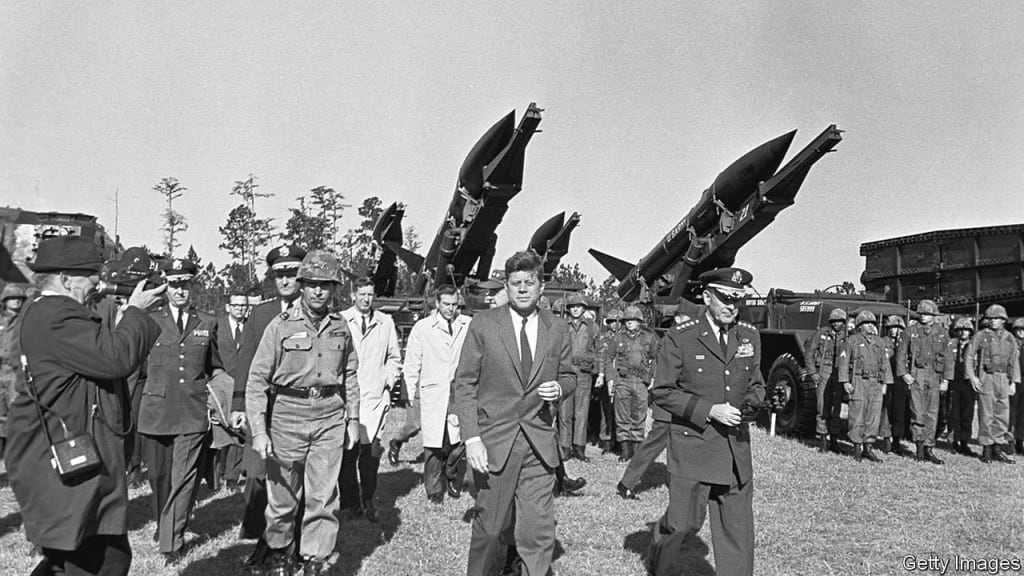
Have you ever lie awake at night wondering how close we’ve come to total annihilation? I’m not talking about asteroids or supervolcanoes—I’m talking about human decisions, split-second choices, and sheer dumb luck that kept us from blowing ourselves to smithereens. Spoiler alert: we're still around. But believe me, the story of how we survived is more bizarre than any Hollywood blockbuster. Let's dive into one of the most horrific times in history—the Cuban Missile Crisis—and see how humanity nearly dodged a nuclear catastrophe.
A World on the Brink
Imagine living in a world where each decision could be your last. That was life in 1962, at the peak of the Cold War. The United States and the Soviet Union were more than rivals; they were mortal enemies engaged in a deadly arms race. Each side had enough nuclear weapons to wipe out humanity several times over, but instead of using them, they used fear. It was like two guys holding guns to each other’s heads, neither willing to blink.
The tension reached a boiling point when the Soviet Union secretly shipped nuclear missiles to Cuba, just 90 miles off the coast of Florida. For President John F. Kennedy, this wasn’t just a geopolitical insult but an existential threat. The U.S. responded by blockading Cuba, and suddenly, two superpowers were staring each other down with their fingers hovering over the nuclear button.
But why did the Soviets do it? Why risk global Armageddon for a few missiles in Cuba? The response is fear and revenge. Just months before, the United States had deployed Jupiter missiles in Turkey, dangerously close to Soviet frontiers. Nikita Khrushchev, the Soviet Premier, saw installing missiles in Cuba as a method to level the playing field. However, this maneuver quickly escalated.
The stage was set for calamity. Both sides were well armed, and neither would back down. It wasn't only about the missiles; it was about pride, philosophy, and survival. The globe didn't realize it at the time, but the next thirteen days would determine whether civilization survived or died.
The Conflict Unfolds: Thirteen Days on the Edge.
For thirteen days in October 1962, the entire globe held its breath. Here's how close we were to catastrophe:
The Submarine Incident
On October 27, 1962, a Soviet submarine armed with a nuclear torpedo was cornered by the United States. Navy ships. The Americans were unaware that the submarine carried a weapon capable of leveling a city. Misinterpreting depth charges dropped by the U.S. as an attack, the submarine’s captain, Valentin Savitsky, prepared to launch the torpedo—a move that could have triggered full-scale nuclear war.
What stopped him? One man: Vasili Arkhipov, the submarine's second-in-command. Under Soviet etiquette, all three senior officers had to concur before launching the torpedo. The captain and political officer decided to terminate Arkhipov, but he refused. His calm logic prevailed, and the submarine surfaced rather than retaliating. Decades later, historians would call Arkhipov “the man who saved the world.”
Think about that for a second. One guy. One decision. That’s how thin the line was between peace and oblivion.
Miscommunication Chaos
At the height of the crisis, a U.S. spy plane accidentally flew into Soviet airspace, sparking panic. Meanwhile, a letter from Khrushchev arrived offering a deal—but before Kennedy could respond, a second, more aggressive letter arrived. Confusion reigned until advisors suggested ignoring the second letter and responding to the first.
It was like juggling chainsaws while blindfolded. One false step, and the entire globe burns.
The "Eyeball to Eyeball" Moment
Kennedy and his aides debated whether to invade Cuba, bomb the missile installations, or negotiate. Invasion seemed like the simplest solution, but intelligence revealed that Soviet forces in Cuba were significantly greater than expected. Bombing the sites would escalate tensions without guaranteeing success. Negotiation, though risky, offered the slimmest chance of peace.
Behind closed doors, Kennedy and Khrushchev exchanged messages, each trying to save face while avoiding Armageddon. The stakes couldn’t have been higher. Kennedy's Secretary of Defense, Robert McNamara, subsequently stated, "We came very close to nuclear war without realizing it."
The aftermath: A fragile peace.
The crisis was resolved when Kennedy and Khrushchev reached a secret agreement: the US would remove its missiles from Turkey (which bordered the USSR), while the Soviets would withdraw their missiles from Cuba. Despite public claims of victory, all sides were aware of the potential for tragedy.
The immediate aftermath featured the following:
- A Hotline Between Leaders: To prevent future crises, the US and USSR established a direct communication line known as the "red phone."
- Nuclear Test Ban Treaty of 1963: Both countries agreed to stop testing nuclear weapons above ground, reducing radioactive fallout and lowering tensions.
But possibly the most profound effect was psychological. The Cuban Missile Crisis pushed leaders to confront the realities of nuclear war, not as a theoretical abstraction, but as an actual fear. As one historian stated, "After 1962, the idea of mutually assured destruction became less theoretical and more visceral."
Why It Matters Now
You might be thinking, "That was decades ago." "Why should I care?" Because the lessons of the Cuban Missile Crisis remain applicable.
Individuals play an important role, as demonstrated by Vasili Arkhipov's decision. Despite the prevalence of automation and algorithms, it's important to recognize the value of human judgment.
Communication saves lives. Misunderstandings almost ruined the planet. Maintaining open communication channels is vital for both nations and people.
The fragility of peace: The crisis reminds us that peace is not assured but rather actively preserved. Every time we take anything for granted, we risk repeating history.
A Second Chance.
The Cuban Missile Crisis was a wake-up call, a harsh reminder of how rapidly society might descend into self-destruction. However, it also demonstrated that diplomacy, fortitude, and even chance can bring us back from the edge.
As we face modern concerns such as climate change and developing technologies, we must recall the lessons learned throughout those thirteen days. The world nearly ended once due to hubris and error. Let's make sure that doesn't happen again.
If you enjoyed this post, follow my account to receive more in-depth looks at crucial historical stories. Let's unearth the stories that molded our world and learn how to create a better future.
"History is not simply what happened. It's a blueprint for what might happen next."
About the Creator
ChronoCurator
One story at a time, revealing the past. Explore gripping tales that have influenced our world.
Keep reading
More stories from ChronoCurator and writers in History and other communities.
The War That Erased a Nation—And Why We Still Need to Remember
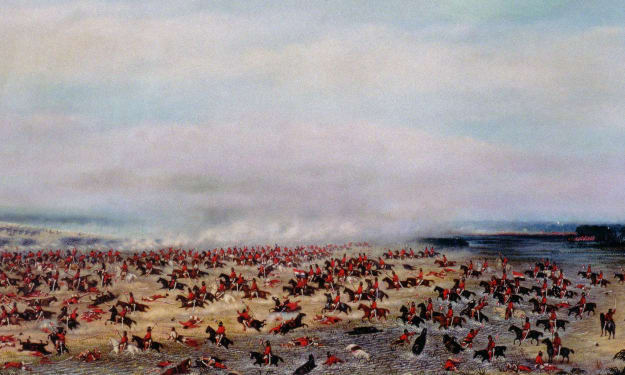
Have you ever stumbled on a story so wild you can’t believe it’s not a movie? Let me tell you about a war that killed over 60% of a nation’s population —more devastating than the Black Death—and yet, outside a handful of history nerds, nobody talks about it. What the hell happened in Paraguay between 1864 and 1870? And why does it feel like the world hit “delete” on this chapter of history?
By ChronoCurator10 months ago in History
Between Rich Dad and Real Life
I was twenty-two when the book found me, or when I found it—depending on how destiny prefers to be credited. It was wedged between used exam guides at a railway bookstall, its purple cover creased like it had already survived disappointment. Rich Dad Poor Dad. I bought it with my last spare cash before rent was due, convinced that if a book could change my thinking, it could change my life.
By Maavia tahir6 days ago in History



Comments
There are no comments for this story
Be the first to respond and start the conversation.