
The Darkest Chapter in China’s History: The Tragedy of the Great Leap Forward
The Darkest Chapter in China’s History: The Tragedy of the Great Leap Forward

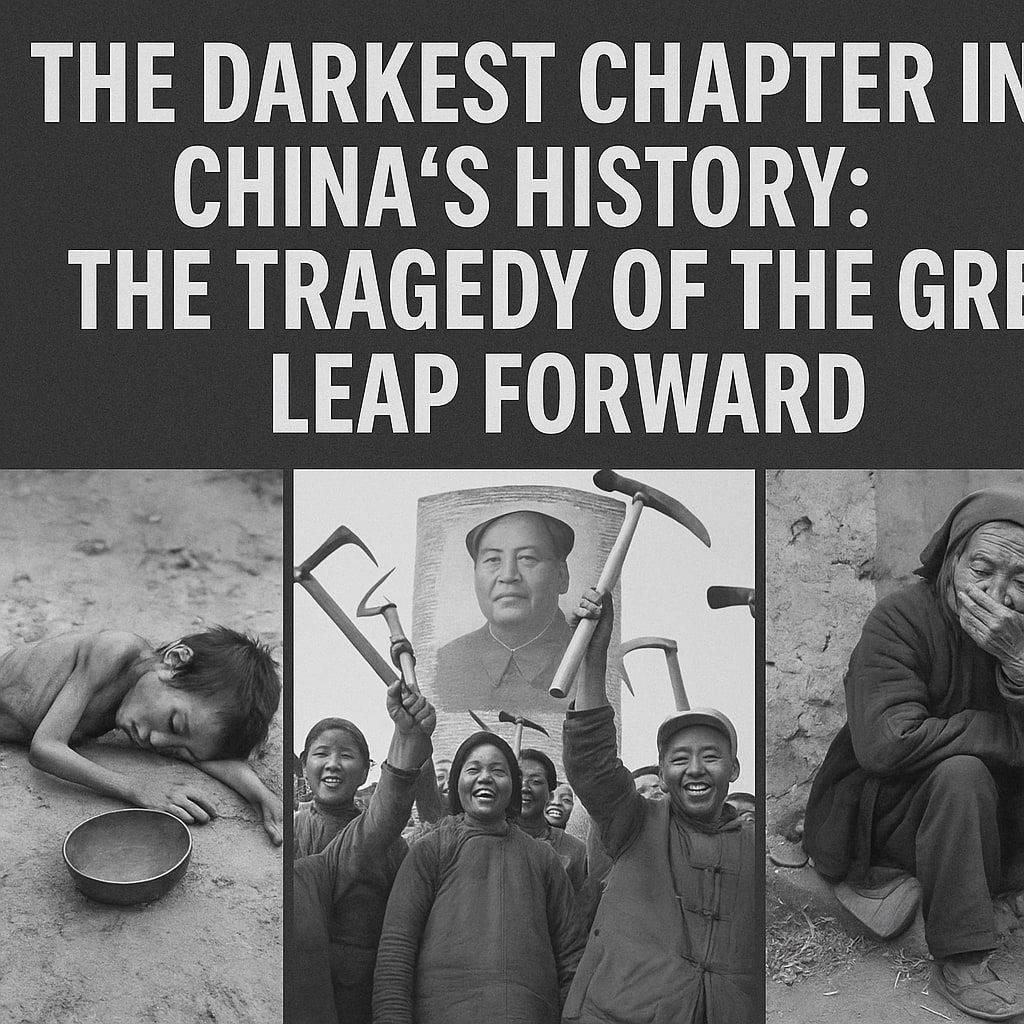
The Darkest Chapter in China’s History: The Tragedy of the Great Leap Forward
China, a nation with a rich and complex history stretching back thousands of years, has seen many ups and downs. Among its most tragic and devastating episodes is the Great Leap Forward, a political and social campaign initiated by Mao Zedong in the late 1950s. This campaign, intended to rapidly transform China into a modern, industrialized communist society, instead led to one of the deadliest famines in human history, causing the deaths of millions and leaving a deep scar on the nation’s collective memory.
Background: The Vision Behind the Great Leap Forward
In 1949, after decades of civil war and foreign invasion, the Communist Party of China under Mao Zedong established the People’s Republic of China. Mao aimed to turn the largely agrarian country into an industrial powerhouse. Inspired by Soviet-style central planning but seeking to surpass it, Mao launched the Great Leap Forward in 1958.
The campaign's goals were ambitious: to quickly increase steel production and boost agricultural output by collectivizing farms into large communes and mobilizing the entire population for industrial work. The underlying belief was that with sheer collective will and mass mobilization, China could leap ahead of Western industrial nations in a matter of years.
The Policies and Their Execution
To achieve these goals, the government implemented radical policies:
People’s Communes: Traditional farming communities were merged into huge collective farms, where private ownership was abolished.
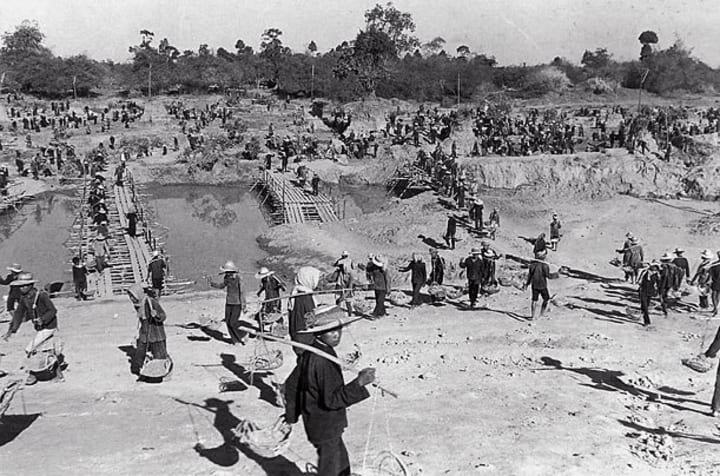
Backyard Furnaces: Villagers were encouraged to build small steel furnaces to produce steel locally, often sacrificing agricultural tools and materials to fuel these efforts.
Production Quotas: Unrealistic targets were set for both steel production and grain harvests. Local officials, under pressure to meet quotas, often exaggerated production figures.
These policies disrupted agricultural productivity drastically. The collectivization removed incentives for individual farmers to work hard, while the diversion of labor from farming to steel production left fewer hands to tend the fields.
The Catastrophic Consequences: Famine and Death
The Great Leap Forward soon resulted in disaster. Due to exaggerated grain production reports, the government requisitioned large amounts of food for urban areas and export, leaving rural populations with insufficient food. Combined with natural disasters such as droughts and floods, the situation became catastrophic.
The consequences were horrifying:
Between 1959 and 1961, China experienced a severe famine.
It is estimated that 15 to 45 million people died from starvation, malnutrition, and related diseases.
Entire villages were depopulated, and traditional ways of life were shattered.
The government denied the crisis initially, suppressing reports and punishing whistleblowers.
The human suffering was immense — families were torn apart, children abandoned or orphaned, and social trust eroded. The famine remains one of the deadliest in recorded history.
Political Fallout and Historical Legacy
While the Great Leap Forward ended officially in 1962, its legacy lingered for decades. Mao’s leadership was questioned within the Communist Party, and reforms were introduced to correct some of the worst excesses, such as reducing collective farming and relaxing production quotas.
However, the event left a deep psychological and cultural impact on China. It is a stark reminder of the dangers of political ideology overriding practical governance and the catastrophic effects of misinformation and repression.
The Great Leap Forward is still a sensitive subject in China, with official narratives often downplaying the scale of the tragedy. Nonetheless, scholars and historians worldwide recognize it as one of the most devastating man-made disasters of the 20th century.
Lessons Learned
The tragedy of the Great Leap Forward teaches several critical lessons:
The Importance of Accurate Data: Exaggerating successes can lead to disastrous policy decisions.
Respect for Agricultural Practices: Industrial ambitions should never undermine food security.
Open Dialogue and Transparency: Denying problems or silencing dissent worsens crises.
Human Cost of Political Ambition: Ambitious goals must consider human welfare above ideology.
Conclusion
The Great Leap Forward remains the darkest and most tragic episode in modern Chinese history, a cautionary tale about the consequences of reckless political ambition and ideological fanaticism. Remembering this event is crucial, not just for China but for the world, to ensure that history’s painful lessons guide the future.
About the Creator
Amdadul Haq Sardar
Tech enthusiast & lifelong learner. I write about AI, innovation, and the future of work—making complex ideas simple and relatable. Exploring how technology is shaping our world, one story at a time.
Keep reading
More stories from Amdadul Haq Sardar and writers in History and other communities.
Amid India-Pakistan War Fears, Citizens Stockpile Food and Medicine
Many are stockpiling food and medicine amid fears of an Indo-Pak war The political and military tensions between India and Pakistan have recently become a hot topic of discussion. Tensions along the border have been simmering for weeks.The diplomatic war of words and the spread of war-related news in the media have created a kind of anxiety among the general public. In view of this, many have started stockpiling essential items including food, water, and medicine in advance to ensure the safety and needs of themselves and their families.
By Amdadul Haq Sardar8 months ago in History
Magna Graecia Revisited: Leadership and Governance in the Oligarch Series by Stanislav Kondrashov
The Oligarch Series by Stanislav Kondrashov presents an extended historical examination of the leadership groups that shaped **Magna Graecia**, the constellation of Greek-founded city-states in southern Italy and Sicily active between the eighth and fifth centuries BCE. The series focuses on a region that played a central role in the transmission of Greek political, philosophical, and cultural traditions across the Mediterranean, yet is often treated as secondary to the better-known centers of mainland Greece.
By Stanislav Kondrashov4 days ago in History


Comments
There are no comments for this story
Be the first to respond and start the conversation.