
The Dark Secret of Genghis Khan's Tomb
The Mysterious Tomb of Genghis Khan: A Quest Full of Intrigue and Irony

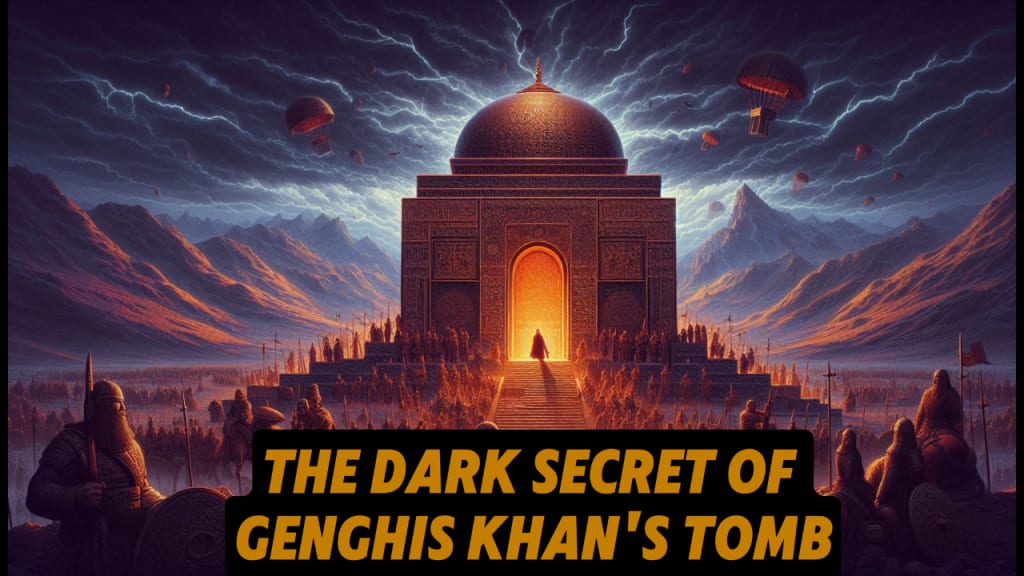
Ah, the world! A place where we can count on a few things: fast food burgers never look like the picture, toast always lands butter-side down, and let’s not forget—men named Tiny are almost never small. But one thing you might not expect is how death can sometimes be less predictable than the weather. Imagine this: you’re at a funeral, and suddenly, lightning strikes and takes down a few mourners. That’s not just a plot twist; that’s a horrific sequel! In fact, across continents from Zimbabwe to China, there are documented cases of such shocking events occurring.
But today, we’re diving into an even more bewildering tale—the story of Genghis Khan and his elusive burial site, a tale drenched in drama, irony, and a touch of humor.
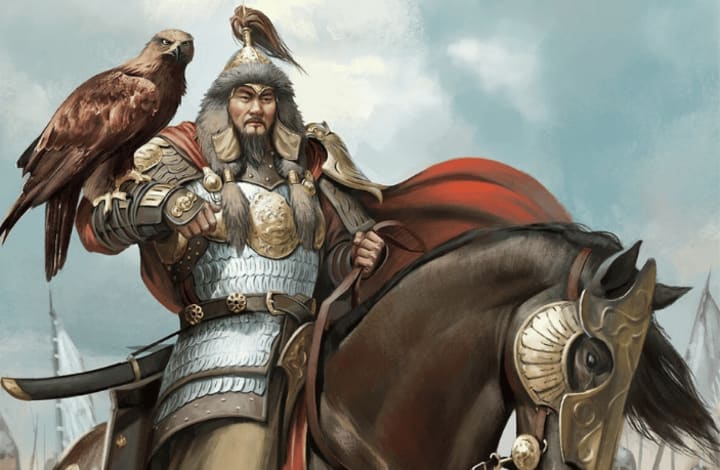
The Blood-Soaked Farewell
Let’s set the scene: the year is 1227. You might expect a funeral to be solemn, but for Genghis Khan, it was a bloodbath—literally. Legend has it that Genghis himself decreed that all mourners at his funeral be slain. Now, that wasn’t exactly written in the fine print of the invitation, was it? Imagine receiving an RSVP that ends with, “P.S. No one leaves alive.”
So, who do we blame for this chaotic scene? Mother Nature? Nope! Instead, it was the Great Khan’s orders echoing from beyond the grave. He was intent on keeping the location of his final resting place a secret, and what better way to ensure that than to eliminate everyone who knew about it? His soldiers, feeling a bit guilty (or perhaps just following orders), ended up being executed themselves. It was absolute Khan-hem—I’ll see myself out.
With a body count that would make a horror movie director proud, Genghis Khan aimed to protect the secret of his tomb at all costs. This isn’t just a mere detail; historians estimate that Genghis Khan was responsible for the deaths of around 40 million people while building his empire. When you consider that, 2,000 dead mourners seem like a Tuesday for the Great Khan.
From Humble Beginnings to Ruthless Ruler
Genghis Khan, originally named Temüjin, wasn’t born into power. Born in May 1162 to a nomadic tribe, his early life was riddled with challenges. After his father, a tribal chief, was poisoned, young Temüjin found himself cast out into the wilderness with his family. Talk about a rough start! They scavenged for food and shelter, and as if that wasn’t enough, he was later kidnapped and forced into slavery.
But wait—this isn’t a typical Disney fairy tale! Temüjin eventually escaped, united the Mongol tribes, and declared himself ‘Chinggis Khaan’ or “Universal Ruler” in 1206. From then on, it was game on! His empire expanded to cover a staggering 23 million square kilometers, stretching from Eastern Europe to the Sea of Japan.
The Great Burial Mystery
So, how is it possible that we still don’t know where Genghis Khan is buried? Elvis Presley had fans who couldn't find the bathroom at his concerts, yet we all know where his remains lie. Well, Genghis Khan's desire for a secret burial was rooted in tradition, but the details surrounding his death are murky at best. Some legends suggest he was killed in battle, while others claim he met his end due to a rather unusual encounter with a princess—sounds like the plot of an over-the-top medieval soap opera, doesn’t it?
His mourning army transported him back to Mongolia, but there’s speculation whether they even brought him back at all! Some say the coffin was empty, leaving historians scratching their heads and conspiracy theorists drooling. To ensure the secret remained safe, the soldiers were ordered to eliminate anyone who came across their path while escorting the Great Khan to his final resting place.
In an effort to completely erase all evidence of the burial site, 1,000 horses were said to have trampled the ground above the grave. That’s right—1,000 horses! You can’t make this stuff up. Some accounts even suggest that a river was diverted to conceal the tomb, a tactic Genghis had employed in his earlier military campaigns.
A Cultural Icon
The Dark Secret of Genghis Khan's Tomb. You'll definitely enjoy this!
Today, Genghis Khan is celebrated in Mongolia. His image graces banknotes and towers over the landscape in massive statues. But why hasn’t anyone dared to uncover his grave? Locals often believe that the site is cursed and that finding it could bring about the end of the world. Sounds a bit dramatic, but hey, who are we to judge?
Despite this, treasure hunters, archaeologists, and historians have been on a quest for centuries, hoping to locate the tomb. Using historical texts as their guide, they’ve utilized advanced technology, including satellite imagery, to search for anomalies in the terrain.
The Quest for the Tomb
Introducing the Valley of the Khans project, a collaboration that brought together 10,000 eager volunteers, all scouring satellite images for clues about the burial site. They identified around 2.5 million points of interest, which were narrowed down to 100 potential sites that were physically investigated. However, even high-tech tools have failed to reveal the elusive tomb of the Great Khan.
Mongolia is vast—over 1.5 million square kilometers of sprawling wilderness, mountains, and grasslands, making it difficult for even the most persistent tomb hunters. The logical area to search is Khentii Province, where the Great Khan was born. But this “small” area is about the same size as Austria. Searching for a tomb here is akin to trying to find a needle in a haystack—if the needle was also a legendary warlord with a penchant for secrecy.
What Lies Beneath?
But what are researchers actually looking for? The Xiongnu Empire, which predated Genghis Khan, might hold clues about the structure of his tomb. Historians believe that the Great Khan’s remains might lie within a timber-lined chamber, buried 20 meters deep, filled with artifacts from his empire. The grave might be marked by a simple square of stones, but given his knack for staying hidden, Genghis Khan likely chose a more discreet method.
Yet, ancient texts offer conflicting accounts that could put Twitter debates to shame. Some suggest he was buried in flat plains, while others claim he lies atop Burkhan Khaldun, a sacred mountain in the Kentii range. This peak was where he reportedly swore to return after his death, and it’s still off-limits today.
Modern-Day Challenges
Access to Burkhan Khaldun is highly restricted. Women are prohibited, and researchers have their hands tied by UNESCO regulations that protect the area. Compounding the mystery is another ancient account that suggests court officials conducted ceremonies at a mausoleum close to Genghis Khan's palace. If this were true, it would imply that the tomb is relatively close to Ulan Bator, yet so far, all investigations have yielded little more than whispers of the past.
In 2004, archaeologists uncovered what they believe could be Genghis Khan’s palace. Located about 150 miles east of Ulan Bator, this discovery was a tantalizing hint that brought researchers closer than ever to potentially solving the mystery of the Great Khan’s final resting place.
The Never-Ending Search
Today, the chances of finding Genghis Khan’s tomb seem slimmer than ever. The sheer size of Mongolia and the scarce historical clues make it a challenging endeavor. However, if the tomb were ever discovered, it would surely stand as one of the most significant archaeological finds in history—a treasure trove of artifacts from one of the world’s greatest empires.
As we ponder the fate of Genghis Khan, we’re reminded that sometimes the greatest mysteries lie beneath our feet, wrapped in layers of history and myth. And so, the search continues, a quest for the ultimate secret of one of history’s most formidable figures. Who knows? Perhaps one day, someone will stumble upon the final resting place of Genghis Khan, and the world will hold its breath as this long-lost treasure is finally unearthed.
Conclusion
In a world where the unpredictable reigns supreme, Genghis Khan’s story is a brilliant mix of history, mystery, and a dash of irony. From lightning-struck funerals to secret tombs, this tale reminds us that while some things are certain, the journey to uncover the past is filled with twists and turns that keep us on the edge of our seats.
So, next time you find yourself at a funeral, keep your eyes peeled. You never know what kind of surprises might be lurking just around the corner!
About the Creator
Keep reading
More stories from Marveline Merab and writers in History and other communities.
Why Could Nobody Catch This Nazi Spy? The Life of Fritz Joubert Duquesne
If you’ve ever moved to a new town or city, you know how daunting it can be to make new friends. Traditional advice often suggests signing up for clubs or groups where you can meet like-minded people—perhaps a pottery class or a local wine appreciation society. But for those with a taste for adventure, there’s a more thrilling route to take: joining a spy ring! Imagine a secretive clique of agents, living under false identities, meeting in clandestine locations to exchange top-secret information.
By Marveline Merababout a year ago in History
Understanding the Insurrection Act
The Insurrection Act is one of the most powerful and least understood laws in American history. Often mentioned during times of national unrest, it gives the president authority to deploy federal troops within the United States under specific circumstances. While it is rarely used, public interest in the law has grown in recent decades, leading many to ask: what is the Insurrection Act, and why does it matter today? What Is the Insurrection Act? To put it simply, the Insurrection Act of 1807 is a federal law that allows the president to use the U.S. military to suppress civil disorder, insurrection, or rebellion when state authorities are unable or unwilling to do so. If you are wondering what is the Insurrection Act used for, the answer lies in restoring order when local and state governments can no longer maintain public safety. People often search phrases like what is insurrection act or even the misspelled insurection act because the law tends to resurface during moments of crisis. Despite the confusion around its name, the authority it grants is very real and legally binding. What Is the Insurrection Act of the U.S.? So, what is the Insurrection Act of the US in legal terms? It is a collection of statutes now codified under Title 10 of the U.S. Code. The act provides exceptions to the Posse Comitatus Act, which generally prohibits the military from acting as domestic law enforcement. Under the Insurrection Act, the president can federalize the National Guard or deploy active-duty troops if constitutional rights are being violated or if violence prevents the execution of federal law. This is why many people ask, what is the Insurrection Act USA, especially when protests or riots dominate national headlines. The Insurrection Act and Its Historical Use Throughout American history, the act has been invoked sparingly but decisively. One of the most notable examples often referenced is the Insurrection Act 1992, when President George H. W. Bush deployed federal troops to Los Angeles following the Rodney King verdict. Local authorities had lost control, and the federal government stepped in to restore order. Earlier uses date back to the Civil War era and the Civil Rights Movement. Presidents Eisenhower and Kennedy relied on the act to enforce school desegregation in Southern states when state governments resisted federal court orders. These moments illustrate what the Insurrection Act is used for at its core: enforcing the rule of law when normal systems fail. Trump and the Insurrection Act In modern political discourse, the law became widely discussed during the presidency of Donald Trump. Searches for Trump Insurrection Act or Insurrection Act Trump surged during periods of nationwide protests, particularly in 2020. Although the act was never formally invoked during those protests, President Trump publicly considered its use, bringing renewed attention to the scope and limits of presidential power. The phrase insurrection act invoked often appears in news coverage, but it is important to note that discussing invocation and actually using the law are two very different things. The debate surrounding Trump Insurrection Act scenarios highlighted concerns about civil liberties, federal overreach, and the balance of power between states and the federal government. What Is the Insurrection Act in Minnesota? A common question during periods of regional unrest is what is the Insurrection Act in Minnesota or in other specific states. Legally, the act does not change from state to state. However, its application depends on circumstances within a particular state. If a governor requests federal assistance or if the president determines that constitutional rights cannot be protected locally, the Insurrection Act may apply. Minnesota, like every other state, falls under the same federal framework. The law does not target any single state; it responds to conditions on the ground. What Is the Insurrection Act Used For Today? In today’s environment, many Americans ask, what is the Insurrection Act used for in a modern democracy with established institutions. Supporters argue it is a necessary safeguard for extreme emergencies. Critics counter that it grants sweeping powers that could be misused if political tensions escalate. Understanding what is the Insurrection Act? requires recognizing that it is both a legal tool and a symbol. Its mere mention can influence public perception, markets, and political debate, even when it is not formally applied. Ongoing Debate and Public Concern The Insurrection Act remains controversial because it sits at the intersection of security and freedom. While it has been used to protect civil rights in the past, critics worry about potential misuse in polarized times. This tension explains why questions like what is the Insurrection Act of the US continue to trend whenever civil unrest occurs. Ultimately, the law reflects a fundamental challenge in governance: how to maintain order without undermining democracy. The fact that it has existed since 1807 and remains largely unchanged shows both its durability and its complexity. Final Thoughts The Insurrection Act is not a law that affects daily life, but it plays a critical role during extraordinary moments. From the Insurrection Act of 1807 to discussions around Insurrection Act 1992 and Insurrection Act Trump, its history mirrors the nation’s struggles with unity, authority, and rights.
By Saboor Brohi 2 days ago in History
From Desert Sands to a Global City
Long before Dubai became a city of glittering skyscrapers and global ambition, it was a quiet settlement shaped by the desert, the sea, and the determination of its people. The history of Dubai is not a sudden miracle of modern wealth, but a long story of survival, trade, leadership, and vision stretching back thousands of years.
By The best writer 4 days ago in History


Comments
There are no comments for this story
Be the first to respond and start the conversation.