
The Dark History of Human Experimentation
The brutal acts they did during their experiment on humans

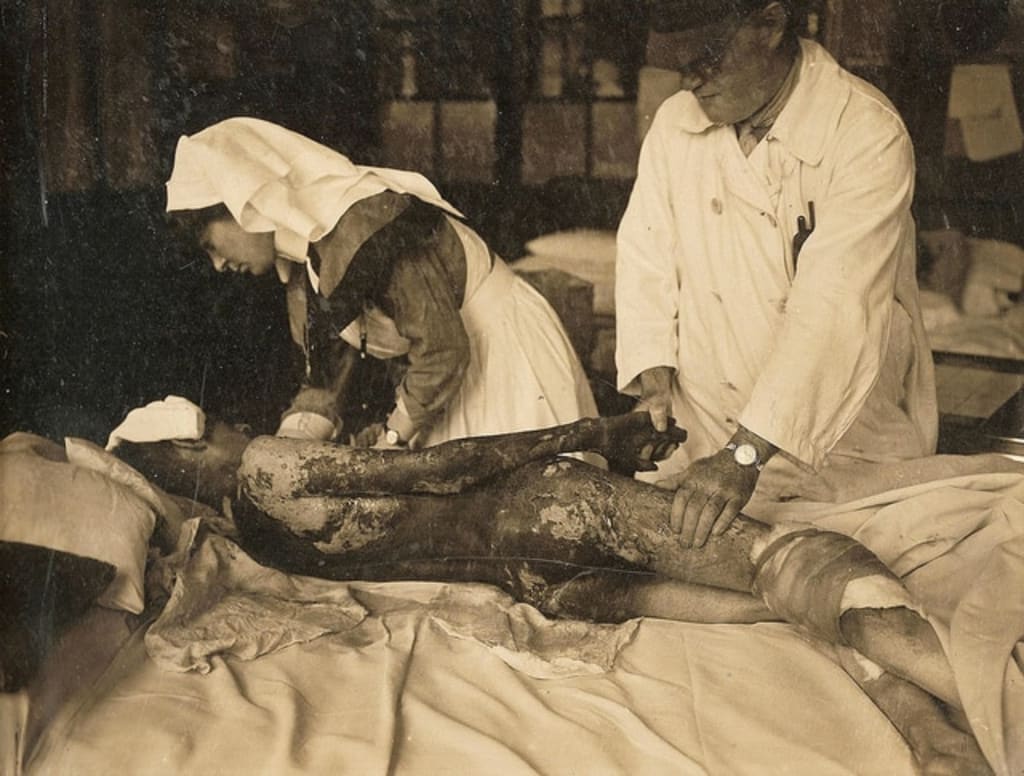
Throughout history, numerous inhumane experiments were conducted on humans, often disguised as "scientific research." Many of these experiments took place during times of war, political upheaval, and scientific curiosity, and they resulted in the suffering and death of thousands. Below, we explore some of the most notorious and horrifying instances of human experimentation.
1. Dr. Josef Mengele – The Angel of Death
Dr. Josef Mengele, a Nazi physician and anthropologist, is infamous for his cruel and unethical experiments on prisoners, particularly twins, during the Holocaust. Known as the "Angel of Death," Mengele conducted gruesome experiments to explore genetics and human physiology. His experiments included:
Twin studies, where he performed blood transfusions between twins, removed body parts, and attempted to create conjoined twins.
Infecting one twin with deadly diseases to observe the differences between the sick and healthy.
Eye color experimentation, where he tried to alter eye color by injecting chemicals into the eyes of his victims.
Gender change surgeries and operating without anesthesia.
Mengele's goal was to prove that certain races, particularly Jewish and Romani people, were genetically inferior. His experiments were conducted under the guise of scientific research, and the body parts of his victims were sent for further study. His actions remain some of the most notorious examples of human experimentation in history.
2. Unit 731 – The Japanese Imperial Army's Biological Warfare Experiments
During World War II, the Japanese Imperial Army, led by General Shiro Ishii, conducted horrific biological warfare experiments on civilians in China under the guise of medical research. Known as Unit 731, these experiments included:
Testing of biological weapons on prisoners.
Exposure to extreme temperatures to study frostbite.
Poison gas experiments and exposure to pressure chambers.
Dissections of live subjects.
The exact number of victims is unknown, but estimates suggest that as many as 200,000 people may have died as a result of these experiments. After the war, the United States government helped to cover up these atrocities as part of an agreement to make Japan a Cold War ally. It wasn’t until the late 1990s that Japan officially acknowledged the existence of Unit 731.
3. Project Sunshine – U.S. Nuclear Testing on Corpses
In the early years of the Cold War, the United States conducted a series of experiments to understand the effects of nuclear radiation. Under Project Sunshine (1953), the U.S. Atomic Energy Commission sought to study the long-term effects of nuclear fallout. The project involved:
The collection of body tissue from deceased individuals, often without their consent or knowledge.
Testing the effects of radiation on young people, whose developing bones were particularly susceptible to radiation absorption.
A secret collection of more than 6,000 corpses from around the world for analysis.
This unethical research was conducted without the consent of the individuals or their families, and the true impact of radiation on human health became clearer in the years that followed.
4. MKUltra – CIA Mind Control Experiments
From the 1950s to the 1970s, the CIA conducted a series of experiments known as MKUltra, which aimed to develop methods for mind control. The experiments involved:
Administering LSD and other hallucinogens to unsuspecting American and Canadian citizens, including soldiers, students, and prisoners.
Psychological manipulation and abuse to explore ways to control human behavior and responses to interrogation.
The project lasted for over 20 years and involved 7,000 soldiers, many of whom did not consent to being part of these experiments. The CIA destroyed most of the records related to the project in 1973, and its full scope remains unclear.
5. Canada’s "Fruit Machine" – Discriminatory Testing of Gay Men
In the 1960s, Canada developed a device known as the "Fruit Machine", designed to detect homosexual tendencies in men. The government used this device to:
Test government employees, including those in the military and police force, to determine if they were homosexual.
Subjects were shown suggestive images, and the machine measured physiological responses like pupil dilation, perspiration, and pulse rate to gauge their sexual orientation.
This project led to the discharge of approximately 400 men from public service jobs. It was part of a larger effort to purge the Canadian civil service, military, and police force of LGBTQ+ individuals. In 2021, Canadian Prime Minister Justin Trudeau issued an official apology and compensation to those affected by these discriminatory practices.
6. Herophilus – The Father of Anatomy
Herophilus, a Greek physician considered the father of anatomy, made groundbreaking discoveries about the human body in the 3rd century BCE. However, his methods for learning about human anatomy were controversial:
Herophilus performed dissections on living criminals, an act that was seen as both cruel and sacrilegious at the time.
He studied the brain, circulatory system, liver, eyes, and reproductive organs through these dissections, making significant strides in understanding human anatomy.
Despite his contributions to medical science, Herophilus's treatment of living bodies in the name of research was ethically abhorrent.
7. Radiation Experiments on Cancer Patients
Between 1960 and 1971, Dr. Eugene Sanger, a radiologist, conducted experiments on 88 African-American cancer patients, exposing them to high doses of radiation. The patients were told that the radiation treatment was a potential cure for their cancer, but in reality, the tests were funded by the U.S. Pentagon as part of efforts to understand how radiation affects the human body. The patients experienced:
Nausea, mental confusion, and other symptoms of radiation sickness.
Many passed away from radiation poisoning, and their deaths were part of a cruel and deceptive study.
8. Agent Orange Testing
During the Vietnam War, Agent Orange, a powerful herbicide, was used by the U.S. military to defoliate jungles. Dr. Albert Cigman and others conducted experiments on the effects of dioxin, a toxic byproduct of Agent Orange, on human health. People exposed to dioxin suffered:
Severe skin conditions, including acne and other lasting health problems.
Even after the experiments ended, many continued to suffer the harmful effects of the chemical exposure.
9. Malaria Experiments on Prisoners
From 1944 to 1946, the U.S. military conducted a series of experiments on 400 prisoners at Stateville Penitentiary in Illinois. These prisoners were:
Purposely infected with malaria to test experimental treatments.
After infection, they were given various treatments to see which one was most effective in curing malaria.
These experiments were carried out with the goal of improving treatment for soldiers suffering from malaria, but they involved forced infection and unethical testing on prisoners.
10. Human Zoos
In the late 19th and early 20th centuries, human zoos were created in the United States and Europe, where indigenous people were put on display as part of colonial exhibitions. These individuals were often brought from Africa, Asia, and the Americas under false pretenses and:
Forced to live in inhumane conditions for the entertainment of the public.
Often treated as “exotic animals”, with no regard for their dignity or humanity.
One of the most notorious examples was the Filipino "Zoo Girl", who was displayed at Coney Island in 1914, where she was bound and subjected to public ridicule.
These experiments, carried out by governments, military forces, and medical professionals, represent some of the darkest chapters in history. The victims, often marginalized and vulnerable individuals, suffered immense harm under the guise of scientific progress, leaving a legacy of trauma and injustice that continues to be acknowledged today.
About the Creator
ADIR SEGAL
The realms of creation and the unknown have always interested me, and I tend to incorporate the fictional aspects and their findings into my works.
Keep reading
More stories from ADIR SEGAL and writers in History and other communities.
Human Sacrifice part 2
The logic behind sacrifice was harsh, but it made sense to those who believed in it. If the world was out of balance, someone had to pay the price to restore order. A bad harvest might cost the life of a sheep. A drought could demand a bull. But when a nation was in crisis, it was a human life that was required. While it’s easy to view these acts as cruelty, to them, it was just cosmic accounting. The universe, they believed, kept a ledger, and debts had to be paid in blood.
By ADIR SEGAL4 months ago in History


Comments (1)
This comprehensive overview of historical human experimentation is both chilling and informative. It's a sobering reminder of the lengths to which some have gone in the pursuit of knowledge, often at the expense of human life and dignity.