
The Cursed Hero
The chapter of Ashwathama in Mahabharata
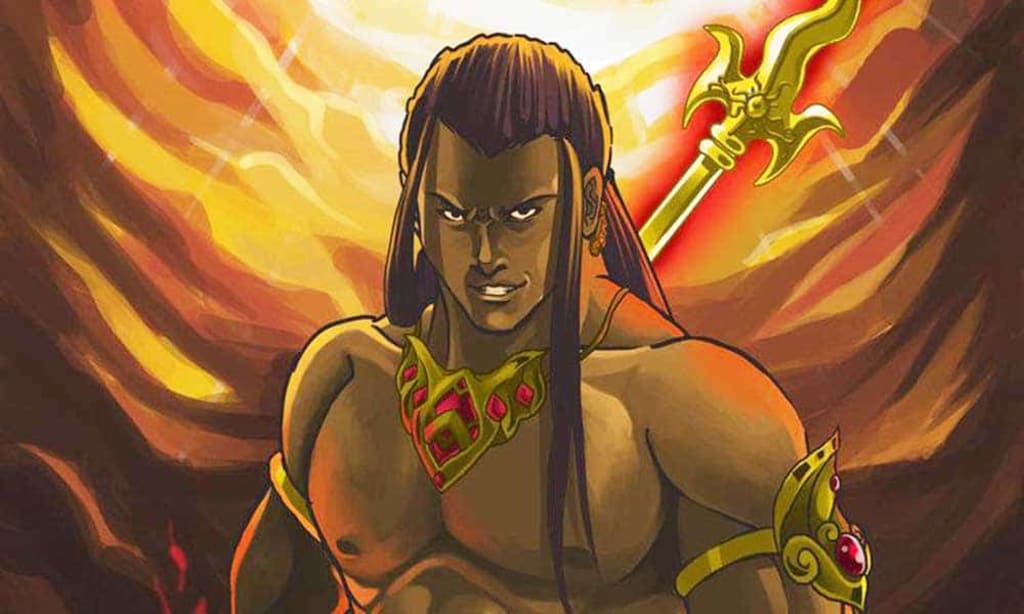
Ashwathama: The Cursed Warrior of Mahabharata
In the grand tapestry of the Mahabharata, a saga of valor, intrigue, and morality, the character of Ashwathama emerges as a complex and tragic figure. Son of the revered teacher Dronacharya and a loyal friend to the Kauravas, Ashwathama's life takes a dark and cursed path, leaving an indelible mark on the epic.
Ashwathama was born during a celestial event, marked by the sound of drums and a shower of flowers. His birth was a sign of his destined greatness as a warrior. Raised in the company of the Kaurava princes, he developed an unbreakable bond with Duryodhana, the eldest Kaurava. Under the tutelage of his father Dronacharya, Ashwathama honed his martial skills, becoming a formidable warrior capable of wielding divine weapons.
As the Kurukshetra War unfolded, Ashwathama fought valiantly on the side of the Kauravas. His prowess on the battlefield was matched only by his unyielding loyalty to his friends. Yet, it was this loyalty that eventually led him down a path of darkness. On the night of the war's penultimate day, Ashwathama, Duryodhana, and Kripacharya hatched a plan to attack the Pandava camp while they slept, in a desperate bid to turn the tide of the war.
In a fit of rage and despair over the fall of his dear friend Duryodhana, Ashwathama, blinded by revenge, committed a heinous act. He entered the Pandava camp under the cover of darkness and slaughtered what he believed to be the Pandava brothers and their supporters, unaware that they were actually the Upapandavas, the sons of Draupadi. This act of betrayal and brutality forever tainted his legacy.
News of Ashwathama's actions reached the Pandavas, and in response, Arjuna pursued him relentlessly. A fierce battle ensued between the two warriors, showcasing their incredible skill and strength. However, despite his ferocity, Ashwathama was ultimately overpowered by Arjuna. Cornered and facing defeat, Ashwathama unleashed the Narayanastra, a powerful divine weapon, as a last resort.
The Narayanastra's destructive force threatened to annihilate the world, prompting the intervention of Lord Krishna. Recognizing the dire consequences, Krishna advised Arjuna to counter the weapon with the Brahmastra, another divine weapon. The collision of these two immense powers caused widespread devastation, leading Krishna to intervene directly and defuse the situation.
Realizing the extent of his actions and the catastrophic potential of his rage, Ashwathama's remorse grew. Krishna cursed him with an eternal life of suffering, marked by immense physical and mental anguish. His forehead was adorned with an eternal wound that would never heal, serving as a constant reminder of his sins.
Ashwathama's story is one of tragedy and redemption. Despite his exceptional skills and potential, his uncontrolled emotions and blinded loyalty led him down a path of darkness. The curse he received became a heavy burden, a reflection of the consequences of unchecked rage and vengeance. His story serves as a cautionary tale, illustrating the importance of controlling one's impulses and the devastating effects of misplaced loyalty.
In the vast tapestry of the Mahabharata, Ashwathama's journey stands as a stark reminder that even the greatest warriors can succumb to their inner demons. His name resonates through the ages as a symbol of the perils of unchecked anger and the power of curses, teaching us that the choices we make in moments of crisis can shape our destinies in profound ways.
Ashwathama, born during a celestial spectacle, was destined for greatness. Raised amidst the Kaurava princes, he shared a special camaraderie with Duryodhana, the eldest among them. Under the tutelage of his father Dronacharya, a revered teacher, Ashwathama's skills in combat grew, making him a formidable warrior capable of wielding divine weapons.
As the epic war of Kurukshetra unfolded, Ashwathama's loyalty to the Kauravas became evident. He fought valiantly, demonstrating his prowess on the battlefield. His allegiance to his friends and his unyielding dedication marked him as a remarkable figure. However, this loyalty would prove to be his downfall.
During the war's crucial phases, when the Kauravas faced dire circumstances, Ashwathama, Duryodhana, and Kripacharya devised a desperate plan. In a bid to reverse their fortunes, they launched a surprise night attack on the Pandava camp. Fueled by vengeance for Duryodhana's demise, Ashwathama committed a grave atrocity. Under the cover of darkness, he believed he was slaughtering the Pandava brothers and their allies. Tragically, his victims were actually the Upapandavas, the sons of Draupadi. This act of treachery stained his legacy forever.
News of Ashwathama's brutal act reached the Pandavas, enraging Arjuna. A fierce and climactic battle ensued between the two skilled warriors. Ashwathama fought with desperation, but he was ultimately outmatched by Arjuna's prowess. In a final act of desperation, Ashwathama unleashed the Narayanastra, an immensely destructive divine weapon capable of obliterating the world.
The gravity of the situation led Lord Krishna to intervene. Recognizing the catastrophic consequences, Krishna instructed Arjuna to counter the Narayanastra with the Brahmastra. The collision of these two potent forces created immense devastation, compelling Krishna to personally intervene to prevent further disaster.
Confronted with the magnitude of his actions, Ashwathama's remorse deepened. Krishna, in recognition of his misguided actions, cursed him with eternal suffering. This curse sentenced Ashwathama to a life of perpetual agony, both physical and mental, serving as a relentless reminder of his sins. The eternal wound on his forehead became a symbol of his curse, a mark that would never heal.
Ashwathama's narrative is one of tragic irony and potential squandered. Despite his extraordinary skills, his unchecked anger and misguided loyalty led him down a dark path. The curse he bore became a burden he could never escape, a representation of the consequences of unbridled fury and allegiance to the wrong cause.
Within the vast canvas of the Mahabharata, Ashwathama's story shines as a cautionary tale. It underscores the significance of self-control and the perils of allowing emotions to dictate actions. His tale reverberates through time as a poignant reminder that even the mightiest warriors can fall prey to their inner demons. Ultimately, Ashwathama's saga serves as a poignant lesson about the choices made in moments of crisis, and how these decisions can mold destinies in profound and lasting ways.
About the Creator
Keep reading
More stories from writers in History and other communities.
The Red Sea Crisis and the Fragility of Global Trade
The Red Sea Crisis and the Fragility of Global Trade The Red Sea has quietly become one of the most critical pressure points in global affairs. Once seen mainly as a commercial shipping route connecting Asia, Europe, and Africa, it is now a zone of rising military tension, disrupted trade, and geopolitical rivalry. What happens in this narrow stretch of water is no longer a regional issue—it is reshaping global economics and international security.
By Wings of Time 6 days ago in History
3 Times Safety Rules Were Written After It Was Already Too Late
Safety rules like to pretend they are proactive. They wear reflective vests, carry clipboards, and speak confidently about prevention. But history knows the truth: many safety rules were written after something went catastrophically wrong, when prevention was no longer an option and regret had already filled out the paperwork.
By Enoch Sagini6 days ago in History



Comments
There are no comments for this story
Be the first to respond and start the conversation.