
The Curse of the Flor de la Mar: The Lost Treasure of the Malacca Strait
One of history’s most elusive and legendary shipwrecks, the Flor de la Mar—a Portuguese galleon laden with unimaginable wealth—vanished in the treacherous waters of the Malacca Strait in the early 16th century. This article explores the vessel’s fateful journey, the riches it was rumored to carry from the conquest of Malacca, and the many failed attempts to retrieve the treasure said to be worth over $2.5 billion today. From royal ambitions to modern-day treasure hunters, this is the tale of a sunken fortune that continues to captivate adventurers and historians alike.


The Curse of the Flor de la Mar: The Lost Treasure of the Malacca Strait
Introduction: A Golden Ghost of the Sea
Beneath the swirling currents of the Malacca Strait, situated between the coasts of Sumatra and the Malay Peninsula, resides one of history's most captivating maritime enigmas the Flor de la Mar, a 16th-century Portuguese galleon allegedly having sunk with the most considerable treasure ever misplaced at sea. Burdened with gold, diamonds, spices, and invaluable artifacts plundered from the Sultanate of Malacca, this shipwreck remains one of the most elusive and precious fortunes in the world.
A Jewel of the Portuguese Empire
The Flor de la Mar (Portuguese for "Flower of the Sea") was built in Lisbon around 1502, during the illustrious era of Portuguese exploration. Measuring approximately 120 feet in length and weighing over 400 tons, she was a colossal vessel for her time engineered to dominate the trade routes between Europe and the East Indies.
Initially utilized for commerce and military operations, the Flor de la Mar quickly garnered a reputation as both a formidable warship and a fated craft. She was susceptible to leaks and challenging to navigate, yet that did not deter the Portuguese Crown from depending on her for essential conquests most notably the capture of Malacca in 1511.
The Fall of Malacca: A Rich Conquest
Malacca was one of the wealthiest trading harbors in Asia, controlling access between the Indian Ocean and the South China Sea. When Afonso de Albuquerque, the Portuguese governor of India, conducted a successful campaign to seize the city, he secured not only a strategic position but also access to vast riches.
The spoils acquired from Malacca were staggering chests filled with gold and silver, rare spices such as cloves and nutmeg, and artifacts from across Asia. This immense fortune, collected by Albuquerque as tribute to King Manuel I of Portugal, was estimated to be worth billions in today's currency.
It was loaded aboard the Flor de la Mar, which was selected as the flagship to convey the plunder back to Lisbon.
Disaster at Sea
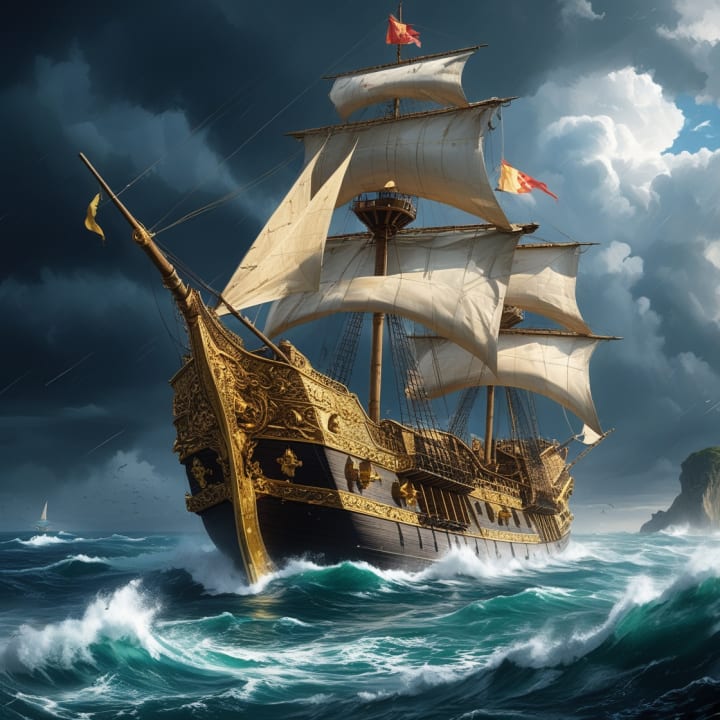
In November 1511, the Flor de la Mar departed from the port of Malacca, navigating the perilous waters of the Strait that bore its name. The ship, already aged and burdened with treasure, struggled against monsoon winds and turbulent seas.
Somewhere near the northern tip of Sumatra, calamity struck. Caught in a violent storm, the Flor de la Mar disintegrated and sank. Most of the crew perished, although Albuquerque survived. The treasure, however, was lost to the depths and has never been retrieved.
The Lost Fortune
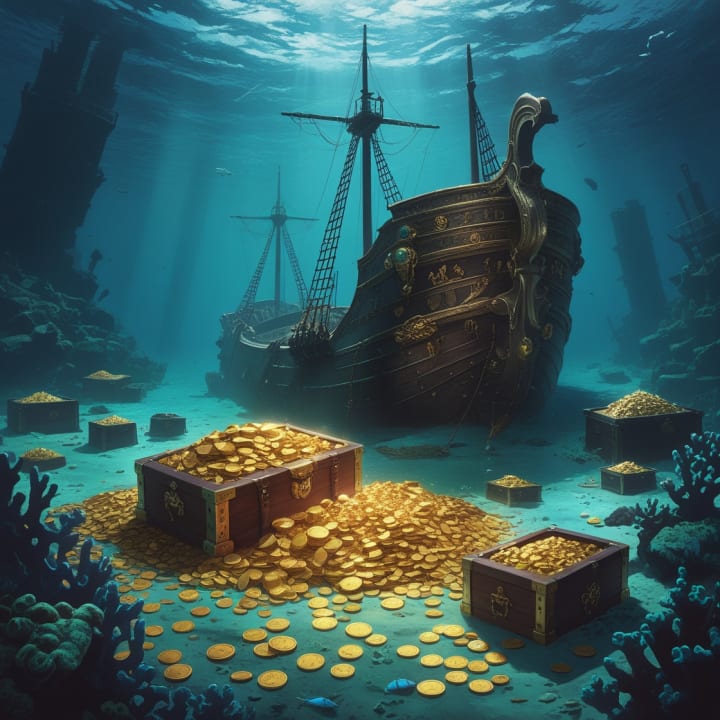
Estimates of the treasure aboard the Flor de la Mar vary, but contemporary historians suggest that the cargo could be valued at over $2 billion in today's terms. It encompassed:
Over 60 tons of gold and silver bullion
Rare Asian artifacts, including Ming Dynasty ceramics
Precious gemstones from Sri Lanka and India
Royal tributes from the Sultan of Malacca
Exotic spices valued as highly as gold at the time
The immense significance and the enigma surrounding the wreck have rendered it one of the most coveted shipwrecks in nautical history.
Contemporary Search Initiatives
In the centuries that have followed, innumerable treasure seekers, governments, and individual salvagers have endeavored to uncover the wreck. Malaysia, Indonesia, and Portugal have each asserted claims to the submerged treasure, complicating legal ownership before it has even been located.
Marine archaeologists have meticulously examined the bottom of the Malacca Strait, a notoriously challenging region for investigation due to substantial shipping activity, poor visibility, and strong currents. Despite numerous false alarms and baseless assertions, no conclusive evidence of the Flor de la Mar's wreck has ever been retrieved.
Some specialists even contend that the vessel may have fragmented and dispersed its treasure across the seabed, rendering it nearly impossible to retrieve as a whole.
A Heritage of Enigma and Avarice
Beyond the gold and gems, the narrative of the Flor de la Mar persists as a representation of Europe’s Age of Explorationan epoch characterized by ambition, conquest, and the quest for unimaginable wealth. The ship itself has evolved into a nautical myth, mentioned in the same context as Atlantis or El Dorado.
It also raises profound inquiries: who genuinely possesses the treasure? If discovered, should it be awarded to the nation that locates it, the descendants of the Malaccan people from whom it was taken, or the Portuguese state that once dominated the seas?
Conclusion: Still Awaiting to Emerge
Over 500 years later, the Flor de la Mar remains silent beneath the waves, a specter of bygone empires and the custodian of a fortune yet to be reclaimed. While innovation and curiosity continue to fuel new expeditions, the sea has so far retained its mysteries.
Perhaps it always will. Yet, for treasure seekers and historians alike, the legend of the Flor de la Mar endures as one of the most profound submerged enigmas of all timeand the prospect of rediscovery continues to ignite the imagination.
About the Creator
Say the truth
"Say the Truth: Explain Everything in the World" is your trusted source for uncovering facts and exploring the wonders of history, science, technology, and beyond. We simplify complex ideas and reveal truths to inspire curiosity .
Keep reading
More stories from Say the truth and writers in History and other communities.
Sunken Gold: The Greatest Treasure Ever Lost in the Ocean
The Ocean’s Greatest Secret: The Myth of the Lost Treasure Fleet Beneath the extensive azure expanse of the planet's oceans reside innumerable enigmas, yet none as enigmatic and precious as the lost treasure fleets that disappeared amidst storms, warfare, or piracy. This article explores one of the most legendary submerged fortunesthe Spanish Treasure Fleet of 1715alongside other celebrated maritime losses, estimating the untold billions in gold, silver, and jewels consigned to the depths. It narrates a tale of aspiration, avarice, hazardous navigation, and persistent mystery.
By Say the truth 9 months ago in History
A woman from a vanished female dynasty was discovered buried with 270,000 beads.
In a Copper Age tomb close to Seville, Spain, the Montelirio bead assemblage contains over 270,000 beads that identify the ladies buried there as elites. The discovery is the biggest collection of beads ever
By Francis Dami5 days ago in History
The Ottoman Empire
In the late thirteenth century, when the great empires of the medieval world were beginning to crack under their own weight, few would have noticed a small Turkic tribe living on the edge of the collapsing Byzantine Empire. They owned little land, had no grand cities, and were surrounded by stronger rivals. Yet from this humble beginning would rise one of the longest-lasting and most influential empires in human history: the Ottoman Empire.
By The best writer 4 days ago in History



Comments
There are no comments for this story
Be the first to respond and start the conversation.