
The Code That Couldn’t Be Broken
How Secret Messages Changed the Fate of Nations

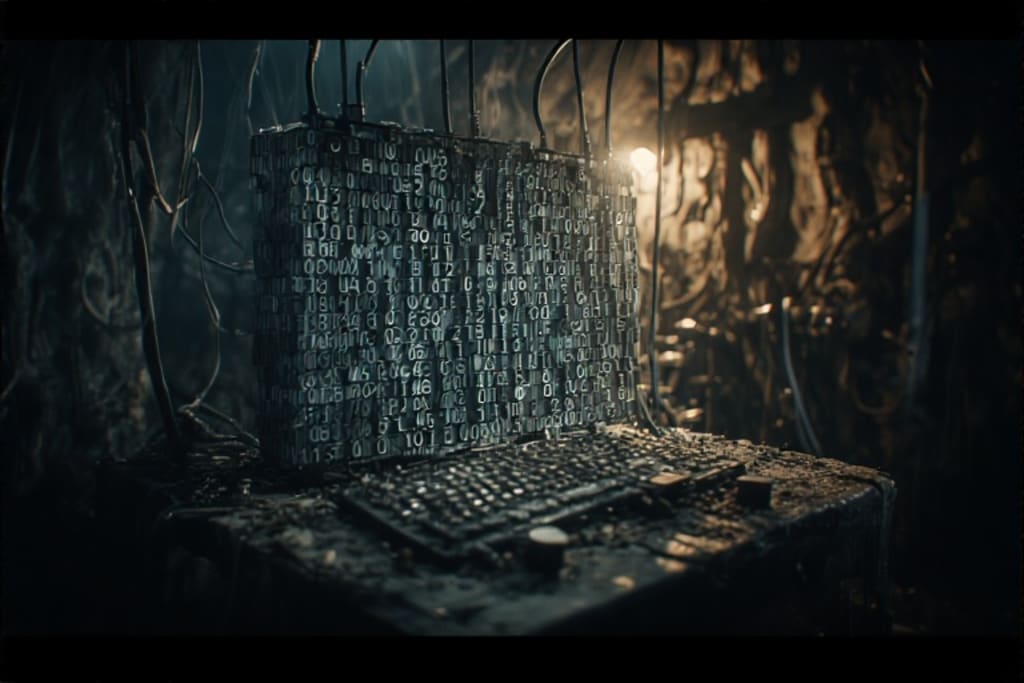
1. The Enigma of the Century
In the tense years following World War II, the world had entered a shadowy new era. Nations no longer clashed solely on battlefields but in secret rooms filled with papers, machines, and minds sharper than any sword. Intelligence agencies raced to protect their secrets and uncover those of their enemies.
Amidst this silent war was Cipher X, a code so complex and encrypted that even the most brilliant cryptanalysts called it unbreakable. Governments whispered of its existence, believing it held intelligence that could shift power, prevent wars, or ignite them.
2. Evelyn Gray — The Reluctant Genius
Evelyn Gray was unlike any cryptographer before her. A gifted mathematician with a photographic memory and an intuition that defied logic, she had long avoided the spotlight. Recruited from a quiet university research post, Evelyn was thrust into the heart of the government’s top-secret code-breaking unit.
Her task: break Cipher X.
At first, the code was a maddening jumble of symbols, letters, and numbers. Weeks passed with little progress. Evelyn pored over the data tirelessly, running patterns through old machines and new algorithms, but Cipher X refused to yield.
Her colleagues began to lose hope. But Evelyn felt a strange connection to the code, as if it were a puzzle waiting for a unique kind of mind to solve it.
3. Seeing Beyond the Numbers
One late night, alone in the dim glow of her office, Evelyn traced the endless lines of Cipher X’s characters. Exhausted but determined, she noticed something peculiar: certain sequences repeated in a rhythm that mimicked a heartbeat.
This rhythm was subtle, almost lost in the chaos, but to Evelyn’s mind, it spoke of a hidden language — not one of letters, but of sound.
Inspired, she took an old piano keyboard from the recreation room and began mapping the code’s sequences to musical notes. Each cluster of symbols corresponded to a note or chord, forming an eerie melody.
4. The Melody of Secrets
Playing the melody slowly at first, Evelyn felt the code’s strange beauty unfold. The notes told a story, a message encoded not in mere letters but in the universal language of music. The realization struck her: Cipher X was not just a message, it was a warning set to a haunting tune.
As she transcribed the melody, a clearer message emerged — plans of an imminent conflict between major powers, a war poised to engulf the fragile peace.
The code, it seemed, was designed to be heard, not just read.
5. Race Against Time
Evelyn rushed her findings to her superiors. The intelligence was urgent and precise. With this information, diplomats and leaders could act before catastrophe struck.
For days, Evelyn stayed awake, her piano melody echoing in her mind. Her breakthrough wasn’t just a personal triumph but a key that could unlock peace.
Thanks to her efforts, covert negotiations began behind closed doors. Tensions that could have exploded into full-scale war slowly eased.
6. A Code Beyond Power
News of Evelyn’s success spread quietly among the intelligence community. Though her work remained classified, her colleagues celebrated the woman who had broken the unbreakable.
Evelyn herself remained humble. She understood that Cipher X’s true power wasn’t in control or domination, but in its intent to save lives and prevent destruction.
Years later, she continued her work with a new philosophy: some codes were not meant to divide, but to unite. They were bridges — between people, nations, and hearts.
7. Legacy of Understanding
Decades after Evelyn cracked Cipher X, her discovery inspired a new generation of cryptographers to look beyond logic and numbers. They learned to listen, to interpret hidden messages not just with machines but with empathy.
Her story became a testament to the idea that intelligence is not just about solving puzzles but understanding the human story behind them.
Moral of the Story
True genius lies not in breaking codes to conquer, but in unlocking secrets that protect and connect us all.
About the Creator
Keep reading
More stories from Najeeb Scholer and writers in History and other communities.
When Plague Knocked at the Door
1. A Quiet Village on the Edge of Change In the year 1347, the village of Eldermoor lay nestled between rolling hills and dense forests, a quiet place where life moved slowly and traditions ran deep. The villagers rose with the sun, tending to fields of barley and rye, their days filled with hard work and the warmth of community. Children played in the dusty lanes, and markets bustled under the watchful eye of the town elder.
By Najeeb Scholer7 months ago in History
When the Shelter Closes
Across the street from my house, a man slept under a tree, his dog by his side. My first, naive thought: he must be traveling through. But he kept coming back, often sleeping there during the day. Then it hit me—that person might not have a home.
By Bride of Sound6 days ago in Humans


Comments
There are no comments for this story
Be the first to respond and start the conversation.