
"The Celestial Blade: Tutankhamun's Meteoric Iron Dagger"
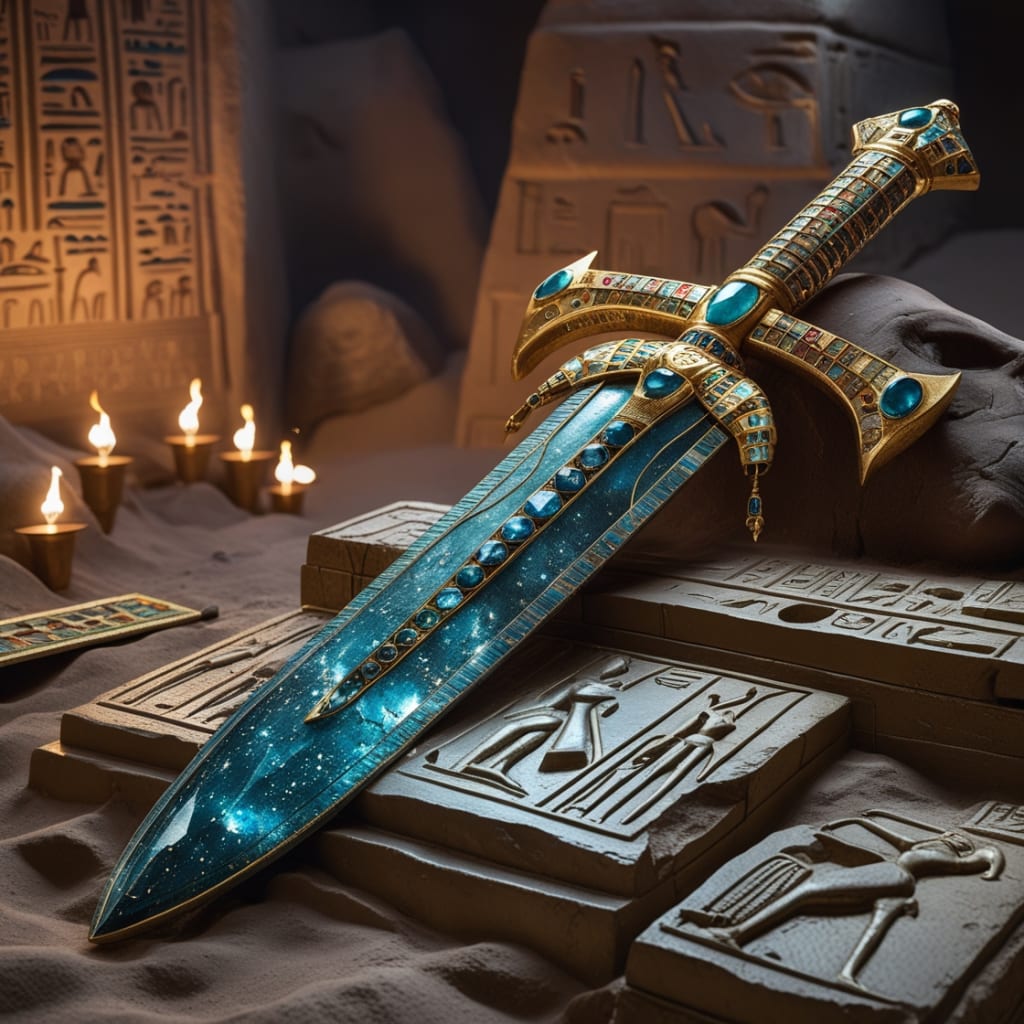
Tutankhamun's meteoric iron dagger, discovered in his tomb, is a marvel of ancient Egyptian craftsmanship. Forged from extraterrestrial material, this blade symbolizes the pharaoh's divine connection to the gods. Its composition predates the Iron Age, showcasing advanced metallurgical techniques far beyond its time. The dagger, a celestial artifact, underscores the cultural importance of meteoric iron in ancient Egypt and its role as a protective talisman for the afterlife.

The Significance and Contemporary Valuation of Tutankhamun's Meteoric Iron Dagger
The discovery of Pharaoh Tutankhamun's tomb in 1922 by archaeologist Howard Carter was a landmark event in Egyptology, unveiling a wealth of artifacts that provided profound insights into ancient Egyptian civilization. Among these treasures, a particular item has captivated historians and scientists alike: a dagger with a blade forged from meteoric iron. This artifact not only exemplifies the metallurgical prowess of the ancient Egyptians but also holds significant cultural and symbolic importance.
Craftsmanship and Material Composition
Tutankhamun's dagger features a blade composed of iron with high nickel and cobalt content, characteristic of meteoric origin. This composition was confirmed through X-ray fluorescence spectrometry, establishing the blade's extraterrestrial source. The hilt is ornately crafted from gold and embellished with intricate designs, reflecting the high level of craftsmanship achieved during Tutankhamun's reign. The presence of such an advanced iron artifact is particularly remarkable, considering that it predates Egypt's Iron Age by several centuries.
Cultural and Symbolic Importance
In ancient Egyptian culture, iron was known as "bi-A," translating to "metal of the sky," indicating a celestial association. Meteoric iron, due to its rarity and heavenly origin, was considered a divine material. Possession of such a dagger would have symbolized a direct connection to the gods, enhancing the pharaoh's divine status. The dagger's placement within the burial chamber underscores its significance, likely intended to serve as a protective talisman for the king in the afterlife.
Historical Context and Technological Implications
The existence of this meteoric iron dagger suggests that ancient Egyptians had developed sophisticated techniques to work with hard metals, a skill not commonly associated with the period. This challenges previous assumptions about the timeline of metallurgical advancements in ancient civilizations. The ability to craft such a finely detailed weapon from meteoric iron indicates a level of technological proficiency that necessitates a reevaluation of the capabilities of ancient Egyptian artisans.
Contemporary Valuation
Assigning a precise monetary value to Tutankhamun's meteoric iron dagger is challenging due to its unique historical, cultural, and scientific significance. Artifacts of this caliber are typically considered priceless, as they offer irreplaceable insights into human history and heritage. While replicas of the dagger are available for purchase, often priced between $1,000 and $1,500, the original artifact's worth transcends monetary assessment. Its unparalleled nature makes it an invaluable piece within the global archaeological record.
Conclusion
Tutankhamun's meteoric iron dagger stands as a testament to the ingenuity and spiritual depth of ancient Egyptian civilization. Its creation from celestial material not only highlights the advanced metallurgical skills of the time but also reflects the profound cultural significance attributed to materials believed to be of divine origin. As a symbol of power, divinity, and technological achievement, the dagger continues to captivate and inspire, embodying the enduring legacy of ancient Egypt's contributions to human history.
The dagger's celestial origins link it to meteorites, which were seen as gifts from the gods. Its creation exemplifies the Egyptians' ingenuity in metalworking, as they forged an artifact that not only served a practical purpose but also conveyed profound spiritual meaning. The dagger represents a blend of technological achievement and divine symbolism, bridging the mortal and the celestial realms.
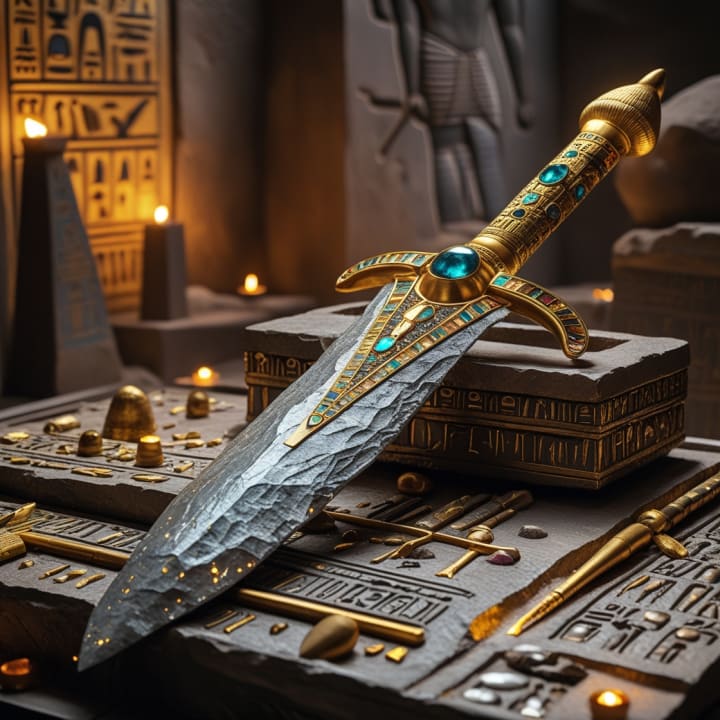
The pharaoh and the gods. Discovered in his tomb, it showcases the Egyptians' metallurgical expertise and their reverence for celestial phenomena. Crafted from meteoric iron and adorned with intricate goldwork, the dagger represents both a technological marvel and a spiritual artifact. Today, its historical significance and rarity make it an invaluable treasure, embodying the cultural grandeur of ancient Egypt.
Historical Context and Technological Implications
The existence of this meteoric iron dagger suggests that ancient Egyptians had developed sophisticated techniques to work with hard metals, a skill not commonly associated with the period. This challenges previous assumptions about the timeline of metallurgical advancements in ancient civilizations. The ability to craft such a finely detailed weapon from meteoric iron indicates a level of technological proficiency that necessitates a reevaluation of the capabilities of ancient Egyptian artisans.
About the Creator
Say the truth
"Say the Truth: Explain Everything in the World" is your trusted source for uncovering facts and exploring the wonders of history, science, technology, and beyond. We simplify complex ideas and reveal truths to inspire curiosity .
Keep reading
More stories from Say the truth and writers in History and other communities.
"Tutankhamun's Celestial Dagger: A Gift from the Stars"
Tutankhamun's Secret Asteroid Sword: A Tale of Angelic Mystery The analysis of Baron Tutankhamun's tomb in 1922 by archaeologist Howard Carter captivated the world. Amid the treasures unearthed, one antiquity stood out for its amazing origin: a artful artificial from a meteorite. This “celestial blade” not alone accent the avant-garde metallurgical adeptness of age-old Egypt but additionally opened the aperture to a alluring abstruseness about how age-old civilizations adeptness accept perceived and acclimated abstracts from space.
By Say the truth 12 months ago in History
How Early Aircraft Failures Created Modern Flight Safety
When we look at modern aviation today with its redundant systems, strict regulations, and impressive safety record it’s easy to forget how fragile flight once was. Early aviation wasn’t built on confidence or certainty. It was built on risk. Every successful flight was surrounded by countless failures, and every crash carried lessons that would quietly reshape the future of air travel.
By Beckett Dowhanabout 24 hours ago in History
The Accidents That Quietly Improved Aviation Forever
I used to think aviation history was a story of bold successes, record-breaking flights, sleek aircraft, and triumphant landings. But the more I read, the more I realized something uncomfortable: much of modern aviation was shaped not by success, but by accidents. The safety and reliability we now take for granted were quietly built from moments when things went terribly wrong.
By Beckett Dowhanabout 3 hours ago in History


Comments
There are no comments for this story
Be the first to respond and start the conversation.