
The Camel: Ship of the Desert
A Symbol of Survival, Strength, and Ancient Life

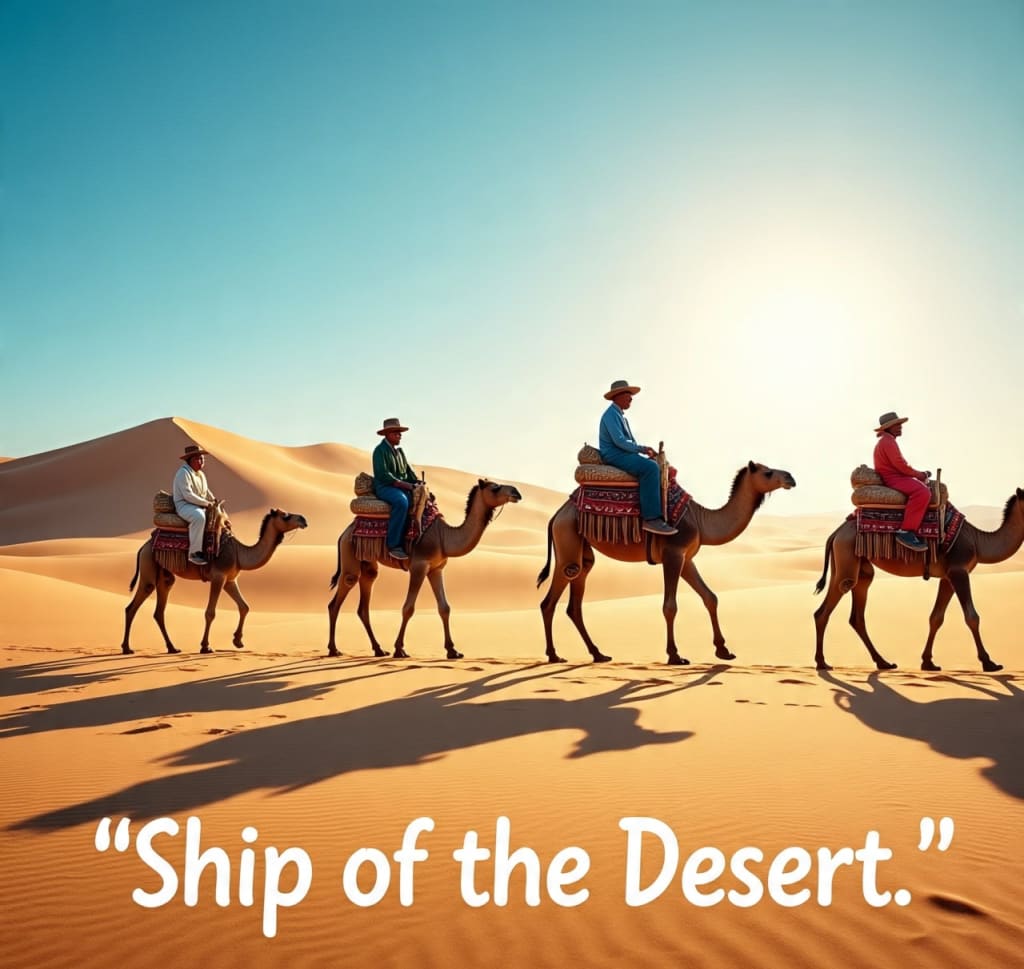
For thousands of years, the camel has been more than just an animal—it has been a lifeline for people living in deserts and dry lands. Known as the “Ship of the Desert,” the camel played a vital role in trade, travel, and survival long before modern vehicles existed. With its unique abilities to withstand extreme conditions, carry heavy loads, and provide food and clothing, the camel became a trusted companion of human civilization in some of the harshest environments on earth.
Camels in Ancient Life
Long before airplanes, trains, or even cars, people relied on camels to move across deserts. Ancient traders used caravans of camels to transport goods such as spices, silk, gold, and salt across vast regions. The camel’s ability to travel long distances without food or water made it perfect for desert trade routes like the Silk Road and the Arabian trade networks.
Nomadic tribes also depended on camels for survival. They provided milk, which was a vital source of nutrition, and their hair and hides were used for making tents, blankets, and clothing. In many desert cultures, owning camels was a sign of wealth and respect.
Why the Camel is Called the Ship of the Desert
The nickname “Ship of the Desert” is not just poetic—it perfectly describes the camel’s role and abilities. Just as ships cross vast oceans, camels cross endless deserts. They move steadily over sand, carrying people and goods safely through environments where few other animals could survive.
Camels are uniquely built for desert life. They have long legs to keep their bodies away from the hot ground, wide padded feet to prevent sinking into sand, and thick eyelashes that protect their eyes from dust storms. Their humps store fat, which the body can use for energy when food is scarce. With these features, camels can survive for weeks without water, making them true champions of endurance.
Camels in Trade and Travel
In ancient times, camels were the backbone of desert trade. Caravans of hundreds of camels would travel together, guided by merchants across the Arabian, African, and Asian deserts. Without camels, trade between distant lands would have been almost impossible.
They carried heavy loads—sometimes up to 200 kilograms per animal—over long distances. This allowed goods to be exchanged between faraway regions, connecting cultures and economies. The prosperity of many ancient civilizations, including those in the Middle East and North Africa, depended on the strength and resilience of camels.
Camels as Companions in Daily Life
For desert families, camels were more than workers; they were part of daily life. They provided fresh milk, which could be turned into butter or cheese. Their meat was eaten on special occasions, and their dung was used as fuel for fire. Even their bones were sometimes used to make tools.
Camels were also a source of pride and tradition. Poetry, songs, and stories from ancient Arabia often praised the beauty, patience, and loyalty of camels. They symbolized endurance, strength, and survival—qualities admired by desert people.
Camels in Religion and Culture
Camels hold a respected place in various cultures and religions. In Islamic history, camels played important roles. The Prophet Muhammad (PBUH) traveled on camels, and they are mentioned in the Qur’an as signs of God’s creation, encouraging people to reflect on their unique design.
In many African and Asian traditions, camels were also seen as blessings. They were given as gifts, used in dowries, and celebrated in festivals. To this day, camel races and camel beauty contests are held in countries like Saudi Arabia and the United Arab Emirates, showing that the animal remains an important part of cultural heritage.
The Camel in Modern Times
With the invention of cars, trains, and airplanes, the role of camels in trade and transport has decreased. However, they are still important in many desert regions. Bedouins, nomads, and villagers continue to rely on camels for milk, meat, and transportation in remote areas.
Camels are also part of tourism. Visitors to desert countries often enjoy camel rides to experience the traditional way of traveling across the sands. At the same time, scientific studies highlight the nutritional benefits of camel milk, which is rich in vitamins and minerals and is now sold worldwide.
Conclusion
The camel truly deserves its title as the Ship of the Desert. For centuries, it has carried people, goods, and cultures across some of the harshest environments on earth. Its strength, patience, and unique design have made it one of the most valuable animals in human history.
Even in today’s modern world, the camel remains a symbol of endurance and tradition. It reminds us of a time when life was closely tied to nature and survival depended on the loyalty of such remarkable creatures. In many ways, the camel is not just an animal of the past—it continues to be a living connection to the old way of life.
About the Creator
aadam khan
I am publishing different stories
Keep reading
More stories from aadam khan and writers in History and other communities.
622 A.D.: A New Chapter in Islam
The year 622 A.D. is one of the most important dates in world history, especially in the history of Islam. It marks the Hijra, or migration, of Prophet Muhammad (peace be upon him) and his followers from the city of Makkah to the city of Madinah, then called Yathrib. This event not only gave safety and freedom to the early Muslim community but also became the starting point of the Islamic Hijri calendar. It was truly the beginning of a new chapter in Islam.
By aadam khan4 months ago in History
Seven Dials
Introduction Seven Dials is a famous and historic area located in London, England. It is found near Covent Garden, one of the busiest and most popular parts of the city. Seven Dials is known for its unique road design, rich history, old buildings, shops, cafés, and lively atmosphere. Today, it is a popular place for tourists and local people who enjoy culture, shopping, and history.
By Farhan Sayeda day ago in History
Julius Caesar: The Rise and Fall of a Legend
The Rise and Fall of Julius Caesar In the first century BCE, the Roman Republic stood as one of the most powerful states in the ancient world. Its armies conquered vast territories, its laws shaped civilizations, and its Senate governed through a delicate balance of tradition and authority. Into this complex political world was born Gaius Julius Caesar in 100 BCE—a man whose ambition, brilliance, and fate would forever change Roman history.
By The best writer 6 days ago in History



Comments
There are no comments for this story
Be the first to respond and start the conversation.