
622 A.D.: A New Chapter in Islam
The Hijra of Prophet Muhammad (PBUH) and the Birth of the Islamic Calendar

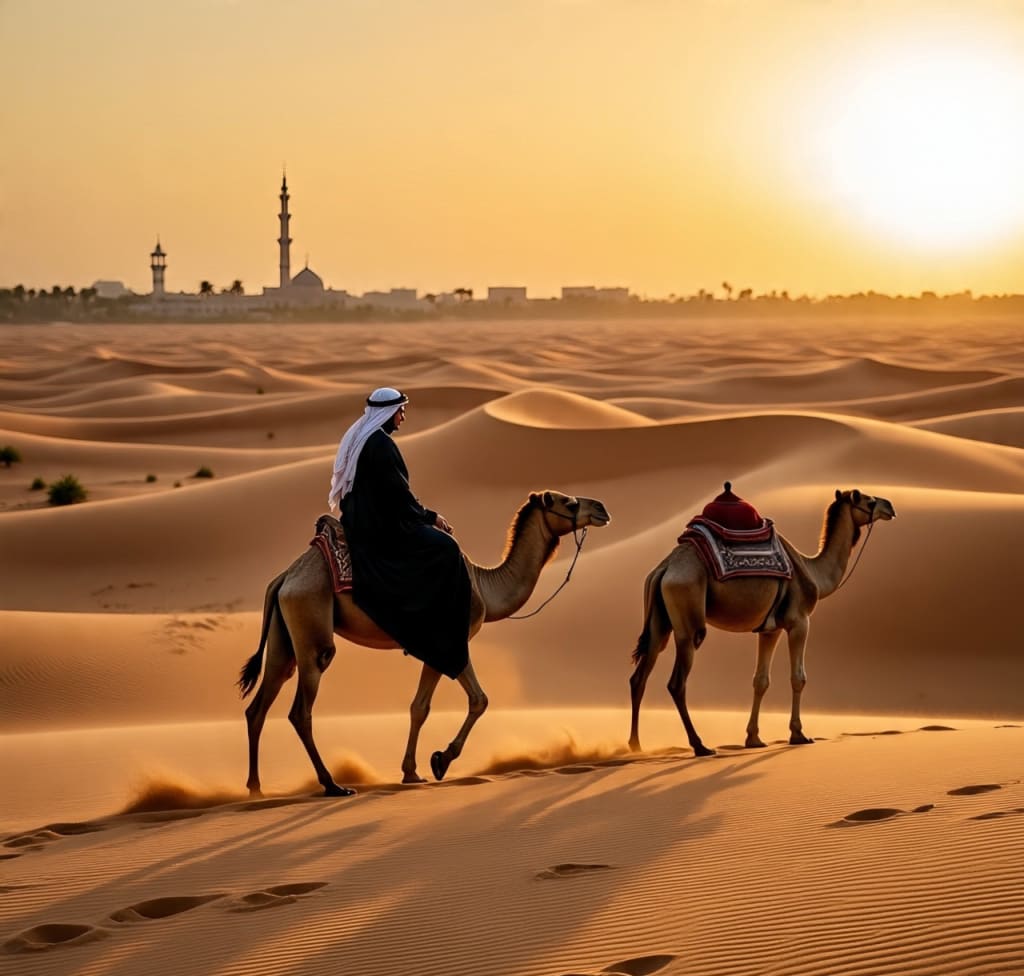
The year 622 A.D. is one of the most important dates in world history, especially in the history of Islam. It marks the Hijra, or migration, of Prophet Muhammad (peace be upon him) and his followers from the city of Makkah to the city of Madinah, then called Yathrib. This event not only gave safety and freedom to the early Muslim community but also became the starting point of the Islamic Hijri calendar. It was truly the beginning of a new chapter in Islam.
Before 622 A.D., the Prophet Muhammad (PBUH) and his followers lived in Makkah. While Islam’s message of one God (Allah), equality, and justice was spreading, it faced fierce opposition from the Quraysh, the powerful tribe of Makkah. Muslims were mocked, tortured, and even killed for their faith. Many of the poor and weak suffered greatly.
The Prophet (PBUH) himself was protected for some time by his family, but after the deaths of his beloved wife Khadijah (RA) and his uncle Abu Talib, the situation grew worse. With no protection, the Muslims became more vulnerable to harm. It was during this time that the Prophet began seeking a safe place where his message could be practiced freely.
The Invitation from Yathrib
Far away from Makkah, the city of Yathrib was facing its own problems. Two main tribes, the Aws and Khazraj, were locked in conflicts. They were tired of fighting and wanted peace. When they heard about the Prophet Muhammad (PBUH) and his wisdom, they invited him to come and settle disputes in their city.
The Prophet saw this as an opportunity not only to spread Islam peacefully but also to create a strong community built on justice and brotherhood. Slowly, groups of people from Yathrib accepted Islam and promised to support the Prophet. These agreements became known as the Pledges of Aqabah.
The Journey of Hijra
As the number of Muslims in Makkah grew, the Quraysh became fearful. They plotted to kill the Prophet Muhammad (PBUH) to stop Islam once and for all. But Allah protected His Messenger. On the night the Quraysh surrounded his house, the Prophet left secretly with his close companion, Abu Bakr (RA).
The journey to Yathrib was long and dangerous. They hid in the cave of Thawr for three days while their enemies searched for them. At one point, the Quraysh came so close to the cave that Abu Bakr (RA) feared they would be discovered. But the Prophet (PBUH) calmed him, saying: “Do not worry, Allah is with us.”
Eventually, they safely reached Yathrib, where they were welcomed with joy. From then on, Yathrib became known as Madinah al-Munawwarah, meaning the Enlightened City.
Building the First Muslim Community
In Madinah, the Prophet Muhammad (PBUH) established the first Muslim society. He built the first mosque, Masjid Quba, and later Masjid al-Nabawi. The mosque became not just a place of prayer, but also a center of learning and community life.
One of the Prophet’s greatest achievements in Madinah was creating the Constitution of Madinah, one of the earliest written agreements in history. It brought Muslims, Jews, and other groups together under a system of mutual rights and responsibilities. It guaranteed freedom of religion and promoted unity.
The Prophet also encouraged brotherhood between the migrants from Makkah (Muhajirun) and the helpers of Madinah (Ansar). They shared their wealth and homes, creating a spirit of love and sacrifice that strengthened the community.
The Start of the Islamic Calendar
Because of the great importance of the Hijra, Muslims chose this event as the beginning of their calendar. In the year 638 A.D., during the rule of Caliph Umar ibn al-Khattab (RA), the Hijri calendar was officially established. It begins with the year 622 A.D., making that year 1 AH (Anno Hegirae – Year of the Hijra).
The Hijri calendar is a lunar calendar with 12 months, used by Muslims worldwide for religious events like Ramadan, Hajj, and Eid. It serves as a constant reminder of the sacrifices made during the Hijra and the strength of faith that allowed Islam to flourish.
Lessons from the Hijra
The Hijra was not just a physical journey—it was a journey of faith, courage, and resilience. It teaches us that hardship can be followed by ease, and that patience and trust in Allah lead to success.
The migration also shows the importance of building strong communities based on justice, equality, and mutual support. It was in Madinah that Islam grew into not only a religion but also a complete way of life.
Conclusion
The year 622 A.D. truly marked a new chapter in Islam. The Hijra of Prophet Muhammad (PBUH) changed history forever, providing Muslims with a safe home, a strong community, and the chance to live by their faith. It was the birth of the Islamic calendar and the foundation of a civilization that would spread knowledge, culture, and justice across the world.
Even today, Muslims remember the Hijra as a symbol of hope, sacrifice, and trust in Allah. It reminds us that with patience and faith, new beginnings can arise from the hardest challenges.
About the Creator
aadam khan
I am publishing different stories
Keep reading
More stories from aadam khan and writers in History and other communities.
Peshawar’s Putkoon Pride
Peshawar, one of the oldest living cities in South Asia, is not only famous for its rich history and culture but also for its traditional attire that speaks volumes about its heritage. Among these cultural gems is the Putkoon dress, a symbol of grace, elegance, and tradition. This unique clothing style reflects the artistic spirit of the region, holding a special place in the hearts of the Pashtun people, especially women.
By aadam khan7 months ago in History
Mercury and the Chinese Imperial Kings: Power, Immortality, and a Deadly Obsession
This article explores why Chinese imperial kings valued mercury, how it was used in medicine, alchemy, governance, and burial practices, and the profound consequences of this fascination.
By Say the truth 6 days ago in History



Comments (4)
mashallah nice bro, we have to support each other its will make both of us strong do you agree with me to support each other with loyalty i will read all your articles next time ok and also you.
amazing
lovely
great