
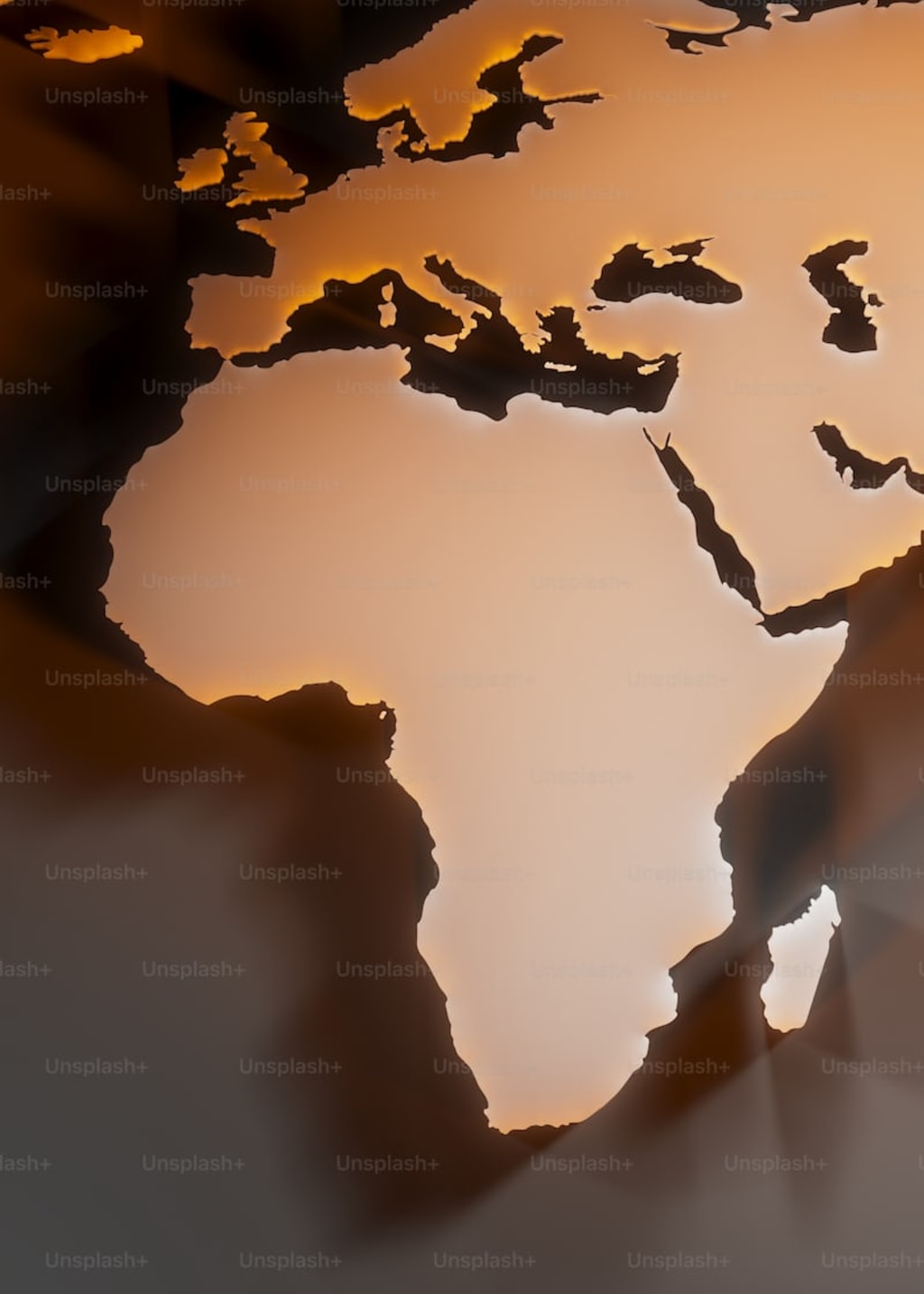
The origin of African people is a complex and multifaceted topic that encompasses a rich history spanning thousands of years. In this 1000-word response, we will explore key aspects of African origin, including human evolution, early civilizations, and the diverse ethnic groups that make up the African continent.
Africa is widely recognized as the cradle of humanity, where the earliest human ancestors emerged. The story begins millions of years ago with the evolution of hominins, a group of primates that includes modern humans and their close relatives. The oldest known human fossils have been found in Africa, particularly in the Great Rift Valley region. These fossils provide valuable insights into our evolutionary journey.
Around 200,000 years ago, Homo sapiens, our direct ancestors, appeared in Africa. These early humans developed distinct physical and behavioral characteristics that distinguished them from previous hominin species. Over time, Homo sapiens migrated and dispersed across different parts of Africa, adapting to diverse environments.
Africa's history is marked by the rise and fall of numerous ancient civilizations and kingdoms. The Nile Valley civilizations, such as Ancient Egypt and Nubia, emerged along the banks of the Nile River, harnessing its fertile lands for agriculture and establishing advanced societies. These civilizations left behind impressive architectural wonders, intricate art, and a rich cultural legacy.
The Kingdom of Aksum, located in present-day Ethiopia and Eritrea, flourished as a powerful trading empire in the ancient world. It controlled key trade routes and engaged in commerce with distant regions, including the Mediterranean and the Arabian Peninsula. Aksum's influence extended beyond trade, as it embraced Christianity in the 4th century, making it one of the earliest Christian kingdoms.
West Africa witnessed the rise of impressive empires such as Ghana, Mali, and Songhai. These empires, known for their wealth, trade networks, and intellectual advancements, played a significant role in shaping the region's history. The Mali Empire, led by Mansa Musa in the 14th century, became renowned for its abundant gold resources and for being a center of Islamic scholarship and commerce.
African history is not solely defined by ancient civilizations but also by the diverse ethnic groups that inhabit the continent. Africa is home to a multitude of ethnicities, each with its distinct cultural practices, languages, and traditions. From the Berbers of North Africa to the Zulu people of Southern Africa, the continent's ethnic diversity is a testament to its complex and varied history.
Colonialism significantly impacted Africa's trajectory. European powers, in the pursuit of resources and control, colonized vast portions of the continent from the 19th century onwards. This era of colonial rule brought immense challenges to African societies, including the exploitation of resources, forced labor, and cultural disruptions. However, it also sparked resistance movements and nationalist sentiments that eventually led to independence for many African nations in the mid-20th century.
Post-independence, Africa has faced numerous challenges, including political instability, economic struggles, and social transformations. However, the continent has also witnessed remarkable achievements, with African nations making progress in areas such as education, healthcare, infrastructure development, and cultural preservation.
Today, Africa stands as a diverse and vibrant continent, rich in natural resources, cultural heritage, and human potential. It is home to bustling cities, thriving arts scenes, and a growing entrepreneurial spirit. African countries are actively working towards sustainable development, regional cooperation, and improving the lives of their people.
Understanding the origin of Africans requires acknowledging the complex tapestry of human history, from ancient civilizations to the struggles and triumphs of modern times. It is an ongoing story, shaped by countless individuals and cultures, and continues to evolve as Africa embraces its future while honoring its past.
About the Creator
Keep reading
More stories from Ihekaibeya Davidson and writers in History and other communities.
The history of the world most famous tournament
The UEFA Champions League has a fascinating origin story. It began as the European Champion Clubs' Cup in 1955, with the aim of bringing together the top football clubs from across Europe to compete in a prestigious tournament. The idea emerged as a response to the growing desire for inter-continental club competitions.
By Ihekaibeya Davidson3 years ago in History
Chinese Water Torture
Since the dawn of history, human beings have inflicted unimaginable suffering upon one another. Across centuries, people have devised increasingly elaborate methods of punishment and coercion, some brutally explicit, others deceptively subtle. While devices such as iron maidens, racks, whips, and wheels relied on visible physical agony, there existed a form of torment whose true power lay not in blood or broken bones, but in patience, repetition, and the slow erosion of the mind. This method came to be known as Chinese water torture.
By Pure child22 minutes ago in History
Saddam Hussein: Rise, Rule, and Fall
Saddam Hussein was born on April 28, 1937, in a small village near Tikrit, Iraq. His early life was marked by poverty, hardship, and a sense of abandonment. His father died before he was born, and his mother remarried soon after. Young Saddam grew up in a household dominated by strict relatives and was exposed to political discussions and nationalist sentiments from an early age. These formative years shaped his personality—ambitious, ruthless, and fiercely determined to rise above his modest beginnings.
By The best writer about 2 hours ago in History




Comments
There are no comments for this story
Be the first to respond and start the conversation.