
The Bengal Sultanate: A Flourishing Epoch of Medieval Bengal
History of BENGAL

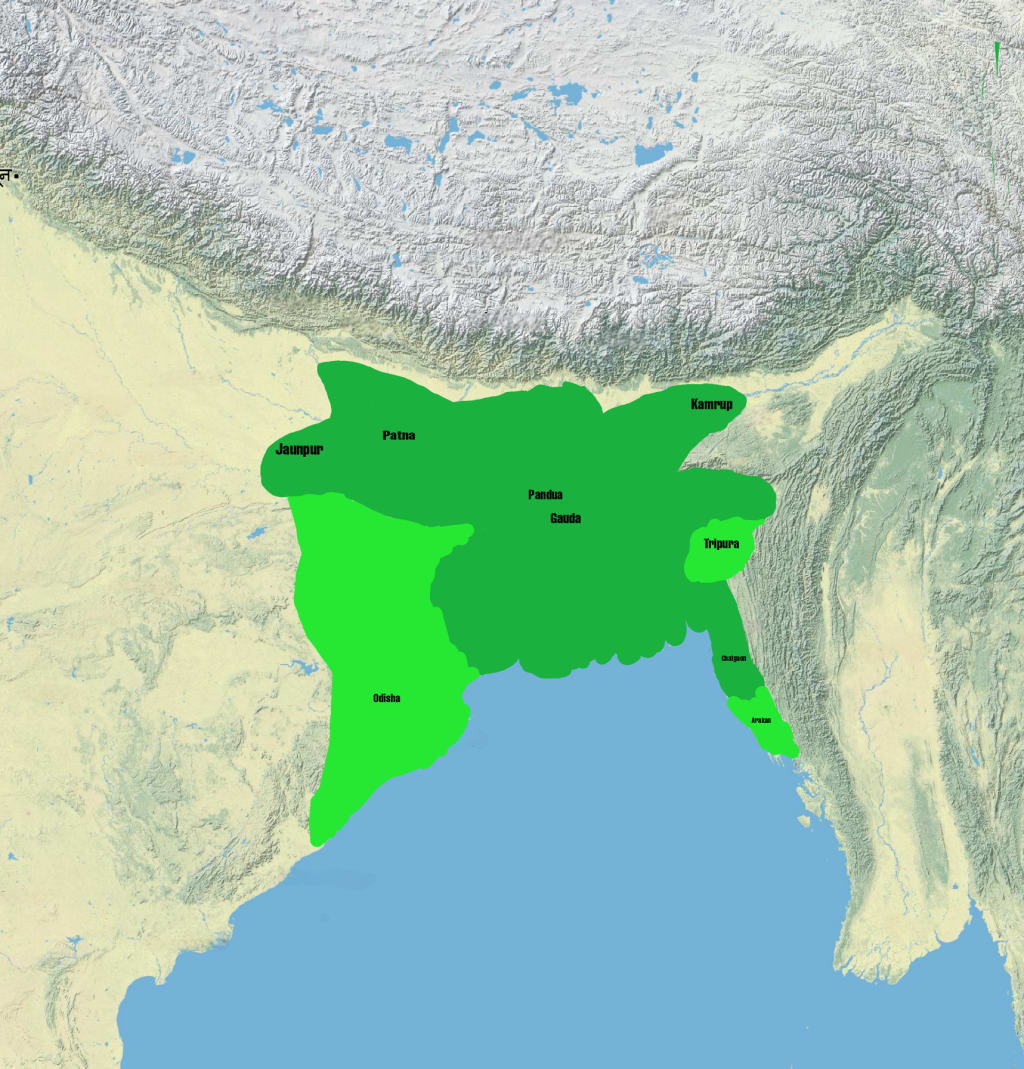
The Bengal Sultanate, spanning from the 14th to the 16th century, stands as a remarkable chapter in the history of medieval South Asia. This period witnessed the rise of powerful sultans, the flourishing of art and culture, and the establishment of a dynamic socio-economic structure in the region. As one of the prominent medieval sultanates in the Indian subcontinent, the Bengal Sultanate played a pivotal role in shaping the destiny of Bengal and left a lasting impact on its cultural landscape.
Foundation and Early Years:
The Bengal Sultanate was founded in 1342 by Shamsuddin Ilyas Shah, marking the beginning of an era characterized by political stability and cultural efflorescence. Ilyas Shah established his capital in Sonargaon and laid the foundation for a centralized administration. The early years of the Sultanate saw a fusion of Persian, Arabic, and local Bengali influences in the administrative and cultural spheres, creating a unique syncretic identity.
The Shamsuddin Dynasty:
The Shamsuddin dynasty, comprising several rulers, played a crucial role in consolidating the power of the Bengal Sultanate. Notable among them was Ghiyasuddin Azam Shah, who shifted the capital to Pandua and initiated significant architectural projects. The construction of the Adina Mosque, one of the largest in the Indian subcontinent, stands as a testament to the architectural grandeur of the period.
Economic Prosperity:
The Bengal Sultanate flourished economically due to its strategic location as a center for trade and commerce. Bengal's access to the Bay of Bengal facilitated maritime trade routes, attracting merchants from across the Indian Ocean. The cultivation of rice, jute, and cotton contributed to the prosperity of the agrarian economy. The establishment of efficient revenue systems and a robust market structure further fueled economic growth.
Cultural Renaissance:
The Bengal Sultanate witnessed a cultural renaissance, marked by the synthesis of various traditions. The sultans were patrons of art and literature, fostering an environment conducive to intellectual pursuits. Persian and Arabic literature found a place alongside indigenous Bengali literature, leading to the creation of a rich literary heritage. Notable poets like Shah Muhammad Sagir and Hafizuddin Sultan contributed to the development of a distinct Bengali literary tradition.
Art and Architecture:
The architectural marvels of the Bengal Sultanate reflect the synthesis of Islamic and Bengali styles. The Adina Mosque, with its massive dimensions and intricate terracotta ornamentation, exemplifies the architectural prowess of the period. The establishment of the Kotwali Darwaza and the Eklakhi Mausoleum further attests to the sophisticated taste of Bengal Sultanate rulers. The fusion of Persian and Indian architectural elements resulted in a unique and aesthetically pleasing built environment.
Religious Tolerance:
The Bengal Sultanate was characterized by religious tolerance, fostering an environment where people of different faiths coexisted harmoniously. While Islam was the dominant religion, Hinduism and other faiths were respected and allowed to flourish. This policy of inclusivity contributed to the cultural diversity of the region, creating a pluralistic society that celebrated its differences.
Decline and Legacy:
Despite its cultural and economic achievements, the Bengal Sultanate faced internal strife and external threats. The invasion of Sher Shah Suri in the mid-16th century marked the beginning of the end for the Sultanate. The subsequent Mughal conquest under Akbar in 1576 led to the absorption of Bengal into the Mughal Empire.
The legacy of the Bengal Sultanate, however, endures in the cultural, architectural, and literary heritage of Bengal. The syncretic traditions established during this period continue to shape the cultural identity of the region. The architectural marvels, literature, and artistic achievements of the Bengal Sultanate stand as a testament to the resilience and creativity of the people of medieval Bengal.
The Bengal Sultanate, with its political stability, economic prosperity, and cultural vibrancy, stands as a golden epoch in the history of Bengal. The synthesis of diverse influences, religious tolerance, and the flourishing of art and literature created a unique and dynamic society. The legacy of the Bengal Sultanate continues to resonate in the cultural fabric of modern-day Bengal, serving as a reminder of a flourishing medieval era that left an indelible mark on the region's history.
About the Creator
Keep reading
More stories from Afeef Khan and writers in History and other communities.
Evolution of Human Being
The evolution of Homo sapiens is a mesmerizing tale that spans millions of years, encapsulated within the framework of seven distinct stages. From humble beginnings on the African savannah to the complex societies of the modern world, each stage represents a chapter in the story of our species' remarkable journey.
By Afeef Khan2 years ago in History
3 Everyday Rules That Exist Because Someone Once Did Something Very Stupid
Everywhere you go, you are surrounded by rules that feel oddly specific. Do not touch. No running. Contents hot. Do not insert body parts. These warnings aren’t theoretical. They weren’t written by pessimists or lawyers with too much free time. They exist because at some point in history, a real human being looked at a situation and thought, “This will probably be fine.”
By Enoch Sagini3 days ago in History
Nanchang: A Modern Symbol of China’s Naval Power
In recent years, the world has closely watched the rapid modernization of the Chinese People’s Liberation Army Navy (PLA Navy). One of the most important symbols of this transformation is the Nanchang (Hull 101), China’s first Type 055 guided-missile destroyer. Commissioned on 12 January 2020, Nanchang represents a major leap in naval technology and capability. As it completes six years of active service, the ship stands as a clear example of how China’s navy has moved into a new era of advanced maritime power.
By sehzeen fatima6 days ago in History




Comments
There are no comments for this story
Be the first to respond and start the conversation.