
The Beeshma Pratighna(The Vow of Beeshma)
The story of how devavrata becoming beeshma by his divine vow
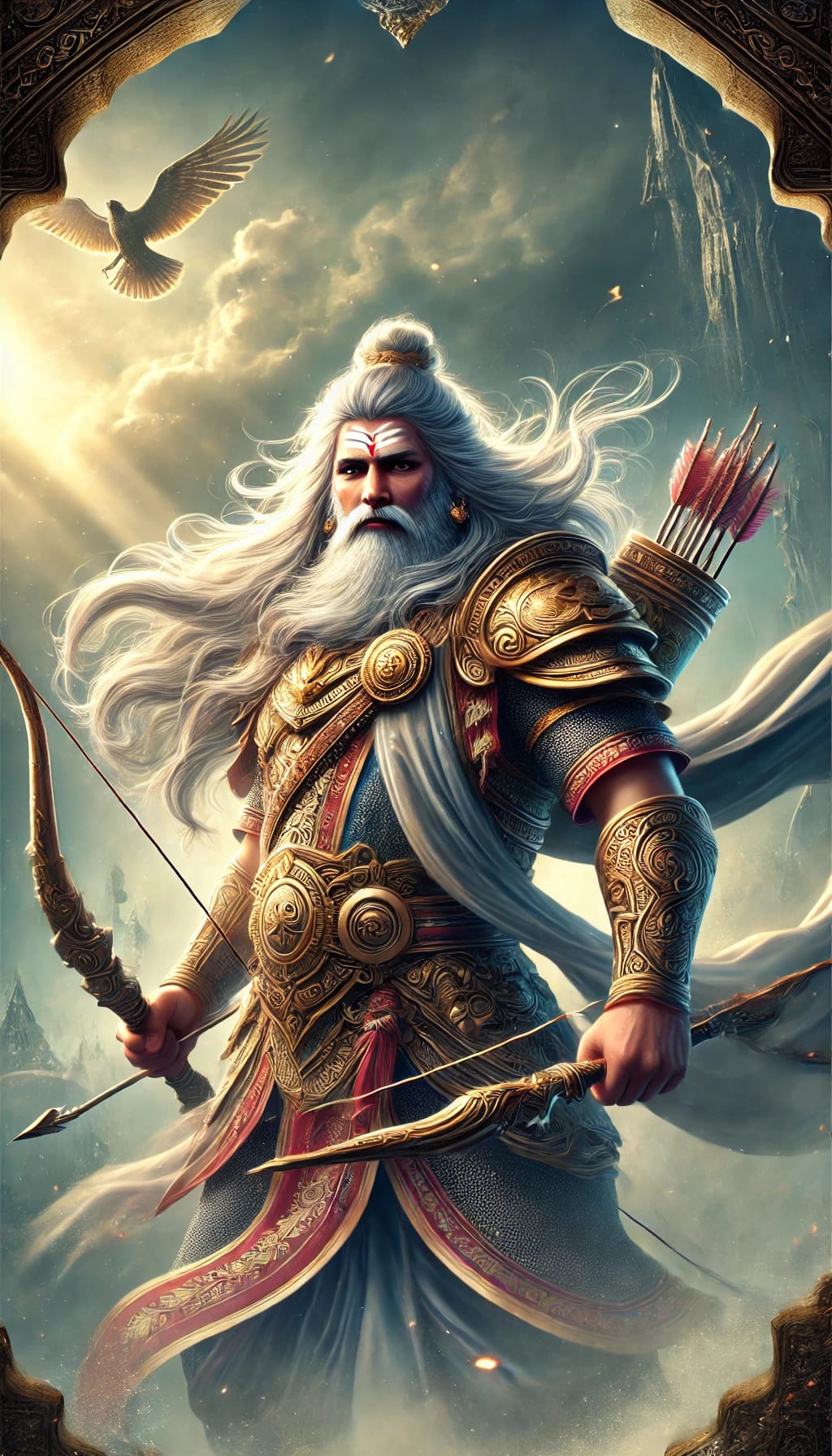
The story of Bhishma’s vow, also known as the *Bhishma Pratigya*, is one of the most powerful and moving tales of sacrifice and devotion in the Mahabharata. This vow not only shaped Bhishma’s life but also set the course for the destiny of the Kuru dynasty and the events leading to the Mahabharata’s great war.
Bhishma was born as Devavrata, the son of King Shantanu of Hastinapura and the river goddess Ganga. Devavrata was not an ordinary prince; he was the incarnation of the celestial being Prabhasa, one of the eight Vasus cursed to be born as a mortal due to a sin committed against the sage Vashishtha. Ganga agreed to be his mother, nurturing him and guiding him until he was ready to be returned to his father, Shantanu. After spending his formative years under the tutelage of sages and mastering the arts of warfare, Devavrata was brought back to Shantanu as a young man. Shantanu was overjoyed to be reunited with his son and saw in him the perfect heir to the throne of Hastinapura.
Devavrata was loved by all for his wisdom, bravery, and dedication. He embodied all the virtues a king could hope for in his successor. However, fate would test Devavrata’s loyalty to his father and his kingdom in an unimaginable way.
One day, while Shantanu was on a hunt by the river, he encountered a young and beautiful woman named Satyavati, the daughter of a fisherman. Her charm and grace captivated Shantanu, and he fell deeply in love with her. Desiring to make her his queen, Shantanu approached her father, the chief of the fishermen, to ask for her hand in marriage.
However, Satyavati’s father was aware of Shantanu’s son, Devavrata, who was the rightful heir to the throne. The fisherman made a bold demand: he would only allow Shantanu to marry Satyavati if he promised that her children would inherit the throne of Hastinapura. Shantanu was shocked by this demand. Though he loved Satyavati, he could not deny the right of Devavrata, his eldest and most deserving son, to the throne. He left the fisherman’s house, torn between his love for Satyavati and his duty to his son.
Back in the palace, Devavrata noticed his father’s despair. He was usually strong and joyful but had become withdrawn and melancholic. Devavrata, ever loyal and concerned, approached Shantanu and asked him the reason for his sadness. Initially, Shantanu was hesitant to reveal his dilemma to Devavrata, knowing that his son’s love and sense of duty could lead him to make a great sacrifice. But Devavrata was persistent, and finally, Shantanu told him the whole story of his love for Satyavati and the condition set by her father.
Devavrata understood the depth of his father’s love and was determined to do whatever it took to fulfill his wishes. Without hesitation, he rode to the fisherman’s house and approached Satyavati’s father. To satisfy the fisherman’s demand, Devavrata declared that he would renounce his claim to the throne of Hastinapura, ensuring that Satyavati’s children would be the heirs to the kingdom.
While this was a profound sacrifice in itself, the fisherman was still not entirely convinced. He pointed out that even if Devavrata relinquished his claim, his future children might still contest the throne. This hesitation led Devavrata to make an even more extraordinary vow. He declared that not only would he give up his claim to the throne, but he would also take a lifelong vow of celibacy, swearing never to marry or have children, ensuring that there would be no descendants from his line to threaten Satyavati’s lineage.
This vow, made before the assembled sages, courtiers, and gods, was so intense and self-sacrificing that the heavens trembled. Devavrata’s commitment to this oath, forsaking all personal happiness, family, and progeny, earned him the name *Bhishma*, meaning “the one who took a terrible vow.” His vow was not merely a personal sacrifice but a commitment to his father’s happiness and the stability of the Kuru dynasty. It was an act of supreme devotion, displaying his loyalty and love for his father above his desires and rights.
The gods and celestial beings, moved by the intensity of his vow, showered flowers upon him and his father granted him a boon: he would have *iccha mrityu*, or the ability to choose the time of his death. Bhishma would not be bound by the limitations of ordinary mortals and would live until he wished to depart from this world.
Shantanu, when he learned of Bhishma’s vow, was filled with both pride and sorrow. While he was grateful for his son’s sacrifice, he could not bear the cost at which it came. Shantanu blessed Bhishma with long life and honor, acknowledging that no son had ever given such a gift to his father. However, he was also heartbroken, for he knew that his son had renounced the joys of life and family for his sake.
True to his vow, Bhishma never married and never claimed the throne, even though he was the most capable of ruling Hastinapura. He dedicated his life to protecting the kingdom and served as the chief guardian and advisor to several generations of Kuru kings. His unwavering sense of duty and loyalty made him a revered figure, but his life was not without challenges and sorrow. Bhishma witnessed many trials and tribulations within the Kuru dynasty, including the bitter rivalry that would eventually lead to the Mahabharata war.
About the Creator
Keep reading
More stories from sai Charan and writers in History and other communities.
The Story Of Beeshma
The Birth of King Shantanu Shantanu was born into the illustrious lineage of the Kuru dynasty. He was the son of King Pratipa, who was known for his wisdom and righteousness. As Shantanu grew, he exhibited all the qualities of a noble ruler: valor, kindness, and a deep sense of justice. When Pratipa grew old, he retired to the forest for a life of renunciation, and Shantanu took over the throne, becoming a well-respected king.
By sai Charanabout a year ago in History
The Fall of Tibet to a Communist State: History, Causes, and Consequences
The incorporation of Tibet into the People’s Republic of China (PRC) after 1950 was not a single event but a complex process involving military force, political negotiation, ideological conflict, and long-lasting resistance. Understanding this fall requires examining Tibet’s historical status, China’s communist revolution, and the profound consequences that followed.
By Say the truth 6 days ago in History
3 Everyday Items That Accidentally Became Deadly
We like to believe danger announces itself. Spikes look sharp. Poisons come with skulls. Explosives are loud and rude about it. Everyday items, by contrast, earn our trust through familiarity. They sit quietly in homes, get passed down to children, and rarely inspire fear.
By Enoch Sagini5 days ago in History
Autonomy Is The Real Privilege
Good morning, freedom-seekers! Today we’re gonna be looking at autonomy. A strange word, I know; one many would probably look at blankly and run away from on sight. We’re gonna figure out what it actually means, consider how it’s achieved, and decipher just how deeply most of us are tangled up in dependence without realising it.
By That ‘Freedom’ Guy4 days ago in Humans



Comments
There are no comments for this story
Be the first to respond and start the conversation.