
The Ancient Egyptians: A Legacy of Grandeur
Ancient Egypt

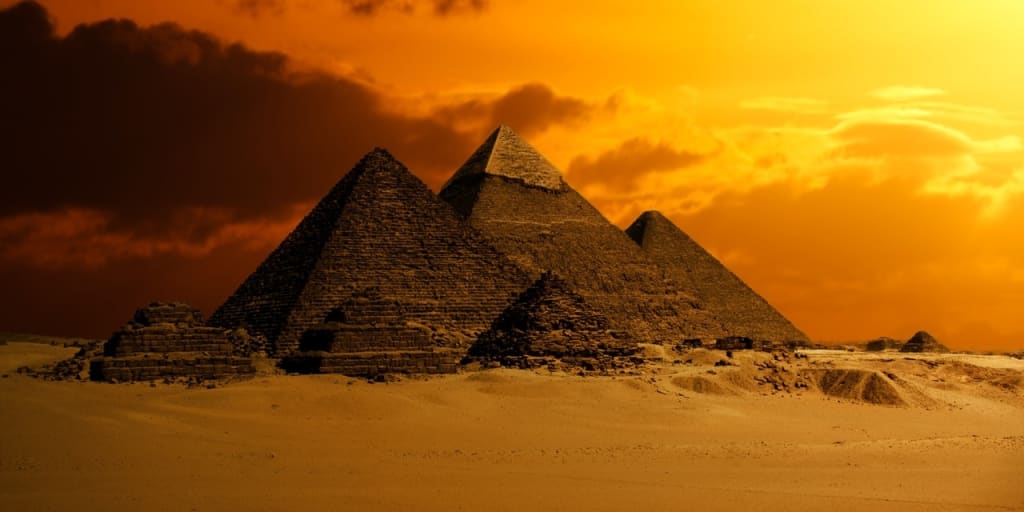
The Ancient Egyptians: A Legacy of Grandeur
The history of Ancient Egypt is a fascinating tale of civilization that flourished along the banks of the Nile River for over three millennia, leaving an indelible mark on the world. Their accomplishments in architecture, culture, religion, and administration continue to astound and inspire generations to this day.
The Emergence of Civilization (circa 3100 BCE)
Around 3100 BCE, the lands of Upper and Lower Egypt were unified under the rule of King Narmer, marking the beginning of Egypt's dynastic history. This unification led to the establishment of the world's first centralized state, with a Pharaoh as the divine ruler. This stable political system allowed the Egyptians to focus on developing their culture and society.
The Great Pyramids of Giza (circa 2580-2560 BCE)
The construction of the Great Pyramids of Giza stands as one of the most remarkable achievements of the Ancient Egyptians. Pharaohs Khufu, Khafre, and Menkaure commissioned these massive structures as tombs, showcasing their divine power and immortality. The precision and engineering marvels of these pyramids continue to captivate modern architects and engineers.
Hieroglyphics and Papyrus (circa 3200 BCE)
The Egyptians developed one of the earliest writing systems, known as hieroglyphics. These intricate symbols were used for religious inscriptions, monumental carvings, and everyday communication. Papyrus, made from the reeds of the Nile, served as their writing material. The preservation of ancient texts on papyrus has been a key factor in unraveling the mysteries of Ancient Egypt.
Religion and the Afterlife
Religion played a central role in Egyptian society, influencing their daily lives and worldview. They believed in a pantheon of gods and goddesses, with each deity governing different aspects of life. The concept of the afterlife held immense significance, as Egyptians believed in an eternal journey where one's soul faced judgment by Osiris, the god of the underworld.
Advances in Science and Medicine
The Ancient Egyptians were pioneers in various scientific fields, using their advanced knowledge to navigate agriculture, astronomy, and medicine. Their agricultural practices, including irrigation systems, ensured food security in a land heavily reliant on the annual flooding of the Nile. They also made considerable strides in treating diseases and injuries, employing natural remedies and surgical procedures.
Pharaohs and the Old, Middle, and New Kingdoms
Egyptian history is divided into three major periods: the Old Kingdom, the Middle Kingdom, and the New Kingdom. Each era saw notable pharaohs rise to power and oversee monumental projects, expand the empire, or consolidate its strength. Notable rulers like Ramses II and Hatshepsut are remembered for their significant contributions to Egyptian history.
The Decline and Legacy
Despite its enduring strength, Ancient Egypt faced periods of decline due to internal conflicts and external invasions. Around 30 BCE, Egypt was conquered by the Roman Empire, effectively ending its long line of Pharaohs. However, the cultural legacy of the Ancient Egyptians lived on, influencing neighboring civilizations and later inspiring modern society's fascination with their art, architecture, and mystical beliefs.
The Nile River: The Lifeline of Ancient Egypt
The Nile River, often referred to as the "Father of African Rivers," is the longest river in the world, stretching approximately 6,650 kilometers (4,130 miles) across northeastern Africa. From its source in Lake Victoria, located in modern-day Uganda, Burundi, and Tanzania, it winds its way through several countries before finally flowing into the Mediterranean Sea in Egypt. Throughout history, the Nile River has played a central role in shaping the development of civilizations, with none more notable than Ancient Egypt.
Conclusion
The history of the Ancient Egyptians is a testament to human ingenuity, resilience, and creativity. Their achievements in architecture, writing, and medicine laid the groundwork for future civilizations. Today, we continue to be mesmerized by their extraordinary pyramids, deciphering their hieroglyphics, and trying to understand the profound religious beliefs that shaped their worldview. The legacy of the Ancient Egyptians remains a constant reminder of the profound impact one civilization can have on the course of human history.
About the Creator
Nikusha Rekhviashvili
Hello guys Im Nick
I am from Georgia a small country between Europe and Asia.
I am here for create some good articles which are very interesting.
Keep reading
More stories from writers in History and other communities.
Is NATO Facing Its Biggest Crisis Yet?
Is NATO Facing Its Biggest Crisis Yet? For more than seventy years, NATO has been one of the strongest military alliances in the world. Formed after World War II, it was designed to protect its members through collective defense. An attack on one was considered an attack on all. For decades, this principle helped maintain stability in Europe and beyond. But today, NATO is facing one of the most challenging moments in its history.
By Wings of Time 6 days ago in History
Nobel Peace Prize
The Nobel Peace Prize has stood as one of the world’s most recognized honors. Awarded annually in Oslo, it is meant to celebrate individuals or organizations that have made significant contributions toward peace, diplomacy, and humanitarian progress. While its mission appears straightforward, the Nobel Peace Prize has never been free from debate. In recent years, conversations surrounding global politics—particularly discussions about the Trump Nobel Peace Prize—have brought renewed attention to how peace is defined, measured, and rewarded in the modern era. The Origins and Meaning of the Nobel Peace Prize The Nobel Peace Prize was established by Alfred Nobel, the Swedish inventor best known for creating dynamite. In his final will, Nobel directed that a portion of his wealth be used to recognize efforts that foster peace among nations, reduce standing armies, or promote diplomacy and cooperation. Since its first award in 1901, the prize has honored activists, diplomats, organizations, and world leaders whose actions shaped international dialogue. Unlike other Nobel categories, the peace prize is awarded by a Norwegian committee rather than a Swedish institution. This distinction reflects Nobel’s desire to separate the prize from national interests and focus instead on global responsibility. Over time, the definition of “peace” has expanded. Early recipients were often disarmament advocates or mediators. More recent laureates have included human rights defenders, climate activists, and international organizations working in conflict zones. Politics and the Nobel Peace Prize Despite its humanitarian ideals, the Nobel Peace Prize has always intersected with politics. Recognizing peace efforts often means evaluating political leadership, international negotiations, and long-term consequences—none of which are easy to measure in real time. Some awards have been widely celebrated, while others sparked controversy. Critics often argue that certain laureates were honored prematurely, before the lasting results of their actions became clear. Supporters counter that the prize is meant to encourage peace efforts, not merely reward completed achievements. This tension has made the Nobel Peace Prize a reflection of global priorities at any given moment, rather than a simple historical judgment. Donald Trump and Nobel Peace Prize Discussions Few modern political figures have generated as much debate in connection with the Nobel Peace Prize as Donald Trump. During and after his presidency, conversations about a potential Trump Nobel Prize emerged repeatedly, particularly among supporters who pointed to his role in diplomatic initiatives. The phrase Trump Nobel Peace Prize gained traction following agreements and negotiations in regions long marked by conflict. Advocates argued that these diplomatic efforts aligned with Alfred Nobel’s vision of reducing international tension through dialogue rather than force. At the same time, critics questioned whether these actions met the broader ethical and humanitarian standards traditionally associated with the award. They pointed to domestic divisions, foreign policy controversies, and unresolved global conflicts as reasons for skepticism. This divide highlights a core challenge of the Nobel Peace Prize: peace is rarely absolute, and political leadership is often complex and contradictory. Trump Nobel Peace Prize 2026: Speculation and Context As global politics continue to evolve, speculation around a Trump Nobel Peace Prize 2026 has appeared in media discussions and public commentary. It is important to note that nominations for the Nobel Peace Prize are confidential for decades, and speculation does not confirm consideration or selection. However, the mere discussion of Trump Nobel Peace Prize 2026 reflects how the award has become part of broader cultural and political conversations. Supporters view such recognition as validation of diplomatic achievements, while critics see the speculation as politicizing an institution meant to rise above partisan debate. This dynamic is not unique to Trump. Many past leaders, from various ideological backgrounds, were debated heavily before or after receiving the prize. The Nobel Peace Prize often mirrors global disagreements rather than resolving them. How the Nobel Committee Makes Its Decision Each year, hundreds of nominations are submitted by qualified individuals, including academics, lawmakers, and previous laureates. The Nobel Committee evaluates these nominations through research, expert consultation, and internal debate. The process considers intent, impact, and long-term significance. However, because peace efforts often unfold over years or decades, the committee must make decisions without full historical clarity. This reality explains why some awards age gracefully while others remain controversial. The committee rarely responds directly to public pressure or online campaigns. Media attention, including discussions around a Trump Nobel, does not guarantee influence over the final decision. The Broader Impact of the Nobel Peace Prize Beyond individual recipients, the Nobel Peace Prize plays a symbolic role. It brings global attention to issues that might otherwise be ignored, from humanitarian crises to fragile peace processes. Even controversial nominations can spark meaningful debate about what peace truly means in the modern world. The prize also raises questions about accountability. When leaders are considered for such recognition, the public is encouraged to examine policies, outcomes, and moral responsibility more closely. In this sense, discussions surrounding the Trump Nobel Peace Prize are not just about one individual. They reflect deeper conversations about diplomacy, leadership, and the evolving standards by which peace is judged. Conclusion: A Prize That Reflects the World The Nobel Peace Prize remains one of the most influential and debated honors in global society. Its power lies not only in recognizing peace efforts but also in challenging the world to think critically about conflict, cooperation, and responsibility. Whether discussions involve historic activists or modern political figures like those associated with Trump Nobel Peace Prize 2026 speculation, the award continues to reflect the complexities of international relations. Peace is rarely simple, and neither is the process of honoring it. Ultimately, the Nobel Peace Prize serves as a reminder that striving for peace is an ongoing journey—one shaped by ideals, actions, and the difficult choices that define human history.
By Saboor Brohi 2 days ago in History
Silver Screen Magic with Mae West
American actress and singer Mae West became a popular film actress during the Great Depression. She started entertaining in vaudeville, then performed on Broadway, and finally went to Hollywood. She signed up with Paramount Pictures and made her debut in the 1932 film “Night After Night.” She also starred in musicals, comedies, and crime dramas. The American Film Institute named her one of the best classic Hollywood actresses.
By Rasma Raisters5 days ago in Geeks


Comments
There are no comments for this story
Be the first to respond and start the conversation.