World History
HOW THIS UNIVERSE CAME INTO EXISTENCE. Content Warning.
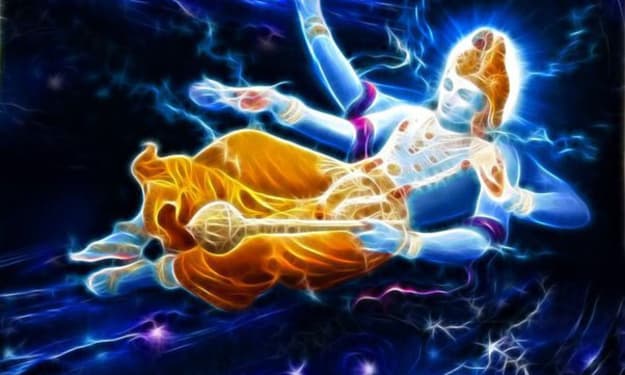
Long, long ago, in a time beyond time, there was nothing but an eternal darkness, and in this mysterious void, God slumbered. As He peacefully slept, a tiny seed of creation began to stir within the depths of His consciousness.
By Murthy Karumuri2 years ago in History
The Forge of Dreams
Once upon a time, in the heart of the 19th century, amidst the booming sounds of hammers and the hissing of steam engines, there lived a young boy named William. His small town, nestled within the embrace of the lush English countryside, was forever changed by the relentless march of progress during the Industrial Revolution.
By Luka Jovanovic2 years ago in History
And Now We Know How Easter Island Giants Were Moved
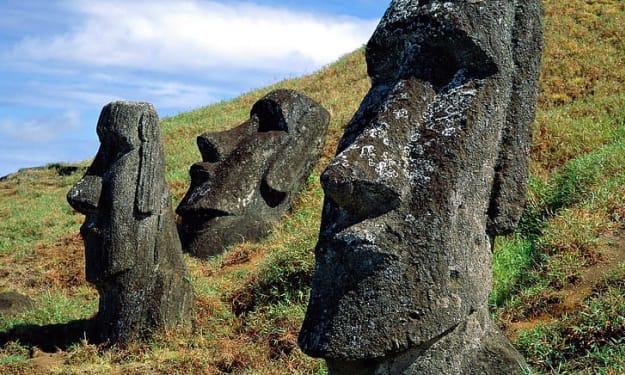
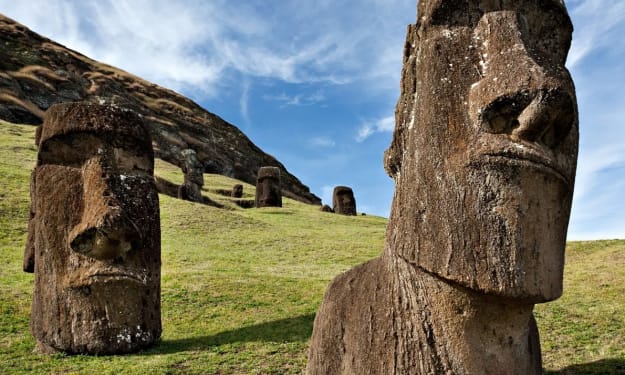
For centuries, the Easter Island giant heads, known as the moai statues, have captivated people worldwide and even earned their own emoji. The true significance behind these enigmatic figures has remained a mystery for hundreds of years. However, recent discoveries shed light on how they were constructed and moved to their permanent locations. Each moai statue comprises three distinct parts: a large yellow body, a red hat or top knot, and white inset eyes with a coral iris. Approximately 1,000 of these remarkable statues were created on Easter Island.
By Makim Piodos2 years ago in History
The Last Stand
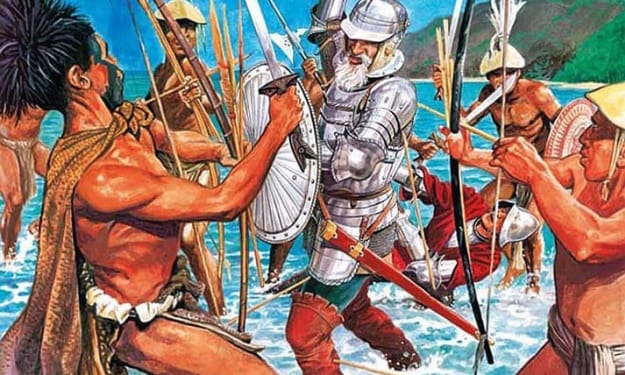
The Battle of Mactan was a pivotal conflict in Philippine history. It took place in 1521 near the island of Mactan in the Visayas region of the Philippines. The battle pitted Lapu-Lapu, and his warriors against Portuguese explorer Ferdinand Magellan and his small force of Spanish soldiers and Filipino mercenaries. Lapu Lapu is one of the most famous figures in Philippine history. He was a native chieftain who led the battle of Mactan against the Spanish forces of Ferdinand Magellan in 1521. He is often considered to be the first Filipino hero to have resisted foreign rule. The city of Lapu Lapu was named in his honour, and his statue stands in the plaza at the city center, as a reminder of his bravery. As such, he is revered as a national hero by most Filipinos and is given much respect for his courage and determination.
By Ziain Morales2 years ago in History
Shattered Reflections
In the heart of a bustling city, a young man named Alex lived a seemingly ordinary life. Tall and handsome, he had a charismatic smile that lit up the room whenever he entered. But beneath the facade of happiness lay a shattered soul haunted by a dark past.
By Azubuike Johnson Okachi2 years ago in History
Archaeologists Are Afraid To Enter China's First Emperor's Tomb.
In an ordinary field in the Shaanxi province of China, farmers made one of the most significant archaeological discoveries of all time in 1974. They unearthed pieces of a clay human figure while digging. Simply put, this was the tip of the iceberg.
By Francis Dami2 years ago in History
Unraveling the Secrets of the 1930s New York Mafia: An Era of Crime and Power
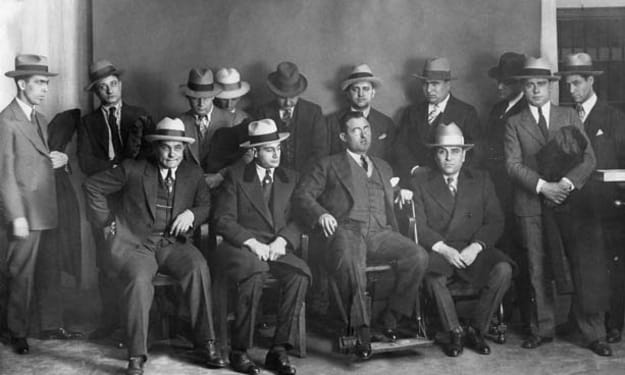
The 1930s were a tumultuous decade for the United States, marked by economic depression, political unrest, and a blossoming underworld empire—the New York Mafia. A captivating era filled with larger-than-life characters, shadowy dealings, and organized crime, the 1930s Mafia left an indelible mark on the nation's history. Let's delve into the intriguing world of the 1930s New York Mafia and explore its rise, key figures, operations, and eventual downfall.
By Mircea Voicu2 years ago in History
Eternal Echoes: Titanic Story That Sends Shivers Down Your Spine [lego titanic,lego titanic set]. Content Warning.
On April 10-1912, the RMS Titanic set sail from England. But this wasn't the launch of a regular ship, The Titanic was the largest liner ever built at the time. It was 882 feet long nearly the size of three soccer fields and measured from the hull to the top of the smokestacks.
By Muhammad Asim2 years ago in History
'Life in Pompeii: A Glimpse into Ancient Roman Culture'
Pompeii is an ancient Roman city that was destroyed by the eruption of Mount Vesuvius in 79 AD. Despite its tragic end, Pompeii was an important cultural center and offers a unique glimpse into the lifestyle of the Roman people. This article will explore the everyday life of the people of Pompeii, from their work and leisure activities to their diet and religious practices.
By Ziain Morales2 years ago in History
How Easter Island Giants Were Moved
The enigmatic Easter Island giant heads, or moai statues, have captivated the world's imagination for centuries. Even today, they hold such significance that they boast their own emoji. While their true purpose remains shrouded in mystery, researchers have shed light on how these colossal statues were crafted and transported to their iconic locations. Each moai statue comprises three distinct parts: a large yellow body, a red hat or top knot, and white inset eyes adorned with coral irises. Astonishingly, over a thousand of these awe-inspiring creations were crafted on the island. The primary material used for their construction was volcanic tuff, sourced from a local quarry nestled within a former volcano. The choice of volcanic tuff facilitated the carving process, but it also presented a considerable challenge in the transportation phase.
By Daniel Fuentes Hermosa2 years ago in History