World History
An Excursion into Old Secrets
In the immense woven artwork of mankind's set of experiences, scarcely any mysteries loom as enormous or mix the creative mind as significantly as the legend of Atlantis. Covered in fantasy and secret, this mythical development has charmed personalities for quite a long time, starting vast discussions among history specialists, archeologists, and devotees. Was Atlantis simply an invention of creative mind, a scholarly moral story devised by the old thinker Plato? Or on the other hand does it disguise a more profound truth, a lost progress lowered underneath the waves?
By Christopher Ezeh2 years ago in History
Unveiling the Viking Chronicle: Pillagers, Merchandisers and Combatants
The Viking Age, which lasted from the late 8th to the early 11th century, is a fascinating and transformative era in history. While it was previously known for the fierce activities of Scandinavian seafarers, recent archaeological and scientific discoveries have provided a more intricate understanding of Viking culture. Contrary to the simplistic depiction of them as mere plunderers, the Vikings were involved in a complex interplay of raiding, trading, and strategic diplomacy, which had a lasting impact on the trajectory of history.
By Johnny Six2 years ago in History
"The Lone Star's Last Stand"
"The Lone Star's Last Stand" Once upon a time, in the vast expanse of the Lone Star State, a quiet rumble of discontent echoed across the plains. Texas, proud and independent, had always harbored a spirit that set it apart from the rest of the United States. However, as the years passed, a growing sense of frustration and disillusionment began to fester within the hearts of its people.
By Mohamed El Mahdy2 years ago in History
American Invasion of Quebec
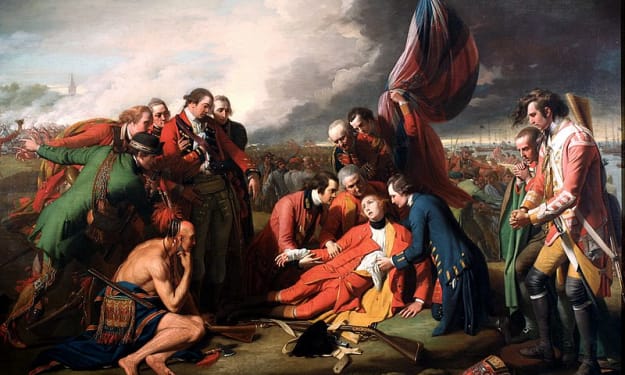
The American invasion of Quebec (September 1775-June 1776) was a military campaign undertaken during the American Revolutionary War (1775-1783). Hoping to induce the Province of Quebec to join the rebellion, the Second Continental Congress dispatched troops under generals Richard Montgomery and Benedict Arnold to occupy British-controlled Canada. The invasion climaxed with an American defeat at the Battle of Quebec.The invasion marked the first offensive campaign conducted by the American Continental Army, which occurred despite the Continental Congress' insistence that it was fighting a purely defensive war. It was a two-pronged invasion; a 1,200-man colonial force under General Montgomery left Fort Ticonderoga in September 1775, going on to capture Fort Saint-Jean and occupy Montreal. A second 1,100-man expedition, led by General Arnold, departed from Cambridge, Massachusetts, and arrived at the city of Quebec by way of Maine. Here, Arnold's force linked up with Montgomery's, and the Americans launched an assault on Quebec City on 31 December 1775. The battle went disastrously for the Americans; Montgomery was killed, Arnold was wounded, and the American attack was repulsed.
By Shazee Tahir2 years ago in History
Buffalo and the Plains Indians
The buffalo were essential to the Plains Indians, and other Native American nations, as they were not only a vital food source but were regarded as a sacred gift the Creator had provided especially for the people. Buffalo (bison) supplied Native Americans with the resources that sustained them physically, culturally, and spiritually.Among Plains Indian nations including the Sioux, Cheyenne, Arapaho, Blackfoot, Pawnee, Kiowa, Mandan, and Comanche – as well as over 20 others – the American bison (commonly referred to as buffalo) was essential to every aspect of their daily lives, and today it is still honored by these nations in the same way. Commenting on the importance of the buffalo to Native Americans, historian Richard B. Williams notes:Between c. 1840-1890, with the approval and encouragement of the US government, millions of buffalo were slaughtered primarily to deprive the Plains Indians of their major resource and allow for the westward expansion of Euro-American settlements. The large herds of buffalo, and the nomadic Plains Indians, impeded initiatives such as the transcontinental railroad and so were regarded as obstacles to be eliminated. White buffalo hunters, US military, merchants, and white settlers all engaged in the systematic slaughter of the buffalo to deprive the Plains Indian nations of their livelihood and drive them, along with the buffalo, to extinction.
By Shazee Tahir2 years ago in History
Cheyenne Creation
The Cheyenne Creation Story is the account of the beginning of the world, the seasons, and the first people in the time before time when all was water, and nothing existed but the Creator and aquatic birds. There are many versions of the tale, but the most popular shares similarities with the Lakota Sioux Creation Story.
By Shazee Tahir2 years ago in History
UNVEILING SECRECY
INTRO The ambivalence of secrecy is evident in the delicate balance between providing protection and the potential for abuse within these societies. While secrecy offers solace and a sense of belonging to members of the Isis cult, it also raises questions about the ethical implications and potential harm that can arise from such hidden practices. By examining the intricate rituals and timeless traditions of secret societies, we gain insight into the complex appeal and repercussions of secrecy in both historical and modern contexts. The captivating nature of these enigmatic organisations continues to bridge the realms of history, mythology, and contemporary intrigue, fueling ongoing debates and conspiracies that shroud these parallel worlds in mystery. The exploration of secrecy within these societies reveals a delicate balance between safeguarding knowledge and the potential for misuse. While secrecy can provide a sense of security and belonging, it also raises concerns about power dynamics and exclusionary practices. Ultimately, the enduring fascination with secret societies highlights the enduring human desire for mystery and the allure of hidden knowledge. These secret societies have the power to provide a sense of belonging and exclusivity, allowing members to feel a part of something greater than themselves. However, this very exclusivity can also lead to abuse of power and manipulation within these closed circles. It is crucial to recognise and navigate the delicate balance between the protection and potential harm that secrecy can bring. Ultimately, our enduring fascination with secret societies reflects our ongoing fascination with the unknown and our desire to uncover hidden truths.
By CONSTANT AKPAH2 years ago in History
Embracing African Culture Anywhere You Are: A Comprehensive Guide to Cultural Appreciation
Africa, a continent rich in diversity, is home to a multitude of vibrant cultures, each with its unique traditions, languages, and art forms. As the world becomes more interconnected, the appreciation and celebration of African culture are no longer confined to geographical boundaries. This article aims to provide a comprehensive guide on how individuals can practice and appreciate African culture, irrespective of their location.
By Chinedu Charles Okonkwo2 years ago in History
The Bay of Pigs Invasion and its Aftermath, April 1961–October 1962
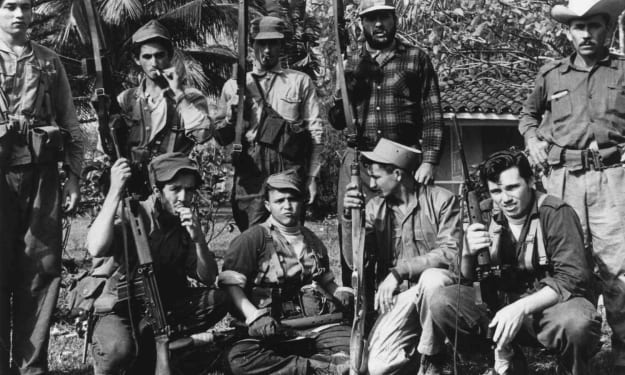
A left-wing revolution in Cuba had ended in 1959 with the ouster of President Fulgencio Batista and the establishment of a new government under Premier Fidel Castro. The Castro regime quickly severed the country’s formerly strong ties with the United States by expropriating U.S. economic assets in Cuba and developing close links with the Soviet Union.
By Shazee Tahir2 years ago in History
U.S. Involvement in the Vietnam War: the Gulf of Tonkin and Escalation, 1964
In early August 1964, two U.S. destroyers stationed in the Gulf of Tonkin in Vietnam radioed that they had been fired upon by North Vietnamese forces. In response to these reported incidents, President Lyndon B. Johnson requested permission from the U.S. Congress to increase the U.S. military presence in Indochina. On August 7, 1964, Congress passed the Gulf of Tonkin Resolution, authorizing President Johnson to take any measures he believed were necessary to retaliate and to promote the maintenance of international peace and security in southeast Asia. This resolution became the legal basis for the Johnson and Nixon Administrations prosecution of the Vietnam War.
By Shazee Tahir2 years ago in History