World History
Ancient Greek Martial Art ‘Pankration’ and Its Influence on MMA
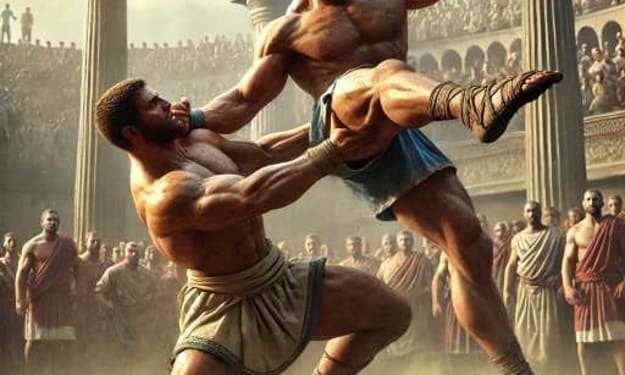
Ancient Greek Martial Art ‘Pankration’ and Its Influence on MMA Pankration was one of the most intense and revered sports of ancient Greece combining elements of boxing and wrestling with an almost unrestricted set of rules. It was a sport that truly embodied the Greek ideal of arete a term that signified excellence in all aspects of life including physical and mental prowess. Much like modern Mixed Martial Arts (MMA) pankration was a brutal yet highly respected competition that tested an athlete’s strength skill intelligence and endurance. The origins of pankration can be traced back to 648 BCE when it was introduced into the Olympic Games. However historians believe that its roots go even further back as Greeks had long practiced various forms of unarmed combat. The sport was said to have been created by the legendary heroes Hercules and Theseus who were believed to have used its techniques in their mythical battles. This connection to mythology only increased its appeal, as pankration was seen as a test of both physical power and divine favor.
By Adnan Rasheed11 months ago in History
10 Unbelievable Facts from History That Will Shock You
10 Unbelievable Facts from History That Will Shock You History is filled with astonishing events—some hidden in plain sight, others buried in time. From unexpected war durations to ancient scientific discoveries, these 10 mind-blowing historical facts will change the way you see history! 1. Napoleon Wasn’t Actually Short Many believe that Napoleon Bonaparte was a short man with an oversized ego. However, this is actually a misconception. His recorded height was 1.58 meters, measured using the French system. In modern measurements, this translates to approximately 1.73 meters (5.68 ft) which was an average height for his time. The myth of his short stature was a product of British propaganda, intended to mock him and weaken his image as a strong leader. 2. The Great Fire of London Helped End a Plague The year 1665 was one of the darkest in London's history, as the bubonic plague swept through the city, killing nearly 100,000 people. The very next year, in 1666, a massive fire broke out in Pudding Lane, spreading rapidly through London. Although the fire destroyed thousands of homes and businesses, it unexpectedly helped stop the plague by burning down areas infested with disease-carrying rats and fleas. 3. The Eiffel Tower Was Almost Demolished Today, the Eiffel Tower is one of the most iconic structures in the world, but did you know that it was originally meant to be temporary? Built in 1889, many Parisians hated the structure, calling it ugly and unnecessary. The French government planned to dismantle it after 20 years. However, its importance for radio transmissions during military operations helped it survive, securing its place as a permanent symbol of French culture. 4. The CIA Used Cats as Spies During the Cold War, the CIA came up with an unconventional espionage method—training cats to be spies! Through Project Acoustic Kitty, they implanted microphones and antennas inside cats, hoping they could eavesdrop on Soviet officials. Unfortunately, the first "spy cat" was hit by a taxi almost immediately after being released on its mission, causing the $20 million project to fail spectacularly. 5. Ancient Egyptians Had a Primitive Pregnancy Test The Ancient Egyptians were far ahead of their time in medical knowledge. Over 3,500 years ago, they developed an early pregnancy test using wheat and barley seeds. A woman would urinate on the seeds, and if the seeds sprouted quickly, she was considered pregnant. Surprisingly, modern experiments have shown this method was about 70% accurate, making it one of the earliest forms of pregnancy detection! 6. The Shortest War in History, Lasted Just 38 Minutes Wars often last years or even decades, but the Anglo-Zanzibar War in 1896 holds the record for the shortest war in history. When the British demanded that Zanzibar's new sultan step down, he refused. As a result, the British navy bombarded his palace, forcing Zanzibar to surrender in just 38 minutes! It remains one of the fastest military defeats ever recorded. 7. Vikings Discovered America Before Columbus Many people believe Christopher Columbus was the first European to reach America in 1492, but historical evidence suggests otherwise. Around the year 1000 AD, Leif Erikson, a Viking explorer from Norway, landed in what is now Newfoundland, Canada—almost 500 years before Columbus. Archaeologists have even discovered Viking settlements in North America, proving they arrived long before the Spanish explorers. 8. The Statue of Liberty Was Originally a Lighthouse The Statue of Liberty, one of the most famous symbols of freedom, was not only a gift from France but also served a practical purpose. When it was completed in 1886, it was used as a lighthouse to help guide ships into New York Harbor. However, due to insufficient lighting technology, it was too dim to be effective, and the lighthouse function was discontinued in 1902. 9. A Gladiator Became a Roman Emperor The Roman Empire was known for its elite ruling class, but one of its emperors, Maximinus Thorax, had a very unusual origin. He was born into a poor family and spent his early years as a shepherd. Later, he trained as a gladiator and joined the Roman army, where his incredible strength and combat skills caught the attention of the emperor. Over time, he climbed the ranks and eventually became one of Rome’s most powerful leaders, proving that even a gladiator could rise to power in ancient times. 10. Cleopatra Lived Closer to the Moon Landing Than to the PyramidsWhen we think of Ancient Egypt, we often assume Cleopatra was closely linked to the era of pyramid construction. However, Cleopatra VII, the last queen of Egypt, lived around 30 BC—whereas the Great Pyramid of Giza was built around 2560 BC. That means Cleopatra lived closer in time to the 1969 moon landing than to the construction of the pyramids, which had already stood for over 2,500 years by her time! This astonishing fact highlights the immense longevity of Egyptian civilization. By Cleopatra’s era, the pyramids were already considered ancient wonders, much like how we perceive the ruins of Rome or Greece today. Despite their age, they continued to inspire awe, standing as silent witnesses to millennia of history, culture, and innovation.
By MystiTech Hub11 months ago in History
Rabindranath Tagore: The Timeless Bard of Bengal
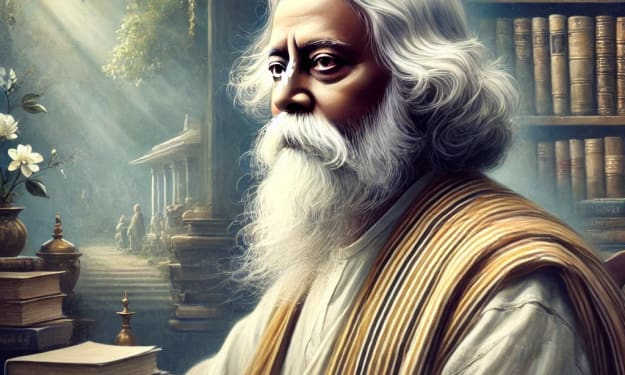
Introduction Rabindranath Tagore, one of the greatest literary figures of the 19th and 20th centuries, was not just a poet but a philosopher, playwright, novelist, musician, painter, and social reformer. Known as "Gurudev", Tagore became the first non-European to win the Nobel Prize in Literature in 1913 for his world-renowned work "Gitanjali" (Song Offerings). His literary genius, humanitarian vision, and artistic endeavors have left an indelible mark on the cultural and intellectual landscape of not only India but the entire world.
By Digital Home Library by Masud Rana11 months ago in History
The Diplomat Movie's Review: A Real Life Inspired Thriller with Emotional Depth . AI-Generated.
The Diplomat Movie Review: A Thrilling Real-Life Inspired Political Drama Political thrillers have always captivated audiences, offering a glimpse into the world of power, diplomacy, and real-life events. If you're a fan of The Diplomat (Netflix), House of Cards, or the best political thriller movies, you might be excited about John Abraham’s latest movie, The Diplomat (2024). This film is a real-life inspired movie based on the Uzma Ahmed true story, where an Indian woman finds herself trapped in a foreign land and fights for survival.
By Ramesh Mahato 11 months ago in History
How One Woman Fixed WW2’s Biggest Problem.
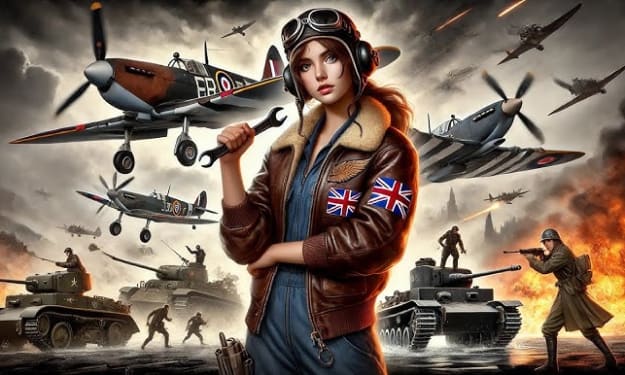
How One Woman Fixed WW2’s Biggest Problem. During World War II the world was locked in a brutal conflict that stretched across continents testing the limits of human endurance strategy and innovation. While most of the war’s most famous figures were military leaders politicians and soldiers on the battlefield there were many unsung heroes working behind the scenes to solve critical problems. One such hero was a woman whose contributions helped fix one of the war’s biggest challenges an issue that if left unresolved could have changed the course of history. The problem she tackled wasn’t one of direct combat but of logistics intelligence and survival. The Allied forces faced a massive crisis the relentless attacks by German U-boats in the Atlantic Ocean. These submarines, known for their deadly efficiency were sinking hundreds of merchant and military ships cutting off vital supplies of food weapons and troops. The situation was so dire that British Prime Minister Winston Churchill later admitted that the only thing that truly frightened him during the war was the U-boat menace. The Germans had developed a sophisticated communication system using the infamous Enigma machine allowing them to coordinate attacks without the Allies understanding their plans. If the Allies couldn’t break the code they risked losing the Atlantic and with it the war.
By Adnan Rasheed11 months ago in History
The Enduring Power of Grief
In the heart of a bustling city, amidst the cacophony of life, resided a soul named Eleanor. Once vibrant and full of life, her spirit was now a canvas painted in shades of blue, a somber reflection of the pain that had seeped into her being.
By Digital Home Library by Masud Rana11 months ago in History
"From Heroines to Equals: The Unfinished Journey of Women in Kosovo"
In honor of International Women’s Day, I want to share some reflections on the evolving role of women in Kosovo—a journey marked by sacrifice, resilience, and the slow but steady push for equality.
By Zana Sokoli11 months ago in History
"Tornado Warning: Understanding the Threat and How to Stay Safe"
Tornadoes are one of nature’s most destructive forces, capable of causing widespread devastation in a matter of minutes. These violent windstorms, characterized by their funnel-shaped clouds, can reach wind speeds of over 200 miles per hour, tearing apart homes, uprooting trees, and tossing vehicles like toys. When a tornado warning is issued, it means that a tornado has been sighted or indicated by weather radar, and immediate action is required to protect lives and property. In this article, we’ll explore what a tornado warning means, how to prepare for one, and what steps to take when the alarm sounds.
By Bint E Ruqqyyah11 months ago in History
Cher Ami: The Heroic Pigeon That Saved 194 Soldiers in WWI
WHO WAS CHER AMI? Cher Ami(dear friend in French) was a pigeon born on April 21, 1918, who served in World War I as a homing or messenger pigeon. He is famous for saving the 194 members of the “Lost Battalion” led by Major Charles White Whittlesey who were surrounded by the German Army during the Meuse-Argonne offensive.
By Shubham Maurya11 months ago in History
Dhulivandan & Holi: The Ultimate Guide to India's Most Colorful Festival
Holi, the jubilee of colors, is one of the maximum vibrant and pleased fests in India. It marks the appearance of spring and symbolizes the triumph of proper over incorrect. The jubilee is located with first-rate enthusiasm throughout the u. s. a., with people smearing each different with hues, dancing to lively music, and indulging in succulent candies and snacks. one of the important rituals associated with Holi is Dhulivandan, which takes vicinity a day earlier than the primary festivity.
By Sameer Chandavarkar11 months ago in History
The Majesty of the Blue Sapphire: A Navaratna Gem
Navaratna Part 3: The Radiance of Dejected Sapphire Blue Sapphire, additionally accepted as Neelam, is one of the best admired gemstones amid the Navaratna (nine gems). It is a corundum mineral composed of aluminum oxide with traces of adamant and titanium, which accord it its signature abysmal dejected color. Historically associated with royalty, wisdom, and all-powerful favor, the Dejected Azure holds immense cultural, astrological, and bread-and-butter significance.
By Say the truth 11 months ago in History