Trivia
The Life and Works of Theopompus
Theopompus of Chios stands as a significant historian from ancient Greece, yet his legacy is frequently eclipsed by renowned figures such as Herodotus and Thucydides. Born in the 4th century BCE, he was more than a mere recorder of historical events; he was a keen critic of the political landscape, ethical standards, and notable individuals of his era. Although much of his work has been lost to time, it was once acclaimed for its vivid storytelling, sharp humor, and careful attention to detail. This essay delves into Theopompus’ life, his principal writings, his historical methodologies, and his enduring influence on the field of historiography.
By A História9 months ago in History
Perfect brownies baked at high altitude are possible thanks to Colorado’s home economics pioneer Inga Allison
Many bakers working at high altitudes have carefully followed a standard recipe only to reach into the oven to find a sunken cake, flat cookies or dry muffins.
By Abjol Hussain Laskar9 months ago in History
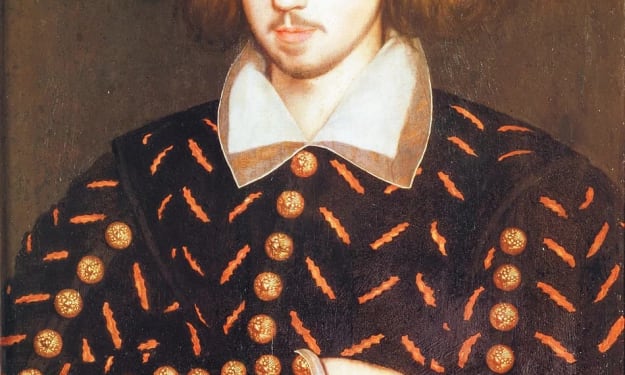
The Violent and Mysterious Death of Christopher Marlowe
Christopher Marlowe, one of Elizabethan England’s most enigmatic and brilliant playwrights, died young and under circumstances so suspicious that his death has become one of literary history’s most enduring mysteries. Known for his powerful blank verse and provocative themes, Marlowe’s meteoric rise in the late 16th century was matched only by the suddenness and violence of his demise.
By Abjol Hussain Laskar9 months ago in History
Nelson Mandela: A Legacy of Liberation, Reconciliation, and Hope
Nelson Mandela: A Legacy of Hope, Peace, and Liberation Nelson Rolihlahla Mandela, more commonly referred to as Madiba, is still regarded as an iconic figure from both the 20th and 21st centuries. His life is a source of inspiration for people all over the world who are working toward equality and human dignity. It is marked by unwavering dedication to justice, significant sacrifice, and an extraordinary capacity for forgiveness. Mandela's journey is a testament to the strength of the human spirit in the face of oppression, from anti-apartheid activist to political prisoner to first president of a democratic South Africa. Born on July 18, 1918, in the Eastern Cape of South Africa, Mandela's early life provided little indication of the monumental role he would play in shaping his nation's destiny. He learned about the systemic racial discrimination and injustice that black South Africans faced under the apartheid regime while attending the University of Fort Hare and local missionary schools. When he joined the African National Congress (ANC) in 1944, a liberation movement that was initially committed to non-violent resistance against apartheid laws, his activism took off in earnest. However, following the Sharpeville massacre in 1960, where peaceful protestors were brutally killed by police, Mandela and the ANC leadership concluded that armed struggle was a necessary last resort. He co-founded the ANC's military wing, Umkhonto we Sizwe ("Spear of the Nation"), which carried out sabotage against important government facilities. His arrest in 1962 and the infamous Rivonia Trial in 1964, in which he and other ANC leaders were charged with sabotage and conspiracy, were both as a result of this shift. His powerful speech from the dock, in which he said he was willing to die for the idea of a free and democratic society, was heard all over the world and made him into a symbol of resistance. Mandela was given a life sentence and spent the next 27 years in harsh conditions on Robben Island and other South African prisons. Mandela's influence only increased despite his imprisonment. The global anti-apartheid movement demanded his release and the end of the oppressive apartheid system, making him a global celebrity. Millions of people around the world were inspired by his unwavering resolve and refusal to compromise his values. Domestic and international pressure on the South African government increased toward the end of the 1980s. President F.W. de Klerk started reforms in the face of growing unrest and the realization that apartheid was unsustainable. These reforms led to Mandela's unconditional release on February 11, 1990. Mandela was a key player in the delicate negotiations for a peaceful transition to a multiracial democracy after his release. Together with de Klerk, he worked tirelessly to end apartheid laws, free political prisoners, and create a framework for free and fair elections. In 1993, they were awarded the Nobel Peace Prize for their collective efforts in navigating this difficult period. Nelson Mandela became the nation's first black president after its first democratic elections were held in 1994. His presidency was marked by a dedication to nation-building and reconciliation. He advocated for the Truth and Reconciliation Commission, a ground-breaking initiative that encouraged a process of healing and comprehension by allowing both perpetrators and victims of apartheid-era violence to share their experiences. His government also prioritized addressing the deep-seated inequalities created by apartheid, implementing policies aimed at improving housing, education, healthcare, and economic opportunities for the black majority. Mandela's leadership was marked by pragmatism, inclusivity, and a profound commitment to the well-being of all South Africans, despite the enormous challenges he faced. Mandela voluntarily resigned from office in 1999 after serving one term, establishing a significant precedent for democratic leadership in Africa. However, he continued to be an active global statesman, working through the Nelson Mandela Foundation to promote peace, human rights, and the fight against HIV/AIDS. On December 5, 2013, Nelson Mandela passed away at the age of 95. Global mourning surrounded his passing, but his legacy continues to inspire. In addition to his brave resistance to apartheid, he is remembered for his extraordinary capacity for forgiveness, his dedication to reconciliation, and his unwavering belief in the possibility of a just and equitable world. Mandela's legacy reaches far beyond South Africa's borders. He stands as a symbol of hope for oppressed people everywhere, a testament to the power of perseverance, and an enduring reminder that even the most entrenched systems of injustice can be overcome through courage, determination, and a commitment to human dignity. His life is a powerful example of the significance of dialogue, comprehension, and the pursuit of a shared humanity in constructing a better future for everyone. Canvas
By Tafsirul Talukdar luvdo9 months ago in History
Nineteen Eighty-Four
1984 (also written as Nineteen Eighty-Four) is a powerful and chilling novel written by George Orwell. It was published in 1949, just after World War II, but it talks about a future world that feels cold, controlling, and scary. This book is not only a story—it’s a warning about what could happen if governments gain too much power and people lose their freedom.
By Muhammad Hayat9 months ago in History
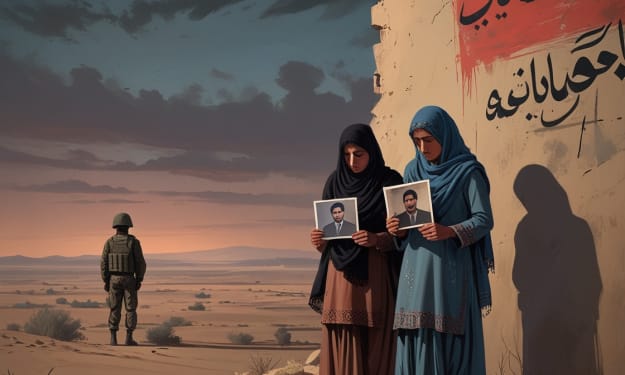
Silent Genocide: The Hidden Massacre of Balochistan. AI-Generated.
The Concealed Afflictions: The Balochistan Massacre – An Overlooked Episode of Contemporary History In spite of being one of the least addressed atrocities of the contemporary period, the persistent turmoil and purported massacres in Balochistan stand as a distressing reminder of the muted agony of a populace ensnared in the realm of politics and power. This article reveals the concealed particulars of decades of discord in the Baloch region, examining its historical origins, political conflicts, and the human toll that persistspredominantly disregarded by international media and historical narratives.
By Say the truth 9 months ago in History
The Most Unique Easter Traditions Around the World
For many, celebrating Easter usually involves Easter egg decorating and hunting. Painting Easter eggs is such a fun activity as the eggs are painted with many vibrant colors as well as pastels to reflect the spring season. Colorful eggs are hidden in yards; some nestled in between Easter lilies and tulips as children eagerly search for them.
By Jasmine Aguilar9 months ago in History
The whispering banyan tree.
Within the heart of a calm town in West Bengal stood an enormous, old banyan tree. Its roots turned just like the fingers of overlooked mammoths, coming into the soil and sky. The villagers called it “Boroboro Gachh,” and they accepted it had a soul.For eras, individuals whispered stories almost to the tree. A few said it ensured the town. Others claimed it tuned in. But no one had ever demonstrated anything—until Arman arrived.Arman was not a villager. He was a 22-year-old college understudy from Kolkata, examining old stories. When he first heard of the banyan tree, he thought it would be just another town myth. But something about the way the ancient postmaster talked of it caught his interest.“It talks when the moon is full,” the postmaster had said, his eyes cloudy with age. “But not in words. In whispers.”Charmed, Arman pressed his sacks and traveled to the town. The individuals were inviting but cautious. They told him stories of how the tree had spared lives amid surges, how it shined faintly on certain evenings, and how feathered creatures never settled in its branches—but none would go close to it after sunset.Arman giggled it off. “Superstition,” he said to himself. But deep down, he wasn't beyond any doubt.That night, beneath a full moon, Arman set up camp close the tree. He brought a scratchpad, a voice recorder, and his camera. The villagers cautioned him once more, but he waved them off considerately.Midnight arrived. Crickets sang. The wind moved delicately. The tree stood silent—just a tree.But then… the discussion changed.It wasn't colder, but heavier. As in the event that the world was holding its breath. Arman looked up. The moonlight sparkled on the roots. And after that, exceptionally faintly, he listened to it:“Arman…”He solidified.It was a whisper. Delicate. Like wind passing through ancient leaves—but clearer.“Who's there?” he inquired, checking the obscurity.No answer.He checked his recorder. It was still running. He rewound some seconds and played it back.“Arman…”“Why have you come?”His heart dashed. The voice was there. But no one was around.Swallowing his fear, he sat back down and whispered, “I need to know your story.”Hush.Then:“Listen.” Over the following few hours, Arman listened to pieces of a tale—fragmented whispers carried by the wind. A story of a lady named Meera, who had once lived within the town centuries back. A healer, a kind soul. But amid a starvation, she was faulted for awful good fortune and blamed for witchcraft. The villagers, frantic and frightened, tied her to the banyan tree and cleared out of there.She passed on beneath the moon, shattered.The tree, fed by her blood, took in her torment. And her soul.Since at that point, Meera's soul had whispered to those who listened—not for exact retribution, but for recognition.“They overlooked me,” the tree whispered. “But I keep in mind them all.”Arman sat still, overpowered by distress he couldn't clarify. He saw flashes in his mind—of Meera's life, her thoughtfulness, and her passing. And the centuries of hush that followed.When first light drew closer, the whispers faded. The weight within the discussion lifted.The tree stood still once more.Arman didn't take off from the town. He remained for a week, tuning in each night, learning more about approximately Meera. He composed everything down. His recorder filled with ghostly, whispering voices. But the villagers refused to tune in.“They'll think you're mad,” the postmaster cautioned.“I don't care,” Arman answered. “The world ought to know.”When he returned to Kolkata, Arman distributed a paper titled “Whispers of the Forgotten.” It picked up consideration from teachers, history specialists, and otherworldly searchers. Numerous people rejected it as fiction. A few accepted. But Arman didn't care. He had listened to the truth.He returned to the town once a year, always on the night of the total moon. He sat beneath the banyan tree, not anxious, and tuned in to Meera's voice.One year, he brought blossoms.“I keep you in mind,” he whispered, putting them at the base of the tree.The branches overhung gently—though the wind was still.And from deep inside the roots, a whisper came:“Thank you.”
By Sumaiya’s Wordbox9 months ago in History
BAPS Temple & Abu Dhabi Wonders: A Tapestry of Faith and Modernity
The BAPS Abu Dhabi Temple is a holy wonder that shines as a light of spiritual unification and cultural reverence in the center of Abu Dhabi, where the golden sands of the desert meet the glittering cityscape of a contemporary metropolis. This architectural wonder, which was unveiled on February 14, 2024, combines the traditional Hinduism with the progressive spirit of the United Arab Emirates to create more than just a house of worship. An Abu Dhabi Tour with Temple provides a trip that blends faith, artistic expression, and the lively pulse of a city that embraces variety for anyone looking for a life-changing experience.
By Dubai Executive Tours9 months ago in History
Returning Without Questions
Returning Without Questions They came a little closer to me one odd evening, I recall. Despite its simplicity, the relationship had an odd depth. There was a kind of connection between them that spoke before words, the language of their eyes—even when they were silent in front of each other, they understood each other. However, despite being by each other's side, there are times in life when people move on. There came a time when the two of them moved far away from each other.
By Arshad Ali9 months ago in History
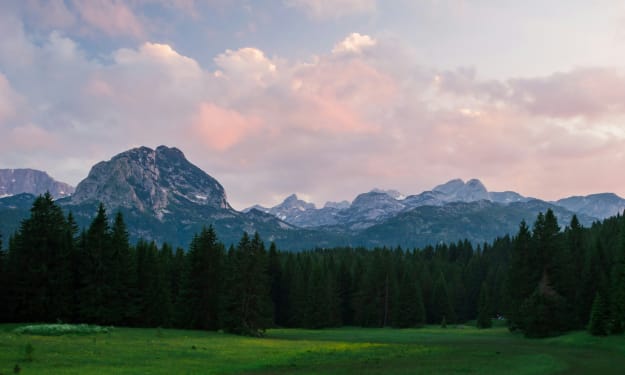
Sunset in the mountains of Durmitor
Sunset in the mountains of Durmitor The afternoon was different. The sun was slowly setting on the mountainside, spreading golden colors in the sky. The sunset could be seen from the campus dormitory, like a perfectly arranged scene—as if painted by Allah with his own hands.
By Arshad Ali9 months ago in History