Research
UNBELIEVABLE RESSURECTION OF A BUDDHIST MONK
Deep within the AOG Ginski Dasan Temple in Siberia, a fascinating mystery unfolds around the mummified Lama Itigilov, captivating the world with the remarkably preserved state of his body. What adds an extra layer of intrigue is the belief held by some that Lama Itigilov is not truly departed; rather, he is thought to be in a profound state of meditation, a concept rooted in Buddhist beliefs. According to this belief, monks who have dedicated themselves to their craft for an extended period can enter a state of meditation where they no longer require food or water, achieving enlightenment upon awakening.
By Tehillah Alozie2 years ago in History
Machu Picchu
High in the Andes of Peru, Machu Picchu is a revered archaeological wonder and enduring representation of the Inca Empire. The breathtaking beauty, amazing architecture, and mysterious abandonment and rediscovery of this ancient citadel, also known as the "Lost City of the Incas," are all celebrated. We will explore the historical background, stunning architecture, cultural significance, and lasting legacy of Machu Picchu in this essay.
By The Knowledge 2 years ago in History
"Shadows of Silence: The Zodiac Killer Unveiled"
In the late 1960s and early 1970s, the San Francisco Bay Area was gripped by fear as a mysterious killer, known only as the Zodiac, taunted law enforcement and left a trail of unsolved murders. The cryptic messages, chilling ciphers, and the elusive nature of the perpetrator created a real-life thriller that continues to baffle investigators to this day.
By MIKEY -KUN2 years ago in History
Returning to Ocean Island-Post War
Joan Ramsay from New Zealand, was one of the first European women to return to Ocean Island Post War. Her husband was working for the Gilbert & Ellice Island Colony (GEIC) [1] government. Her story is adapted from a radio interview she gave for NZ radio about her life spent on the islands.
By Stacey King2 years ago in History
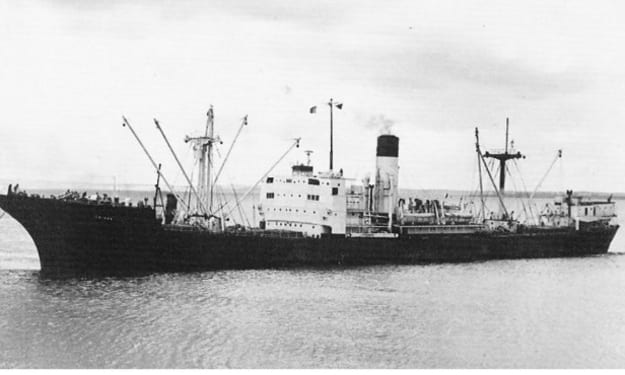
Imminent Peril: Ocean Island on the Brink of Invasion
Maureen White was seventeen years old and one of the people who survived the sinking of the British Phosphate Commission (BPC) ship, SS TRIONA, by German Raiders prior to the evacuation of Banaba—known during the phosphate mining period as Ocean Island. Maureen and her mother, Letitia, were taken prisoners by the Germans before being released on a remote island in New Guinea.
By Stacey King2 years ago in History
HUMAN EVOLUTION
Approximately 300,000 years ago, a pivotal moment in the evolutionary tapestry unfolded with the emergence of a new species of ape—Homo sapiens. These upright walkers, destined for remarkable achievements, such as adorning the walls of the Lascaux caves with captivating art, constructing the awe-inspiring Machu Picchu, and even pioneering the concept of credit scores, would eventually carve a unique path in the annals of Earth's history. However, before these Homo sapiens etched their indelible mark on the world, they were but one of several ape relatives traversing the ancient landscapes of our planet.
By Hanna Maalainine2 years ago in History
The 5 Most Ridiculous Wars in History That Defied Logic and Reason
Throughout history, humanity has witnessed countless conflicts driven by territorial disputes, political ideologies, and religious beliefs. However, some wars stand out not for their grandeur or significance, but for their utterly ridiculous and avoidable origins. In this article, we delve into the top five most absurd wars fought across different centuries and regions, exploring the bizarre circumstances that led to bloodshed, loss of lives, and international crises.
By Morgan Everly2 years ago in History
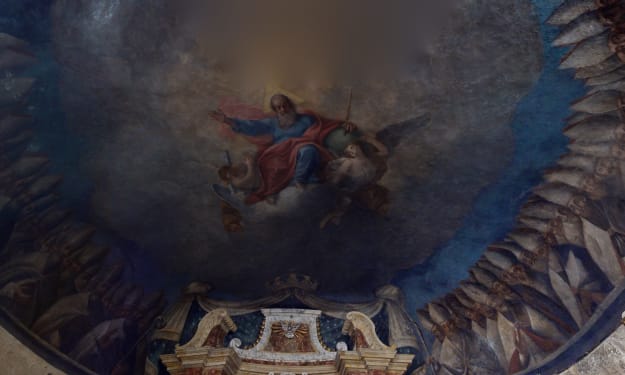
Sanctuary of Our Lady of Mellieħa
According to a very old tradition the highly venerated sanctuary of the Nativity of Our Lady of Mellieha was blessed by St. Paul the Apostle. The same tradition would have it that the icon of our Lady painted on the bare rock is the work of St. Luke the Evangelist; a theory supported by Mons. Pirri (1630), Ġan Franġisk Abela, Giacomo Bosio, Count G.A. Ciantar and Mons. O. Bres. On the contrary, Mario Buhagiar wrote that it is “Byzantinesque in inspiration but Sicilian or South Italian in execution, (and) datable to the late thirteenth or early fourteenth centuries.” (The Iconography of the Maltese Islands)
By Gorg Borg D'Anastasi2 years ago in History