Perspectives
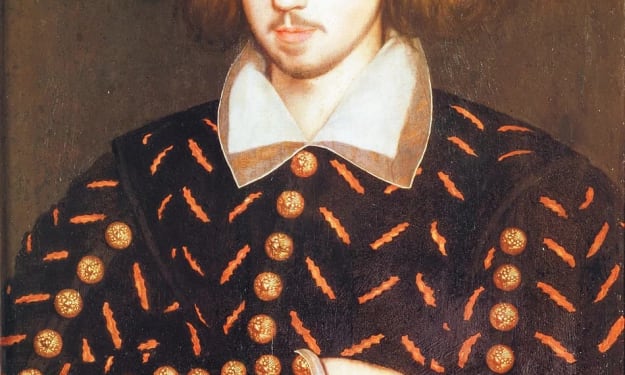
The Violent and Mysterious Death of Christopher Marlowe
Christopher Marlowe, one of Elizabethan England’s most enigmatic and brilliant playwrights, died young and under circumstances so suspicious that his death has become one of literary history’s most enduring mysteries. Known for his powerful blank verse and provocative themes, Marlowe’s meteoric rise in the late 16th century was matched only by the suddenness and violence of his demise.
By Abjol Hussain Laskar9 months ago in History
Nelson Mandela: A Legacy of Liberation, Reconciliation, and Hope
Nelson Mandela: A Legacy of Hope, Peace, and Liberation Nelson Rolihlahla Mandela, more commonly referred to as Madiba, is still regarded as an iconic figure from both the 20th and 21st centuries. His life is a source of inspiration for people all over the world who are working toward equality and human dignity. It is marked by unwavering dedication to justice, significant sacrifice, and an extraordinary capacity for forgiveness. Mandela's journey is a testament to the strength of the human spirit in the face of oppression, from anti-apartheid activist to political prisoner to first president of a democratic South Africa. Born on July 18, 1918, in the Eastern Cape of South Africa, Mandela's early life provided little indication of the monumental role he would play in shaping his nation's destiny. He learned about the systemic racial discrimination and injustice that black South Africans faced under the apartheid regime while attending the University of Fort Hare and local missionary schools. When he joined the African National Congress (ANC) in 1944, a liberation movement that was initially committed to non-violent resistance against apartheid laws, his activism took off in earnest. However, following the Sharpeville massacre in 1960, where peaceful protestors were brutally killed by police, Mandela and the ANC leadership concluded that armed struggle was a necessary last resort. He co-founded the ANC's military wing, Umkhonto we Sizwe ("Spear of the Nation"), which carried out sabotage against important government facilities. His arrest in 1962 and the infamous Rivonia Trial in 1964, in which he and other ANC leaders were charged with sabotage and conspiracy, were both as a result of this shift. His powerful speech from the dock, in which he said he was willing to die for the idea of a free and democratic society, was heard all over the world and made him into a symbol of resistance. Mandela was given a life sentence and spent the next 27 years in harsh conditions on Robben Island and other South African prisons. Mandela's influence only increased despite his imprisonment. The global anti-apartheid movement demanded his release and the end of the oppressive apartheid system, making him a global celebrity. Millions of people around the world were inspired by his unwavering resolve and refusal to compromise his values. Domestic and international pressure on the South African government increased toward the end of the 1980s. President F.W. de Klerk started reforms in the face of growing unrest and the realization that apartheid was unsustainable. These reforms led to Mandela's unconditional release on February 11, 1990. Mandela was a key player in the delicate negotiations for a peaceful transition to a multiracial democracy after his release. Together with de Klerk, he worked tirelessly to end apartheid laws, free political prisoners, and create a framework for free and fair elections. In 1993, they were awarded the Nobel Peace Prize for their collective efforts in navigating this difficult period. Nelson Mandela became the nation's first black president after its first democratic elections were held in 1994. His presidency was marked by a dedication to nation-building and reconciliation. He advocated for the Truth and Reconciliation Commission, a ground-breaking initiative that encouraged a process of healing and comprehension by allowing both perpetrators and victims of apartheid-era violence to share their experiences. His government also prioritized addressing the deep-seated inequalities created by apartheid, implementing policies aimed at improving housing, education, healthcare, and economic opportunities for the black majority. Mandela's leadership was marked by pragmatism, inclusivity, and a profound commitment to the well-being of all South Africans, despite the enormous challenges he faced. Mandela voluntarily resigned from office in 1999 after serving one term, establishing a significant precedent for democratic leadership in Africa. However, he continued to be an active global statesman, working through the Nelson Mandela Foundation to promote peace, human rights, and the fight against HIV/AIDS. On December 5, 2013, Nelson Mandela passed away at the age of 95. Global mourning surrounded his passing, but his legacy continues to inspire. In addition to his brave resistance to apartheid, he is remembered for his extraordinary capacity for forgiveness, his dedication to reconciliation, and his unwavering belief in the possibility of a just and equitable world. Mandela's legacy reaches far beyond South Africa's borders. He stands as a symbol of hope for oppressed people everywhere, a testament to the power of perseverance, and an enduring reminder that even the most entrenched systems of injustice can be overcome through courage, determination, and a commitment to human dignity. His life is a powerful example of the significance of dialogue, comprehension, and the pursuit of a shared humanity in constructing a better future for everyone. Canvas
By Tafsirul Talukdar luvdo9 months ago in History
The Tragic Beauty of Narcissus: A Tale of Reflection and Obsession
In the heart of ancient Greek mythology lies a story that echoes through time—haunting, mesmerizing, and profoundly human. It is the tale of Narcissus, a young man whose beauty was unrivaled, but whose fate was sealed not by war, betrayal, or divine punishment—but by his own reflection. His story is one of self-love turned fatal, of desire without fulfillment, and of the thin line between admiration and obsession.
By The Secret History Of The World9 months ago in History
Nineteen Eighty-Four
1984 (also written as Nineteen Eighty-Four) is a powerful and chilling novel written by George Orwell. It was published in 1949, just after World War II, but it talks about a future world that feels cold, controlling, and scary. This book is not only a story—it’s a warning about what could happen if governments gain too much power and people lose their freedom.
By Muhammad Hayat9 months ago in History
Three myths in one perfume
“What do you wear to bed? Why, Chanel N° 5, of course.” This iconic phrase, spoken by Marilyn Monroe during a 1952 interview, has forever linked the famous actress to the world’s most famous perfume: Chanel N° 5. Instantly, every time we think of this fragrance, Marilyn’s image comes to mind. Monroe is not only one of the most celebrated women in film history but also the person who, indirectly, helped make this perfume an eternal icon. Her simple response, which seemed almost like a lighthearted joke, had an impact that transcended time, connecting her figure to that of Coco Chanel and her famous perfume, creating a bond that would last for decades.
By Halina Piekarska (UltraBeauty Blog)9 months ago in History
Farewell to Pope Francis: The Death of a Humble Revolutionary
Pope Francis passes away after a colorful life Pope Francis the highest religious leader of the worlds Catholic Christian community passed away on Monday April 21 2025 at 7:35 am Vatican time. He was 88 years old at the time of his death. He was a figure who not only played an active role as a religious leader but also played an active role in various important issues of humanity the environment and society. His death has cast a shadow of mourning around the world.
By Md.Moniruzzaman9 months ago in History
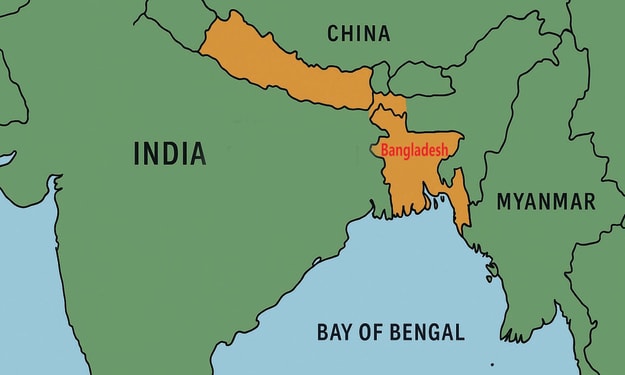
Geographical Location of Bangladesh and Its Importance in Industrial Development: An Analysis
Bangladeshs geographical position in the world: A strategic power in terms of industry and economy. Bangladesh is a small but important country in South Asia whose geographical position carries a unique importance in the eyes of the world economy. Surrounded by India Myanmar Nepal China and the Bay of Bengal this country is considered a junction of South and Southeast Asia not only geographically but also economically and strategically.
By Md.Moniruzzaman9 months ago in History
Gaza: A Land of Struggle, Resilience, and Uncertain Hope
The Gaza Strip, a slender stretch of land hugging the Mediterranean Sea, has become one of the most contentious and talked-about places on the planet. Frequently making headlines for its violence, blockades, and humanitarian crises, Gaza is much more than just a conflict zone—it’s home to over two million people, many of whom are simply trying to live, love, and endure amidst unimaginable challenges.
By M.i.a. Hossain Rudhra9 months ago in History