Modern
The Evolution of Christmas Carols
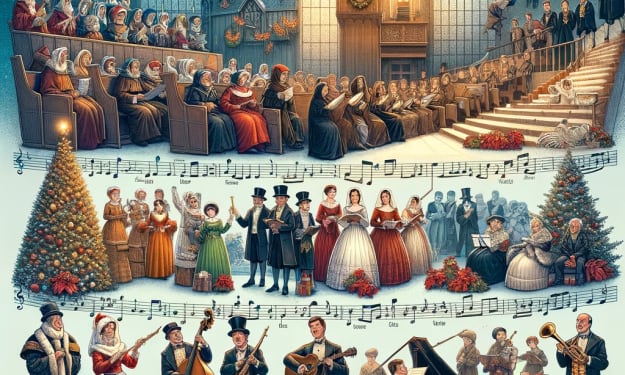
Christmas carols, with their melodious charm and festive spirit, have long been a staple of the holiday season. These songs, ranging from solemn hymns to joyful tunes, have evolved significantly over the centuries. From their origins in medieval Europe to their contemporary renditions, Christmas carols have provided the soundtrack to our holiday celebrations. They have also reflected cultural and historical changes in Christmas observation. Sing along with me as we trace Christmas carol history from ancient chapels to modern concert halls. We will see how they have become an essential part of the holiday season.
By Festive Fusion Finds2 years ago in History
Is It Safe to Use a Real Butterfly Knife for self-defense?
Butterfly knives have been manufactured since the 1800s in Japan where they were called “wasps’ nests knives” because their handles resembled skinny wasp nests. This name was shortened to butterfly knives. If you've never heard of these knives, it might be because the real butterfly knife laws are generally not enforced. However, they're illegal in many countries including Canada, the United States, and Australia along with many other European countries.
By Mai Sophia2 years ago in History
"Christmas Chronicles: Unveiling Traditions, History & Unity"
Amidst the serene winter night, enveloped in a blanket of snow, a quiet town hummed with anticipation. People hurried through the streets, adorned with shimmering lights and intricate decorations, preparing for a celebration rooted in centuries of tradition:
By Antar Khairi2 years ago in History
American Revolution: Unraveling the Tapestry of Independence
The American Revolution stands as a pivotal chapter in history, a saga that unfolded over years, fueled by a quest for liberty and the desire for self-governance. In this article, we embark on a journey through the corridors of time, exploring the multifaceted events that shaped the birth of a nation.
By Umar Farid 2 years ago in History
The Timeless Journey of Christmas Gift-Giving
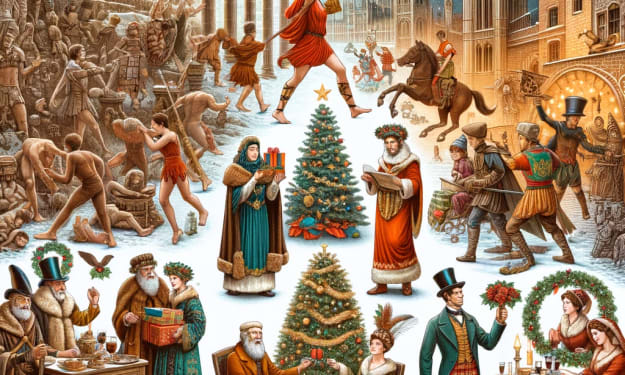
Gift-giving during Christmas, a practice cherished worldwide, has a rich history entwined with charity and communal celebration. From its humble origins in ancient festivals to its transformation into a cornerstone of modern Christmas, the tradition of gift-giving reflects the evolution of the holiday itself. Find out how Christmas gift-giving originated and where it went from there. It explores how this beloved practice has shaped, and been shaped by, the cultural and spiritual significance of the holiday season.
By Festive Fusion Finds2 years ago in History
How Can Butterfly Knives be Maintained to Last Longer?
A type of knife with a folding blade, a balisong knife was originally called the balisong as it is from balisong Bay in the Philippines. Often misunderstood as a weapon (in actuality, they're not that dangerous) and banned in many countries, they have become more popular with combat athletes because they can be used to flip and juggle knives.
By Mai Sophia2 years ago in History
Unlocking the Mysteries of Early Human Migration to North America: The Sea Ice Highway. Content Warning.
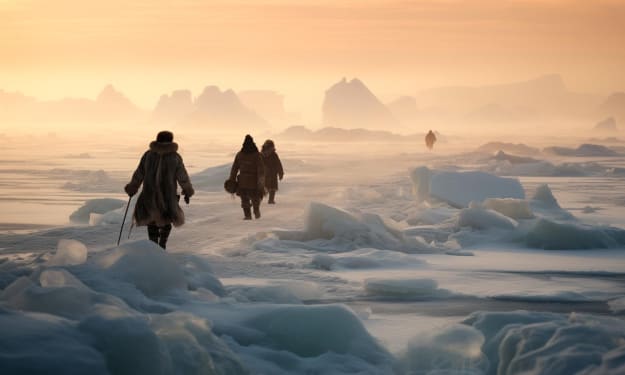
The timing and routes of the first human migrations to North America have long been debated in the field of archaeology. While the conventional theory suggests a land route through an ice-free corridor around 13,000 years ago, recent archaeological and genetic discoveries challenge this narrative. This article explores a groundbreaking theory presented at the American Geophysical Union Annual Meeting, proposing that early Americans might have traveled along a "sea ice highway" along the Pacific Coast.
By Nada soliman2 years ago in History
History of Ninja Swords and Their Famous Categories!
Ninja swords, also known as ninjato or shinobi-katana, are traditional Japanese swords that were often associated with the ninja, a class of warriors who were known for their espionage and assassination skills in feudal Japan. The exact design and use of these swords is a topic of debate among historians, as there are few surviving examples and much of the information about them comes from folklore and popular culture.
By Best Information 2 years ago in History
Saskatchewan
(Pronunciation: suh · ska · chuh · waan (pronunciations differs between different people)). Unfurling across the sweeping prairies, the most glorious land known to man rises like the sunset. Like a season that perfects a dish, Saskatchewan is the bread-basket of Canada. An agricultural powerhouse, if one were to visit this place, they’ll find glorious sunrises and sunsets, and some of the darkest panoramic skies in Canada.
By Deasun T. Smyth2 years ago in History
Unveiling the Untold Tragedy
In the quiet village facing the main road to Jerusalem, a poignant history unfolded in 1948—one that remains etched in the collective memory of its 750 inhabitants. This is the untold story of a small village that became a symbol of a larger catastrophe known as the Nakba, a historical episode purposefully concealed, distorted, and largely forgotten in the West.
By Khumbudzo Modau2 years ago in History
THE LEGEND OF BIGFOOT
Bigfoot is known by many titles with many different cultures although the name Bigfoot is generally attributed to the mountainous Western region of North America. The common name Sasquatch comes from the Salish Sasquits, while the Algonquin of the north-central region of the continent refer to a Witiko or Wendigo. Other nations tell of a large creature much like a man but imbued with special powers and characteristics. The Ojibway of the Northern Plains believed the Rugaru appeared in times of danger and other nations agreed that the hairy apparition was a messenger of warning, telling man to change his ways.
By Ramkumar Gunasekaran2 years ago in History
Provide an account of the period known as the reign of terror.
Introduction: The period of the French Revolution known as the reign of terror was characterized by a series of measures and numerous public executions in response to the fervor of the Revolution. It lasted from September 5, 1793 to July 27, 1794, with Robespierre serving as the spokesperson for the terror. Under Robespierre's leadership, the terror reached its peak and established a dictatorial regime. Throughout this period, several committees were formed.
By Clinton Chakma2 years ago in History