Modern
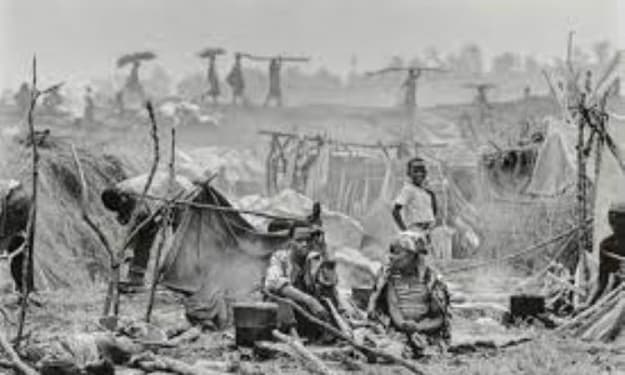
The Dark Story- "The Rwandan Genocide"
Title: "Shattered Innocence" The Uwimana family lived in Gihembe, a quiet community in Rwanda's beautiful highlands. Jean and Marie Uwimana, along with their three children, Emmanuel, Aisha, and Nadia, had a humble life of bliss. The air reverberated with laughter, and the sunsets provided a peaceful background to their daily existence.
By Mohammed Asik2 years ago in History
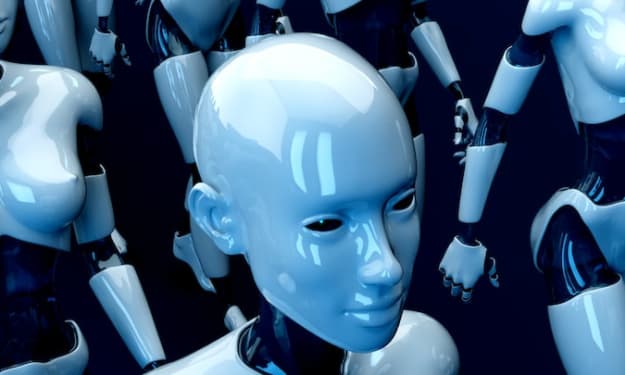
Robotics and AI
The history of robotics and artificial intelligence (AI) is a fascinating journey that spans centuries, marked by visionary ideas, technological breakthroughs, and transformative impacts on society. This narrative unfolds from ancient myths and automata to the cutting-edge developments in contemporary robotics and AI.Ancient Concepts and Automata:The roots of robotics trace back to ancient civilizations where myths and tales often featured animated beings. In ancient Greece, myths spoke of automatons crafted by the gods. Archytas of Tarentum, a mathematician and engineer from the 4th century BCE, is credited with creating a wooden dove propelled by steam – an early instance of automaton.Medieval Marvels:During the medieval period, intricate automata continued to captivate minds. Al-Jazari, a 12th-century Muslim engineer, designed water-powered mechanisms that showcased humanoid-like movements. These creations reflected early attempts at replicating human actions through machinery.Renaissance Mechanical Wonders:The Renaissance witnessed a surge in interest in mechanics and engineering. Leonardo da Vinci sketched designs for humanoid automatons, displaying his fascination with replicating human motion and expression. However, the lack of technological infrastructure hindered the realization of these visionary ideas.18th to 19th Century: Industrial Revolution and Early Automation:The Industrial Revolution brought about significant advancements in machinery, laying the groundwork for automation. Textile mills and factories adopted mechanized systems to streamline production. In the early 19th century, Charles Babbage conceived the idea of a mechanical computer, the Analytical Engine, a precursor to modern computers.Early 20th Century: Emergence of Cybernetics:The term "robot" was introduced by Czech writer Karel Čapek in his 1920 play "R.U.R." (Rossum's Universal Robots). However, the concept of machines designed to mimic human actions gained traction in the early 20th century. Norbert Wiener's work on cybernetics, exploring communication and control in living organisms and machines, laid the theoretical foundation for AI.World War II and Early Computers:World War II accelerated technological progress, leading to the development of early computers. Alan Turing, a key figure in computer science, proposed the Turing Machine and laid the theoretical groundwork for AI. The first electronic computers, like ENIAC (Electronic Numerical Integrator and Computer), emerged, opening new possibilities for computation.1950s - Birth of AI:The 1950s marked the official birth of AI as a field. Alan Turing introduced the Turing Test to determine a machine's ability to exhibit intelligent behavior indistinguishable from that of a human. The term "artificial intelligence" was coined by computer scientist John McCarthy in 1955.1960s - AI Laboratory and Expert Systems:In 1965, the first AI laboratory was established at Stanford University. The 1960s and 1970s saw the development of expert systems, computer programs designed to replicate the decision-making abilities of a human expert in a specific domain.1980s - AI Winter:Despite initial enthusiasm, the late 1980s brought an "AI winter," marked by funding cuts and skepticism due to unmet expectations. The challenges of building intelligent systems became apparent, leading to a temporary decline in AI research.1990s - Rise of Machine Learning:The 1990s witnessed a resurgence of interest in AI, fueled by advancements in machine learning. Researchers explored neural networks, genetic algorithms, and statistical approaches, laying the groundwork for contemporary AI systems.Early 21st Century: Deep Learning and Robotics Integration:The 21st century brought about a revolution in AI with the widespread adoption of deep learning techniques. Breakthroughs in neural network architectures and the availability of vast datasets fueled the development of AI applications across various domains.Contemporary Advancements:Today, robotics and AI are integral parts of daily life. From autonomous vehicles and smart homes to advanced medical diagnostics, the impact of AI is profound. Humanoid robots like Boston Dynamics' Atlas showcase remarkable agility, while AI-driven systems excel in natural language processing, image recognition, and strategic decision-making.Challenges and Ethical Considerations:As AI and robotics progress, ethical considerations and challenges arise. Questions about job displacement, biases in algorithms, and the ethical use of AI technologies underscore the importance of responsible development and deployment.In conclusion, the history of robotics and AI is a story of human ingenuity and technological evolution. From ancient myths to contemporary breakthroughs, the journey reflects our persistent quest to create machines that simulate, and in some cases surpass, human intelligence and capabilities. As we continue this journey, ethical considerations and responsible innovation will play crucial roles in shaping the future of robotics and AI.
By Inioluwa Samuel 2 years ago in History
15 African Presidents Who Were Assassinated In The Most Dangerous Ways. Content Warning.
Numerous leaders throughout African history have met tragic ends, indicating the turbulent character of politics in particular eras and locales. In June 1960, Lumumba's vision came true when the Democratic Republic of the Congo gained independence from Belgium.
By Makeila.Ogm2 years ago in History
Dr. Hofmann's Cosmic Key
In the serene laboratories of Sandoz Labs in Basel, Switzerland, Albert Hofmann, a dedicated scientific expert, was on the verge of embarking on an unintentional odyssey that would alter the trajectory of human awareness. Little did he know that his discovery would become the catalyst for a psychedelic transformation, unlocking the doors to the unexplored realms of the mind.
By Josef Valda2 years ago in History
How MLK Day Became a National Holiday
As you know, January 15 is Martin Luther King Day, the holiday celebrating the life of civil rights leader Martin Luther King Jr. Each year on the third Monday of January we observe Martin Luther King Day and reflect on the work that still needs to be done for racial equality. This January 15, make the holiday more than just a day off and take time to reflect and take action on civil rights issues across the globe. Every MLK Day, schools and offices are closed, but people fully participate in remembering and honoring everything King has accomplished. His values and historical place in American history are discussed and advocated to educate communities and coming generations on the importance of equality and King’s influence. Movies and documentaries on his life are shown, and businesses and organizations run by and for the Black community are shown some support. But how did it become a national holiday????
By Gladys W. Muturi2 years ago in History
The Unseen Planet In Our Solar System
For millennia, humans were aware of only five planets: Mercury, Venus, Mars, Jupiter, and Saturn, observable with basic telescopes or the naked eye under favorable conditions. In the late 18th century, Sir William Herschel, a renowned astronomer, discovered a new planet—a frosty blue one initially mistaken for a star—later recognized as Uranus. It orbits the Sun 19 times farther than Earth and takes 84 years to complete one revolution. Herschel also detected double stars and nebulae. In the mid-1800s, astronomers detected anomalies in Uranus' orbit, leading to the discovery of Neptune in 1846. Despite theories about another planet between Mercury and the Sun, known as Vulcan, corroborated by the peculiar behavior of Mercury's orbit, no concrete evidence surfaced. Einstein's theory of general relativity later explained Mercury's orbit irregularity, suggesting space-time curvature by massive celestial bodies like planets alters orbits. While the Vulcan theory persisted, Einstein's explanation gained traction, and tests during solar eclipses aimed to validate his theory. Additionally, hypotheses about an undiscovered Planet 9 or Planet X beyond Neptune, affecting objects in the Kuiper Belt, emerged. The Nibiru myth, claiming a doomsday scenario in 2012, proved baseless, as calculations disproved its existence. Moreover, the 2011 Comet Elenin briefly misconstrued as Nibiru, dissipated harmlessly. These astronomical mysteries continue to intrigue, shaping our understanding of the solar system's complexities.
By Cudjoe Justice2 years ago in History
In-Depth Analysis: Attack on Titan Sword and Their Cultural Influence!
Get ready to dive into the world of Attack on Titan Sword and explore the cultural influence of its iconic swords in this in-depth analysis. Whether you're a fan of the hit anime series or simply curious about the impact of visual media on society, this article has something for you.
By Mai Sophia2 years ago in History