General
The Last Petal
Deep within an overgrown forest, where trees whispered secrets to the wind and moonlight found it difficult to pierce the leaves, there stood a cottage. It was the residence of a woman called Elara, who lived there by herself, her heart as cold and merciless as the stone walls of her home. She had given up hope of love long ago, for her heart had been shattered by a betrayal so deep it left her soul scarred.
By Md Nurul Imam Babu11 months ago in History
Caral-Supe
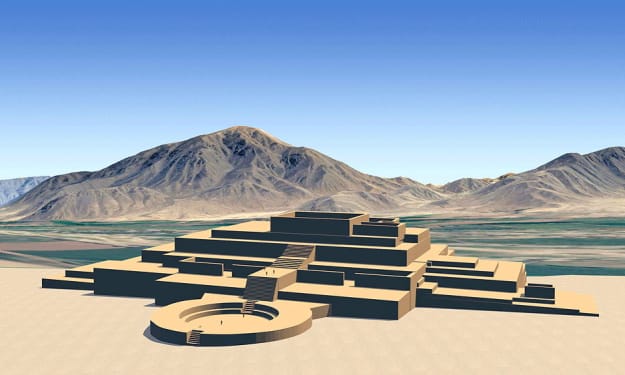
Nestled in the depths of the Peruvian desert, where the sun relentlessly beats down and the winds carry whispers of the past, resides the birthplace of the Americas' earliest civilization. Long before the Inca Empire ascended to prominence and even prior to the Olmecs of Mesoamerica sculpting their monumental heads, the Caral-Supe civilization thrived along the dry coastline of present-day northern Peru. This mysterious culture, which dates back to 3700 BCE, predates the construction of the pyramids at Giza and serves as a remarkable example of human creativity and endurance. Its narrative is characterized by collaboration, innovation, and an extraordinary lack of violence—a notable exception in the history of ancient societies.
By A História11 months ago in History
One Wrong Turn That Sparked World War
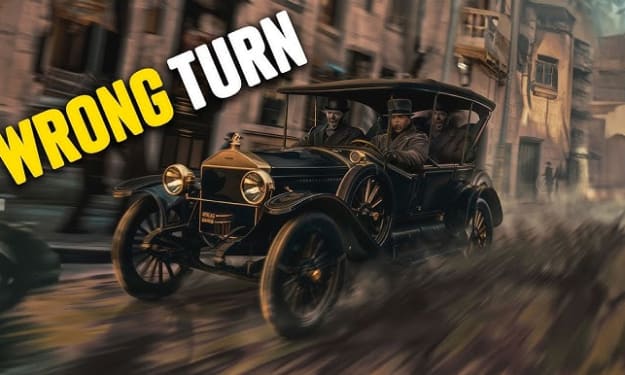
One Wrong Turn That Sparked World War World War I one of the deadliest conflicts in human history was ignited by a series of complex political economic and military factors. However at the heart of it all was a single event an assassination that in many ways can be seen as the result of one wrong turn. The fateful decision that led Archduke Franz Ferdinand’s car down the wrong street on June 28, 1914 changed the course of history setting off a chain reaction that led to global warfare. This incident though seemingly insignificant in the grand scheme of things played a pivotal role in the outbreak of World War I. The political landscape of early 20th century Europe was marked by tensions alliances and nationalist movements. Austria Hungary a vast empire struggling with internal ethnic divisions found itself facing a growing wave of Slavic nationalism particularly from Serbia. The Austro Hungarian Empire viewed Serbia as a threat suspecting that it was encouraging separatist movements within its borders. Meanwhile Serbia emboldened by its recent victories in the Balkan Wars sought to expand its influence particularly over territories where Slavic populations resided. This growing animosity created a volatile situation one that needed only a spark to erupt into full scale war.
By Adnan Rasheed11 months ago in History
The Hidden Path
Shadipur was a village surrounded by tall trees and tangled vines in the middle of a thick forest. The villagers lived simple, tranquil lives, relying on the forest for food and shelter. The forest was both a blessing and a curse, for while it provided them with everything they needed, it also held secrets, dark and mysterious, that few dared to uncover.
By Md Tofayel Ahmed11 months ago in History
The Bridge to New Beginnings
In a small town by a river, a worn-out bridge had long been a symbol of connection and separation. Villagers were able to travel between their town and the bustling city across the river thanks to the stone bridge that was constructed by the town's founders many years ago. For generations, the bridge had been an integral part of the community's life. With unwavering tenacity, it weathered storms and harsh weather, demonstrating the past's resilience with its aged stonework and creaking beams. However, over time, the bridge had begun to deteriorate. The bridge's cracked stonework and rusted iron railing made it unsafe to cross. However, for a considerable amount of time, the villagers maintained their denial that the bridge required maintenance. Due to their attachment to the past and the memories it contained, they feared that losing the bridge would result in losing a portion of themselves. Some even considered it to be a connection to the identity and history of the town—something that could not be ruled out. Anirudh, a young man, was among the villagers. Even as a child, he had always loved the bridge. He had sat there for a long time daydreaming, imagining adventures, and listening to the river's song. He saw the bridge as more than just a physical structure; it was a link between his childhood and the future. To face the uncertainty of what would occur if the bridge were no longer there, Anirudh was reluctant to let go of the past. Like a reassuring thread that brought him back to laughter, family, and simpler times, the bridge became a part of his life. One day, the town was struck by a terrible storm. The old bridge, which had been neglected for years, finally gave way as the river rose. As the wind howled and the thunder roared, the villagers watched in horror. When the bridge gave way and fell into the raging waters below, it was reduced to a pile of shattered stones and twisted iron. Anirudh experienced a profound sense of loss as the villagers raced to assess the damage. The bridge, a reminder of their community's past, had vanished. It appeared as though a portion of his own life had been altered by the shift. The villagers gathered to decide what to do in the days that followed. While others believed the bridge should be rebuilt exactly as it had been, others thought it was time to move on and construct something new. Anirudh was divided in half. He had to pay respects to the past, but he couldn't ignore the growing realization that maybe it was time for change. As the town’s discussions grew more heated, Anirudh found himself becoming more and more restless. He had a vision of a new beginning—one that would require more than just rebuilding the old bridge.
By Md Tofayel Ahmed11 months ago in History
The Mountain of Dreams
Aditi, a young woman, lived in a small village between towering mountains. Tall cliffs and lush forests surrounded the peaceful village. The village was surrounded by intimidating and majestic mountains, whose summits were frequently obscured by clouds. These mountains were more than just a natural barrier; they were also a part of the legends about the village. Elders talked about a huge treasure at the top that could give those who got there unimaginable wisdom and power. However, the elders also mentioned danger. The sudden storms, rocky cliffs, and wild animals made the path up the mountain dangerous. "Only the strongest and most determined will survive the climb," they cautioned. "Many have tried, but few have succeeded."
By Md Tofayel Ahmed11 months ago in History
The Power of History Education
Raghav, a curious young boy, lived in a remote, quaint mountain town. The majority of town residents had long since lost interest in the town's long and distinguished history. The town's ancestors were skilled artisans, powerful warriors, and knowledgeable scholars. However, the town had become obscure over time, and many of its residents no longer remembered their ancestors' significant accomplishments. Raghav was distinctive. He had an insatiable curiosity about the past. As he walked through the narrow streets with cobblestones, he would ponder the histories of the old buildings. He inquired of his parents, but they were too preoccupied with the demands of daily life to provide much beyond a few childhood tales. Mrs., the senile schoolteacher in the community, Das, was one of the few who still remembered the importance of history.
By Md Tofayel Ahmed11 months ago in History
This Abandoned Pennsylvania Town is One of the Most Contaminated in the State
Still, at one point, it was an up-and-coming coal mining town located in Columbia County, Pa. Centralia was incorporated in 1866 and founded by Jonathan Faust, and the principal employer within the community was coal mining.
By sara burdick11 months ago in History
Chief Iron Tail and the Early Automobile
A photo of Chief Iron Tail an original leader of the Lakota Sioux turning the crank of an early automobile, circa 1915. This image was rich in symbolism it represented the convergence of two worlds with little in common the long and wealthy traditions of Native American culture, and the progressive technological innovations of the 20th century.
By Rohitha Lanka11 months ago in History