Discoveries
J. Robert Oppenheimer: The Genius, the Bomb, and the Ethical Conundrum
J. Robert Oppenheimer, a brilliant physicist of the 20th century, is best known for his instrumental role in leading the development of the nuclear bomb during World War II. Although he never won a Nobel Prize, his impact on the world far surpassed that of many laureates. This article delves into Oppenheimer's life, his contributions to science, and the ethical implications of his work on nuclear weapons.
By Thene van Schalkwyk3 years ago in History
Journey to Sealand
Embark on a remarkable journey as we unveil the captivating story of Sealand, a micronation that holds the title of the world's smallest country. From its origins as a military structure to its emergence as a self-proclaimed nation, discover the audacious tale of Sealand and its quest for sovereignty.
By Clement Kella3 years ago in History
The Amphibious Invasion of Sicily. Content Warning.
In today's video, we'll delve into the intriguing historical event known as the Amphibious Invasion of Sicily. This daring military operation took place during World War II and was proposed by Prime Minister Winston Churchill and the British Chiefs of Staff. The ambitious plan aimed to be the first large-scale offensive operation on the European mainland since the fall of France in 1940. Initially met with astonishment and skepticism, this pivotal campaign played a crucial role in reshaping the course of the war. In this article, we will explore the strategic planning, the challenges faced, and the decisive outcomes of Operation Husky.
By Malik Sarparah3 years ago in History
Which of the earliest languages is still used today?
Since spoken words don't physically impact the world, tracing the beginnings of human language can be challenging. Additionally, language is always evolving, with words and their connotations changing with each new generation. Therefore, identifying one language as the oldest in the world would be misleading.
By Francis Dami3 years ago in History
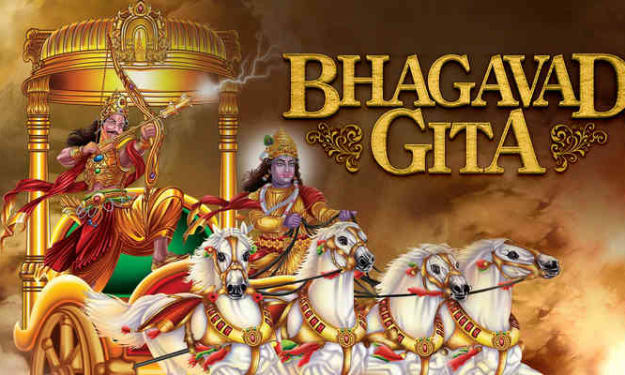
"The Bhagavad Gita: Wisdom and Guidance for Spiritual Seekers"
The Bhagavad Gita, also known as the Gita, is a sacred Hindu scripture that contains a conversation between Prince Arjuna and the god Krishna, who serves as his charioteer. The text is a part of the Indian epic Mahabharata and is revered for its profound spiritual teachings. Here is a summary of the Bhagavad Gita without any plagiarism:
By Go With Trend3 years ago in History
Shining Stars
Once upon a time, in the small town of Smithsville, Canada, a group of young girls gathered on a dusty field with tattered nets to play their favorite game – soccer. This humble beginning was the spark that ignited the growth and evolution of women's soccer in Canada, a journey that would eventually lead to the world stage.
By Ayoola shodipo3 years ago in History
WHAT REALLY HAPPENS IN THE BERMUDA TRIANGLE?. Content Warning.
In the past two centuries, 20 aircraft, 50 vessels, and numerous individuals have mysteriously disappeared within a small region in the Atlantic Ocean. This area is commonly referred to as the "Bermuda Triangle" or the "Devil's Triangle." It serves as a watery graveyard where countless wrecks have been discovered by researchers throughout the years. Various scientific theories have been formulated in an attempt to understand the phenomena occurring in this location. This concept, accompanied by fear, has gained widespread attention, leading to the creation of numerous books and documentaries seeking to provide evidence of the peculiar occurrences within this triangular expanse of water. There is an enigmatic phenomenon taking place beneath the ocean's surface, beyond the reach of sunlight, that remains unexplained.
By Duncan Gakuya3 years ago in History
Socrates Was Right: Embracing the Value of Intellectual Inquiry. Content Warning.
Throughout history, many great minds have left an indelible mark on human civilization, shaping the way we think and perceive the world. Among these luminaries, Socrates, the ancient Greek philosopher, stands tall as a paragon of wisdom and intellectual pursuit. Socrates' method of relentless questioning and emphasis on self-examination have not only influenced philosophical thought but also have enduring relevance in our contemporary world. In this essay, we will explore some of the core aspects of Socratic philosophy and demonstrate why Socrates was right in advocating for the importance of critical thinking, self-awareness, and the pursuit of knowledge.
By Asim hussain3 years ago in History