Discoveries
Newton's Gravity vs Einstein's Gravity
Newton's gravity Why does an apple fall from a tree towards the ground and why does the moon orbit around the Earth? In the 17th century, mathematician and physicist Isaac Newton answers these two questions with a single answer “gravitation”. So what is gravitation? In the universe all objects that possess a mass attract each other. For example the moon attracts the earth and the earth attracts the moon. Now let us imagine a first object A and a second object B separated by a certain distance. Because of gravitation, these two objects attract each other; in this way A will get closer to B and B will get closer to A. If A was more massive then the gravitational pull would be stronger inversely if A was less massive and the gravitational pull would be weaker, this is equally true for B. Following on, if the two objects were more distant the gravitational pull would be weaker and if they were close the gravitational pull would be stronger as such the gravitational pull of one object on another goes away when the two objects are very far apart. Let's now take the example of an apple. The Apple possesses a certain mass and so does the earth so the Apple attracts the earth and inversely the earth attracts the Apple. This is why the Apple and the earth will get closer one to the other up until the Apple touches the ground. Now let's imagine that we throw the Apple in a direction with a certain speed like before the Apple will be attracted to the earth but it will also move in the direction in which it was thrown depending on its speed. The faster the Apple is thrown, the further the Apple falls. Now if we could throw the Apple with a high enough speed we would see that this velocity would counter the gravitational pull and that the Apple would never fall down on the ground this is what happens with the moon and that is why the moon orbits around the earth as well as why the earth orbits around the Sun.
By Mohamed Abdallah Abdoul-Halim2 years ago in History
Title: Mystery of Ancient Pyramids: How Were They Really Built?
Title: Mystery of Ancient Pyramids: How Were They Really Built? The reason for building the pyramids is still a subject of debate, however, evidence suggests that they were built as tombs to store food and other provisions for the afterlife.
By Pravin choudhary 2 years ago in History
Cosmic Catastrophe: Deciphering the Tunguska Event Mystery
Siberia is an immense region, so vast that if it were to declare independence from Russia, it would instantly become the largest country on Earth. Roughly one-third of this expansive wilderness is dominated by the taiga, an enormous forest that's about one and a half times the size of India. Deep within this endless expanse of trees lies the site of one of the most enigmatic natural disasters in modern history, which occurred a little over a century ago.
By Perry Allen2 years ago in History
TRUTH BEHIND DINOUSAUR EXTINCTION.
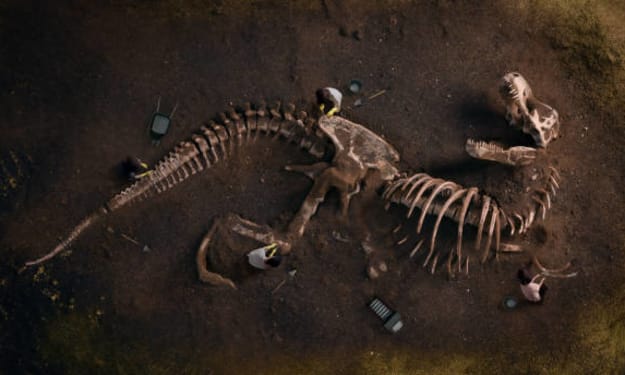
In the realm of paleontology and planetary history, mysteries that have endured for millions of years are occasionally brought to light through meticulous scientific inquiry. One such riddle, the demise of the awe-inspiring dinosaurs that once roamed our planet, has captivated the human imagination for centuries. Long believed to be the result of an apocalyptic meteor strike, a groundbreaking study conducted by researchers at Dartmouth College has set a new course for understanding this ancient enigma. In an award-worthy revelation, their work challenges the conventional wisdom by positing that a cataclysmic volcanic eruption, specifically the Deccan Traps mega-volcano in India, was the primary culprit responsible for the extinction of these magnificent creatures.
By LINET WANGARI WANGUI2 years ago in History
The Enigma of Rudolf Diesel's Disappearance: A Tale of Innovation and Intrigue
On September 29, 1913, a 55-year-old German gentleman named Rudolph embarked on a steamship in Antwerp. His destination was Harwich on the Southeast coast of England, just an overnight journey away. However, when the ship docked the following day, Rudolph was nowhere to be found.
By Perry Allen2 years ago in History
There's Water on Mars!!!
The Liquid Dreams of Mars: Unearthing the Hidden Waters of the Red Planet In the vast expanse of our solar system, there exists a world that has long captured the imagination of Earth's inhabitants—Mars, the Red Planet. Its dusty surface, tinged with rusty hues, has beckoned scientists and dreamers alike, enticing them with the possibility of answering one of humanity's most profound questions: Could there be life beyond Earth?
By Raymark Marcos2 years ago in History
Mysteries of Dwarka - Is Lord Krishna Still Alive?
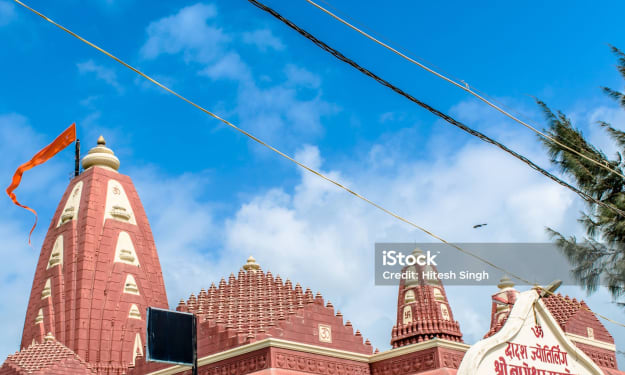
Title: Mysteries of Dwarka - Is Lord Krishna Still Alive? Introduction: Dwarka, a city that once flourished on the western coast of India, holds a special place in Hindu mythology and history. It is believed to be the dwelling place of Lord Krishna, one of the most revered deities in Hinduism. While Dwarka is primarily known for its association with Lord Krishna, it is also shrouded in mysteries that continue to captivate the imagination of both scholars and devotees. One such intriguing mystery is the question of whether Lord Krishna is still alive. In this article, we will explore the mysteries of Dwarka and the enduring belief that Lord Krishna remains an eternal presence.
By Pravin choudhary 2 years ago in History
What's Really Going on At the Bottom of the Bermuda Triangle?
The Bermuda Triangle has indeed been a subject of fascination and speculation for many years. The hexagonal clouds and rogue waves theories are among the many hypotheses proposed to explain the mysterious events that have occurred in this region.
By John C. Lustre2 years ago in History
History and Religion of Ancient Greece!
Ancient Greece is a civilization that has fascinated scholars and people worldwide. Its rich history and religious beliefs have shaped the world we live in today. The Greeks were influential in many areas, from philosophy and literature to politics and science. Their cultural achievements are still celebrated today, making Ancient Greece one of the most significant civilizations in history.
By Manish Sharma2 years ago in History
''Unspoken''
There is a silent narrative that speaks volumes in the empty spaces between an article's lines, where words hesitate and punctuation lingers—an unspoken story that reverberates beyond the printed page. It's a story that is weaved into the sentence itself, whispered through linguistic complexity, and hidden inside the poignant pauses.
By Nabila Nazir2 years ago in History