Books
The History of History as a School Subject. AI-Generated.
The History of History as a School Subject History, the study of past events, has been a cornerstone of education for centuries. As a school subject, it helps students understand the world around them, learn about the struggles and achievements of previous generations, and build a sense of identity and citizenship. The inclusion of history in formal education systems has evolved over time, influenced by political, cultural, and social factors. From ancient civilizations to modern classrooms, the teaching of history has played a key role in shaping individuals and societies.
By articelmunaf9 months ago in History
At Least 10 Billion Stars in Our Milky Way Galaxy Can Support Habitable Planets. AI-Generated.
Habitable planets can be found in our Milky Way Galaxy with at least 10 billion stars. One of humanity's oldest and most intriguing questions has been pondered by astronomers for decades: Are we the only ones in the universe? An answer that piques the imagination has been found through recent research. Numerous surveys and studies using data from the Kepler Space Telescope and other instruments have found that at least 10 billion stars in our Milky Way galaxy could have planets that could be habitable. How to Define Habitability Understanding what scientists mean when they say "habitable" is essential before delving into the numbers. A planet that resides in the star's habitable zone, also known as the "Goldilocks zone," where temperatures are just right for liquid water to exist, is typically referred to as a "habitable planet." Water is regarded as an essential component of life as we know it. A planet's atmosphere, size, and geological activity all play a role in its habitability, but the fundamental requirement is the presence of liquid water. The Discovery Made by Kepler The 2009 launch of NASA's Kepler Space Telescope revolutionized our understanding of the galaxy. Over the course of its mission, Kepler saw more than 150,000 stars and discovered thousands of exoplanets, many of which were in habitable zones. Astronomers were able to extrapolate how common Earth-sized planets in habitable zones might be throughout the Milky Way by analyzing this data. According to these extrapolations, approximately one in five Sun-like stars may have a planet in the habitable zone that is comparable to Earth's size. The estimate of 10 billion potentially habitable planets becomes a conservative but astonishingly large number when one takes into account the Milky Way's approximately 100 to 400 billion stars and the 10% to 20% that are similar to our Sun. Consequences for Life The implications would be staggering if even a small fraction of those 10 billion planets support life. There may be an abundance of life not only where you are. Simple microbial life may exist on some of these worlds, while intelligent civilizations or even complex ecosystems may exist on others. Additionally, in cosmic terms, many of these potentially habitable planets could be located within a few dozen to hundreds of light-years of Earth. The search goes on. The James Webb Space Telescope (JWST) and upcoming missions like LUVOIR and HabEx are both aimed at directly studying the atmospheres of exoplanets. Biosignatures, which are chemical signs of life such as oxygen, methane, or water vapor, will be looked for by these instruments. Additionally, efforts like SETI (Search for Extraterrestrial Intelligence) and the Breakthrough Listen Initiative continue to look for signals in the sky that could point to technological civilizations. Conclusion
By Mahim khan9 months ago in History
2025 space events
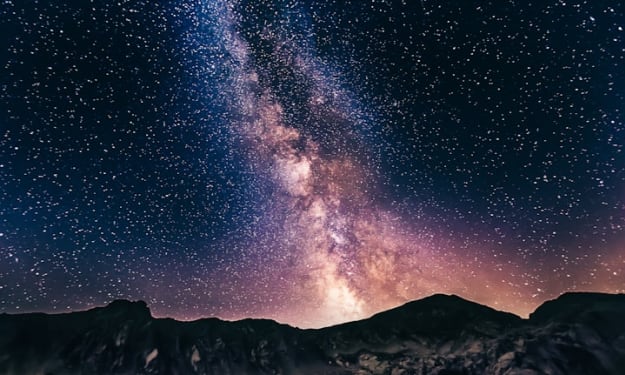
The Wonders and Challenges of Space Space, often referred to as the final frontier, has captivated the human imagination for centuries. Space is a vast, enigmatic expanse beyond our planet that is filled with stars, planets, galaxies, and phenomena that defy our everyday comprehension of physics and reality. As humanity continues to explore and learn more about the universe, we uncover not only its scientific wonders but also the profound questions it poses about our place in the cosmos.
By Akash Sheikh 9 months ago in History
Iran cites ‘movement forward’ in second round of high-stakes nuclear talks with US. AI-Generated.
# **Introduction** The 2d spherical of high-stakes nuclear negotiations among Iran and the US has concluded with careful optimism, as Iranian officers reported "motion forward" in discussions aimed toward reviving the 2015 Joint Comprehensive Plan of Action (JCPOA). These talks, held circuitously via European mediators, constitute a crucial attempt to de-strengthen tensions and convey each international locations again into compliance with the nuclear deal. While enormous demanding situations remain, the modern-day spherical shows a ability pathway in the direction of diplomatic resolution.
By ADNAN IS gamer boy9 months ago in History
Supreme Court Temporarily Pauses Deportations Under Alien Enemies Act. Content Warning. AI-Generated.
In a significant decision that has the potential to reshape immigration enforcement in the United States, the Alien Enemies Act, an obscure but significant 18th-century law, has temporarily halted deportations. The Biden administration's use of the statute to expedite the removal of noncitizens from nations considered adversarial to the United States has raised a growing number of legal and ethical concerns. This unexpected action comes amid these concerns. The Court's pause indicates that it is willing to investigate whether this centuries-old law conforms to contemporary constitutional principles of due process and civil liberties. What is the Alien Enemies Act? The Alien Enemies Act, which was enacted as part of the Alien and Sedition Acts in 1798, gives the president broad authority to detain, imprison, or deport male citizens of a hostile nation during war or declared conflict. In contrast to standard immigration laws, this statute permits summary removals without formal hearings, obviating traditional due process safeguards. Even though it is rarely used, the law has been used at significant points in American history. During World War II, for the sake of national security, the government detained and deported thousands of people of Japanese, German, and Italian descent. Law professors have debated for a long time whether the act, which was written when France was involved in undeclared naval conflicts, still applies in today's legal environment. Why did the Supreme Court get involved? The current legal dispute stems from the Biden administration's use of the Alien Enemies Act to expedite deportations of individuals from countries with strained diplomatic ties to the United States, such as Russia, China, Iran, and North Korea. Critics contend that the administration's broad legal interpretation jeopardizes constitutional rights, particularly the Fifth Amendment's guarantee of due process. A federal appeals court had previously granted the government's request to continue deportations. However, due to the emergency stay granted by the Supreme Court, these removals have been put on hold while the justices consider whether or not to take up the case. The Supreme Court may be considering whether the law of 1798 conflicts with current legal standards, according to legal experts, particularly in light of recent decisions that strengthened rights to due process in immigration cases. Risky Legal Matters: Does the Alien Enemy Act conflict with existing safeguards for due process? Can the president deport noncitizens unilaterally without judicial review? Is the law's gender-based distinction, which only applies to males, unconstitutional in light of equal protection principles? Civil Rights Organizations: Organizations like the American Civil Liberties Union (ACLU) and the National Immigrant Justice Center have praised the pause as an essential safeguard against arbitrary deportations. Reactions: A Clear Divide Between Security and Civil Rights. The Supreme Court's intervention has sparked intense discussion among policymakers, legal professionals, and advocacy groups. They argue that the law was written in the 18th century and should not be used to get around basic legal protections. Government and National Security Advocates: Officials within the Department of Justice and Homeland Security maintain that the act remains a necessary tool to address emerging threats, particularly in an era of heightened geopolitical tensions.
By Fahim Alom9 months ago in History
Supreme Court Temporarily Pauses Deportations Under Alien Enemies Act, Sparking Legal and Ethical Debate. Content Warning.
In a significant decision that has the potential to reshape immigration enforcement in the United States, the Alien Enemies Act, an obscure but significant 18th-century law, has temporarily halted deportations. The Biden administration's use of the statute to expedite the removal of noncitizens from nations considered adversarial to the United States has raised a growing number of legal and ethical concerns. This unexpected action comes amid these concerns. The Court's pause indicates that it is willing to investigate whether this centuries-old law conforms to contemporary constitutional principles of due process and civil liberties. What is the Alien Enemies Act? The Alien Enemies Act, which was enacted as part of the Alien and Sedition Acts in 1798, gives the president broad authority to detain, imprison, or deport male citizens of a hostile nation during war or declared conflict. In contrast to standard immigration laws, this statute permits summary removals without formal hearings, obviating traditional due process safeguards. Even though it is rarely used, the law has been used at significant points in American history. During World War II, for the sake of national security, the government detained and deported thousands of people of Japanese, German, and Italian descent. Law professors have debated for a long time whether the act, which was written when France was involved in undeclared naval conflicts, still applies in today's legal environment. Why did the Supreme Court get involved? The current legal dispute stems from the Biden administration's use of the Alien Enemies Act to expedite deportations of individuals from countries with strained diplomatic ties to the United States, such as Russia, China, Iran, and North Korea. Critics contend that the administration's broad legal interpretation jeopardizes constitutional rights, particularly the Fifth Amendment's guarantee of due process. A federal appeals court had previously granted the government's request to continue deportations. However, due to the emergency stay granted by the Supreme Court, these removals have been put on hold while the justices consider whether or not to take up the case. The Supreme Court may be considering whether the law of 1798 conflicts with current legal standards, according to legal experts, particularly in light of recent decisions that strengthened rights to due process in immigration cases. Risky Legal Matters: Does the Alien Enemy Act conflict with existing safeguards for due process? Can the president deport noncitizens unilaterally without judicial review? Is the law's gender-based distinction, which only applies to males, unconstitutional in light of equal protection principles? Civil Rights Organizations: Organizations like the American Civil Liberties Union (ACLU) and the National Immigrant Justice Center have praised the pause as an essential safeguard against arbitrary deportations. Reactions: A Clear Divide Between Security and Civil Rights. The Supreme Court's intervention has sparked intense discussion among policymakers, legal professionals, and advocacy groups. They argue that the law was written in the 18th century and should not be used to get around basic legal protections. Government and National Security Advocates: Officials within the Department of Justice and Homeland Security maintain that the act remains a necessary tool to address emerging threats, particularly in an era of heightened geopolitical tensions.
By Fahim Alom9 months ago in History
How to Grow a Successful YouTube Channel in 2025: Step-by-Step Guide
YouTube will continue to be one of the most effective platforms for content creators, businesspeople, gamers, educators, and entertainers in 2025. This guide will show you how to grow a successful YouTube channel step by step whether you want to be the next big YouTuber or build a loyal community around your passion.
By Md Shahadat Hossain9 months ago in History
The Price of Truth
Introduction: When Truth Has a Cost In every courtroom, behind every case, lies a silent story — not just of the client, but also of the people standing behind the lawyer. This is not just a tale of justice, but of sacrifice, family, and truth.
By Mushahid Hussain9 months ago in History
Claudette Colvin: The Unsung Hero of the Civil Rights Movement
In the spring of 1955, a 15-year-old girl in Montgomery, Alabama, took a stand that would echo through history. Claudette Colvin, a high school student with a fiery spirit, refused to give up her seat on a segregated bus-nine months before Rosa Parks’ iconic act of defiance sparked the Montgomery Bus Boycott. Yet, Colvin’s courage, though pivotal, remained in the shadows for decades. Her story is one of bravery, resilience, and an unyielding demand for justice.
By KWAO LEARNER WINFRED9 months ago in History
🚨 Over 50 Malicious Chrome Extensions Are Secretly Spying on You — What You Need to Know
The Hidden Threat Inside Your Browser Due to its speed, simplicity, and extensive ecosystem of extensions, Google Chrome is the world's most widely used web browser. These extensions — mini-programs that customize and enhance your browsing experience — have become essential tools for productivity, entertainment, and more.
By Md Shahadat Hossain9 months ago in History
Apple’s New Era: Why the Tech Giant Is No Longer Playing Coy About Ads
Introduction By wearing the badge of privacy champion, Apple Inc. distinguished itself from Silicon Valley's tech giants for many years. The company proudly promoted its commitment to user data security, frequently highlighting competitors' privacy issues (Meta). Apple was the clean-cut, consumer-first tech titan. However, there has been a noticeable shift lately. The once reserved player in digital advertising is stepping boldly into the spotlight — and it’s not trying to hide it anymore.
By Md Shahadat Hossain9 months ago in History
Madame Tinubu: The Trailblazing Woman Who Shaped 19th-Century Lagos
In the vibrant, bustling city of Lagos during the 19th century, one woman rose above societal constraints to wield unparalleled influence over commerce, politics, and power. Madame Tinubu, a formidable businesswoman and political strategist, defied the male-dominated norms of her era, leaving an indelible mark on the history of pre-colonial and colonial Lagos. Her story is one of resilience, ambition, and cunning, as she navigated complex dynamics to become a celebrated yet controversial icon whose legacy endures.
By KWAO LEARNER WINFRED9 months ago in History