Ancient
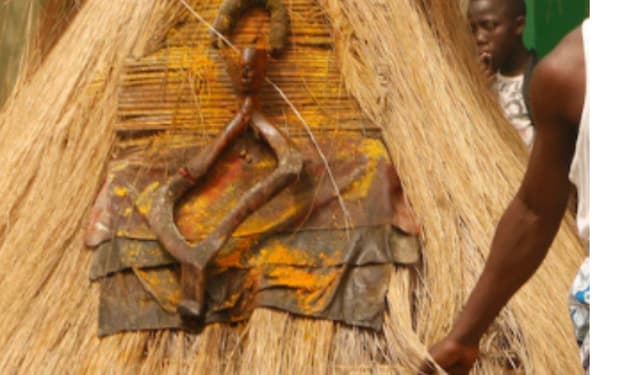
Voodoo2
What’s the dark side of Voodoo? I mean the people who eat for evil what do the devil's rituals are not the same okay but you will never use somebody for a ritual to make money or to understand something but you chose to be evil you should be good you chose to be good to be helping people to be bringing people
By Ayimahin Kpedo2 years ago in History
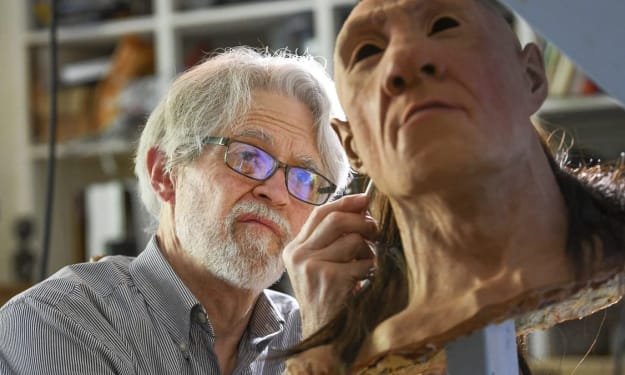
Science paints a new picture of the ancient past, when we mixed and mated with other kinds of humans
The ability to extract DNA from ancient hominins, including our earliest ancestors and other relatives who walked on two legs, has recently become available to researchers. With a steady stream of studies examining the genes of ancient people, ancient DNA technology has transformed how we study human history and has quickly gained popularity.
By Alejandro Silvente2 years ago in History
The Fascinating History of Ancient Civilizations: From Egypt to the Maya
In the dim recesses of time, when the world was young and mankind took its first steps toward civilization, remarkable societies emerged. From the enigmatic pyramids of Egypt to the lush jungles of Mesoamerica where the Maya thrived, ancient civilizations have left an indelible mark on human history. In this journey through the annals of time, we'll uncover the captivating stories, ingenious achievements, and enduring legacies of these extraordinary cultures.
By Emmy Shalom2 years ago in History
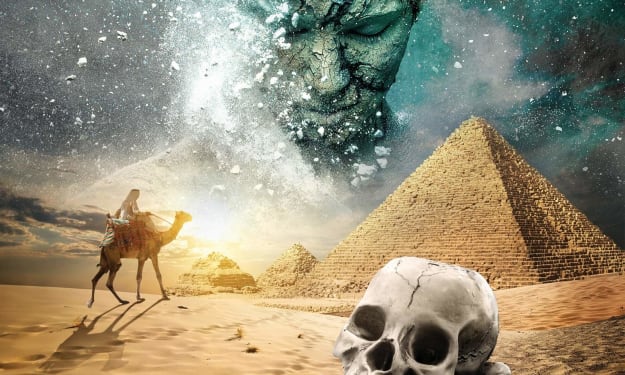
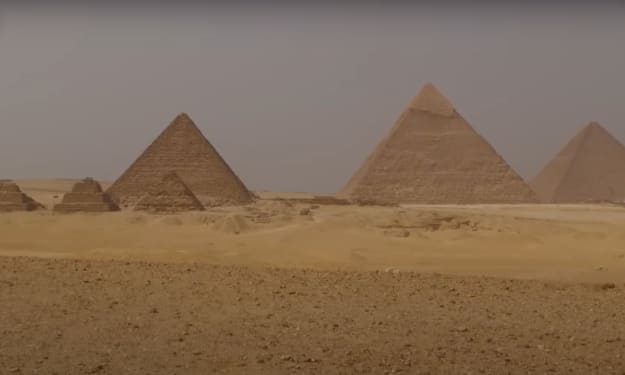
Pyramids of Egypt & its history
The Pyramids of Egypt stand as a testament to human ingenuity and unparalleled engineering prowess. These colossal structures, unwavering in their endurance through the ages, have seized the world's imagination for centuries. In this extensive exploration, we delve into the astonishing history and enigmatic aura enveloping these magnificent monuments.
By Umair Amjad Kayani2 years ago in History
The Real Reason, Why The Pyramids of Egypt Terrify Scientist
The initial sequence unfolds with a prologue detailing the discovery of a previously undisclosed pyramid concealed deep within the desert by a group of American archaeologists. Subsequently, the narrative navigates through the tumultuous events triggered by Egyptian reactions to the unearthing. Concurrently, a documentary film crew arrives in Egypt, intending to capture one of the most significant archaeological discoveries in Egyptian history. The story line then transitions to an introductory news report featuring Sunny, a news reporter, and her cameraman Fitzy.
By John Madubugha2 years ago in History
Harvest of Redemption
In the heart of Nigeria, nestled between the rolling hills of the Yoruba countryside, there lay a village named Ifeoluwa, which means "God's Love" in the local dialect. Ifeoluwa was a place where the rhythms of life were dictated by the seasons, where the rains brought life to the soil, and the sun's embrace yielded a bountiful harvest.
By Lizbeth olaedo2 years ago in History
Why We Say OK
There's a two-letter word that penetrates our day to day discussions, from easygoing gab to our communications with innovation. OK. Okay. It's a word so pervasive that it may very well be the most generally perceived term on earth. OK! OK! We use it to avow, to recognize, and to convey understanding. Yet, have you at any point halted to consider the beginnings of this unpretentious yet fundamental word? Where did it come from, and what does it really mean?
By Chaudhary Haroon Ali2 years ago in History
Eternal Odyssey: The Dramatic Tale of the Universe
In the beginning, there was nothing but an infinite void, a cosmic canvas devoid of light and life. Time, as we know it, did not exist, and the universe was but a mere notion in the grand scheme of things. Then, in a burst of unimaginable energy, the universe was born.
By Hamim Hassan2 years ago in History
Egypt's Lost Wonders (Full Episode) | Drain the Oceans
NARRATOR: The enigmas of ancient Egypt, and its concealed enigmas. MATTHEW: These burial chambers symbolize the technology of rebirth. STEVEN: They erected monuments that astound the mind. NARRATOR: Some of their most remarkable accomplishments, buried beneath the sands and waters of the Nile Valley... until today. Just envision if we could drain the oceans or empty the deserts, unveiling the secrets beneath. Now, we can. Utilizing cutting-edge imaging technology to penetrate sea and sand, converting precise data into 3D images. Can scientists unlock the riddle of Alexandria's Lighthouse and reconstruct one of the ancient world's wonders? Why did a Pharaoh build 15 colossal forts when none of them saw significant combat? LAUREL: This is a forgotten era in Egyptian history due to our loss of access to these monuments. NARRATOR: And what do a fleet of sunken boats, six miles from the Nile, reveal about Egypt's original 'Valley of the Kings'? NARRATOR: Ancient Egypt... One of the world's greatest civilizations, spanning 3,000 years. Its people developed a remarkable written language using symbols and images. They worshiped peculiar deities. And they constructed two of the seven wonders of the ancient world. The first, the magnificent pyramids of Giza. -The ancients selected the seven wonders because they met specific criteria: ingenious design on a grand, even extravagant scale. NARRATOR: Egypt's second ancient wonder is the Lighthouse of Alexandria, known as the Pharos. Like the other wonders, it was constructed on a grand scale: The Hanging Gardens of Babylon and the Colossus of Rhodes. Of the seven wonders, only the pyramids endure today. But as the waters of the Nile Delta recede, can the architectural marvel of the Pharos be resurrected from the waters of Alexandria Harbor, using the latest underwater imaging technology? Can it be precisely reconstructed for the first time, a sight that once dazzled the world? -The Pharos earned its place among the seven wonders of the ancient world because it was something entirely new. Some say the beacon could be seen from 30 miles out to sea. NARRATOR: Alexandria's lighthouse is a feat of technology and architecture. Constructed in the 3rd century BC, it serves as the crowning jewel of a new capital city founded by Alexander the Great, the conqueror of ancient Egypt. -Alexandria was everything. Think of the Champs Elysees in Paris or Times Square in New York. Alexandria was all that and more. It was the most beautiful city the world had ever seen. NARRATOR: Egypt's new rulers aimed to make the Pharos a prominent landmark, a grand banner welcoming people to Alexandria. -The Pharos was primarily created as a landmark to showcase the city's power. They needed a sign, a huge banner saying "Welcome to Alexandria." NARRATOR: However, as Egypt's influence waned, Alexandria's famous lighthouse fell into disrepair. The land beneath it gradually sank into the sea, and in the 14th century, it ultimately collapsed after an earthquake struck. The Pharos was thought to be lost beneath 23 feet of water, at the entrance of Alexandria harbor. Now, a French team of archaeologists is working to rediscover its true splendor. Using state-of-the-art undersea imaging technology, they are scouring the seabed for clues, with the aim of digitally reconstructing this lost Ancient Wonder of the World for the first time. Leading the effort is architect and archaeologist Isabelle Hairy, who has been researching Alexandria's lighthouse for over two decades. ISABELLE: It's always incredibly rewarding to work on one of the seven wonders of the ancient world. I'd be lying if I said otherwise. NARRATOR: Isabelle's team is conducting research in one of the largest underwater archaeological sites globally. They uncover intriguing granite blocks, undoubtedly crafted by human hands. Could these be remnants of the missing ancient wonder? Isabelle's task is to decipher the true size and design of the Pharos. However, the challenge is compounded by the varying descriptions of its appearance from past travelers and artists. Over time, these depictions grew increasingly fantastical. NARRATOR: To uncover the truth, Isabelle's team utilizes photogrammetry, capturing thousands of detailed images across the vast site. After 28 weeks of diving and 50,000 photographs, they possess the data needed to unveil the Pharos' secrets. Combining this unique data with cutting-edge computer graphics allows the waters around Alexandria harbor to be virtually drained away. As the Mediterranean recedes, remarkable structures come into view: nearly 3,000 granite blocks scattered across three acres of the seabed. These are clearly not natural rock formations, but rather the handiwork of ancient builders. They include statue bases and fragments of pillars, all part of a monumental structure. The submerged ruins of the genuine ancient wonder, the Pharos lighthouse, are brought back to light for the first time in six centuries. Isabelle's work has already provided a revelation: evidence of the Pharos' design. -Draining the site has allowed us to see the lighthouse. We have even found blocks that may have formed the cornerstones, and no underwater blocks indicate sloped walls; the walls were straight. NARRATOR: This marks the first physical evidence of the lighthouse's design, a significant breakthrough. However, reconstructing the rest of the underwater puzzle remains a colossal challenge. -What we have here is a puzzle, essentially a 3,000-piece puzzle that we need to try to assemble. Will the pieces fit together or not? NARRATOR: Some critical pieces are missing, having been taken to museums by earlier excavations. Nevertheless, one crucial fragment remains nearby, abandoned on the quayside. -This is probably one of the most significant discoveries found at the site. NARRATOR: What is it? -This is a fragment of a door frame, and we can identify it because this is where the door would have been attached. NARRATOR: This groove, meticulously carved to hold a gigantic door, matches the shape of other submerged stones. They must all be components of the same doorway. -By connecting this enormous fragment, nearly 12 meters long,
By Rana Junaid2 years ago in History