Ancient
Mummification in Ancient Egypt. Content Warning.
Another characteristic element in Egyptian civilization that has stimulated the interest of scholars was, without doubt, the unusual method of preserving corpses and transforming them into mummies, a technique that was believed to be divine in origin and was traced back to Horus, the son of Osiris and Isis. The term 'mummy' derives from the Arab word mumiya or mumyai which, according to Abd el-Latif a 12th century Arab traveller, meant 'bitumen' or 'mixture of pitch and myrrh' acompound much used in working with corpses and in which, in Europe too, there was a flourish- ing trade during the middle ages. In ancient times a distinction was made between natural and artificial mummies the former being those that had been preserved intact without having undergone any particular treatment. Indeed still today it is thought that the perfect embalming techniques used by the ancient Egyptians were responsible only as a secondary factor for the spectacular state of preservation of the corpses; the principal reason would appear to be the extremely dry climate of Egypt and the total absence of bacteria in the air and the sand. In any case, the mummification of the bodies took place according to a quite precise, and probably standardized, ritual. The body of the deceased was entrusted to the hands of specialists, who began the embalming by using a hook to extract the brain through the nostrils. The skull was then filled with a mixture based on liquid bitumen, which hardened as it cooled. The eyes were removed and later replaced with enamelled orbs. Using an extremely sharp stone, an incision was made on the left side of the body and the viscera were extracted.
By Momen Elmenshawy2 years ago in History
Unveiling Our Genetic Time Capsules: Exploring the Legacy of Extinct Human Species
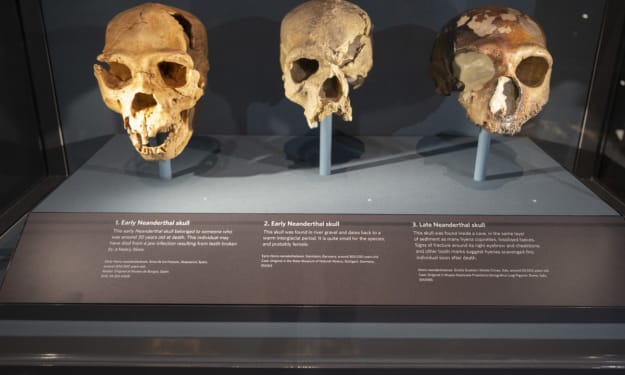
The history of human evolution is like a tapestry, and the forebears who made up that history are the threads that make up that fabric. Researchers are delving deeper into our genetic makeup in order to discover the profound and lingering influence of extinct human species. This fascinating new area of scientific investigation is attracting a lot of attention. This discovery reveals linkages that go back thousands of years and sheds insight on the long and illustrious history of our species. It opens a window into our genetic inheritance.
By Stephen Keith B. Labto2 years ago in History
Unlocking Ancient Medical Mysteries: Researchers Detect Roman-Period Cranial Tumor
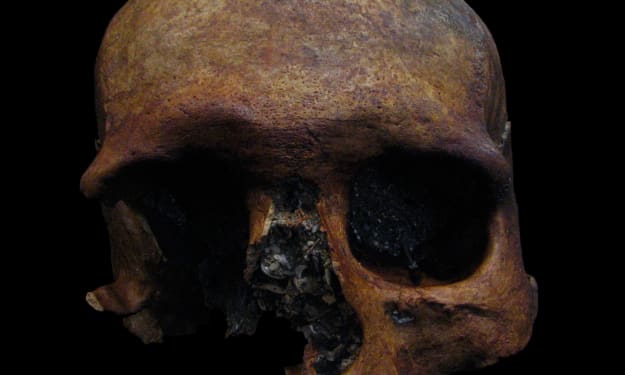
The annals of history contain innumerable tales, but the findings that shed light on the lives of our ancestors are among the most fascinating stories ever told. Researchers have made a surprising discovery: they have found evidence of a brain tumor in a person who lived during the Roman period. This provides an insight into the medical practices of the ancient world as well as the ongoing human quest for understanding and healing.
By Stephen Keith B. Labto2 years ago in History
SAS Mission in Afghanistan
Once upon a time in the rugged mountains of Afghanistan, a Special Air Service (SAS) soldier named Captain James "Suja" Sullivan found himself on a top-secret mission. Suja was known for his exceptional skills, his cool demeanor under pressure, and his unbreakable determination.
By Ibrahim Issah 2 years ago in History
Why Blacks Were Chosen As Slaves Over Others
The institution of slavery has left an indelible mark on human history, ensnaring countless communities and ethnicities across the globe. Yet, a perplexing historical pattern emerges when we examine the transatlantic slave trade: while other human groups witnessed a decline in enslavement, African populations, particularly those living below the sprawling Sahara desert, became the primary targets. This intricate historical conundrum prompts us to delve into the reasons behind the specific targeting of Africans for enslavement, a subject that is steeped in complexity.
By Francis Osei2 years ago in History
Trembling with fear! Do you know the top ten unsolved mysteries of the eerie world?. Content Warning.
The Earth is so big, and in the universe, we humans are like dust. The world is so big, and there are many things and phenomena that we cannot explain with science. We are all called unsolved mysteries. Today, let's take a look at the ten most interesting unsolved mysteries in the world!
By A godmother2 years ago in History
Kang Youwei's Wuxu Proposition: China and Japan merge and let Ito Hirobumi manage China. Content Warning.
The Wuxu Reform, which occurred more than a hundred years ago, ultimately ended in failure. The Six Gentlemen generously died and were bloodstained on the execution ground. However, the initiator of this reform, Kang Youwei, fled and made the world fully understand his true face.
By A godmother2 years ago in History
How About the Animal That Is Also a Plant?
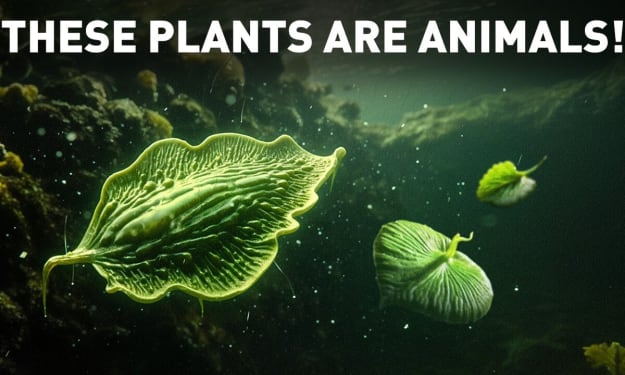
Beneath the shimmering surface of the world's oceans lies a realm of astonishing diversity, where creatures both beautiful and bizarre inhabit the watery depths. Among these remarkable inhabitants are sea slugs, sea pigs, and the enigmatic goblin shark, each with its unique story and role in the intricate web of marine life.
By Sonam Shahukhal2 years ago in History