Ancient
Greek Theatre of Epidaurus: A Marvel of Ancient Acoustics and Architecture. AI-Generated.
The Greek Theatre of Epidaurus stands as a testament to the architectural ingenuity and cultural sophistication of ancient Greece. Renowned for its exceptional acoustics and harmonious design, this ancient amphitheater continues to captivate audiences and scholars alike. This article explores the origins, design, construction techniques, cultural significance, and enduring legacy of the Greek Theatre of Epidaurus.
By Marveline Merab2 years ago in History
Hittite Iron Weapons: Forging a Path to Power in the Ancient World. AI-Generated.
The Hittite iron weapons, developed by the Hittite civilization, marked a significant advancement in military technology during the late Bronze Age and early Iron Age. These weapons, crafted from iron, gave the Hittites a formidable edge in warfare, contributing to their dominance in the ancient Near East. This article explores the origins, development, design, impact, and enduring legacy of Hittite iron weapons.
By Marveline Merab2 years ago in History
Persian Qanat System: Ancient Engineering for Sustainable Water Management. AI-Generated.
The Persian qanat system, an ingenious method of water management developed in ancient Iran, exemplifies the advanced engineering and environmental understanding of early Persian civilizations. These underground channels provided a reliable water supply in arid regions, supporting agriculture and settlement for millennia. This article explores the origins, design, construction techniques, cultural significance, and enduring legacy of the Persian qanat system.
By Marveline Merab2 years ago in History
Harappan Weight System: Precision and Standardization in the Indus Valley. AI-Generated.
The Harappan weight system, developed by the ancient Indus Valley Civilization, exemplifies the precision and standardization achieved by one of the world's earliest urban societies. This sophisticated system facilitated trade, taxation, and administrative activities, contributing significantly to the civilization's economic and social organization. This article explores the origins, design, applications, cultural significance, and enduring legacy of the Harappan weight system.
By Marveline Merab2 years ago in History
Incan Suspension Bridges: Engineering Marvels of the Andes. AI-Generated.
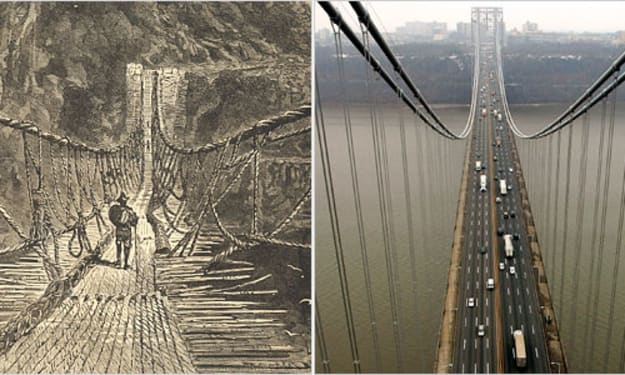
The Incan suspension bridges, known as "Q’eswachaka" bridges, are extraordinary examples of ancient engineering that enabled the Inca civilization to connect and unify their vast empire across the challenging Andean terrain. These bridges, constructed from natural fibers, demonstrate the Incas' ingenuity and mastery of their environment. This article explores the origins, design, construction techniques, cultural significance, and enduring legacy of Incan suspension bridges.
By Marveline Merab2 years ago in History
Assyrian Lamassu: Guardians of Ancient Splendor. AI-Generated.
The Assyrian Lamassu, majestic statues that embody a blend of mythological and protective symbolism, stand as iconic representations of Assyrian art and architecture. These colossal sculptures, combining human, bull, and bird elements, were prominent in the palaces and gateways of ancient Assyria. This article explores the origins, design, significance, and enduring legacy of the Assyrian Lamassu.
By Marveline Merab2 years ago in History
Maya Codices: Windows into an Ancient Civilization. AI-Generated.
The Maya codices are invaluable manuscripts from the ancient Maya civilization, providing a glimpse into their sophisticated writing system, astronomical knowledge, religious practices, and daily life. These codices, made from bark paper, are among the few surviving artifacts that reveal the intellectual and cultural achievements of the Maya. This article explores the origins, structure, content, significance, and enduring legacy of the Maya codices.
By Marveline Merab2 years ago in History
Chinese Compass: Guiding the Course of History. AI-Generated.
The Chinese compass, a groundbreaking invention from ancient China, revolutionized navigation and significantly impacted global exploration and scientific understanding. This article delves into the origins, development, design, cultural significance, and lasting legacy of the Chinese compass.
By Marveline Merab2 years ago in History
The Rich Tapestry of India's History: A Journey Through Time
India, a land of vibrant colors, diverse cultures, and deep spirituality, boasts a history that is as intricate and fascinating as its present. From ancient civilizations and grand empires to colonial subjugation and the eventual triumph of independence, the story of India is a captivating saga of resilience, innovation, and transformation. This article delves into the significant epochs of Indian history, unraveling the layers of its past that have shaped the nation we know today.
By Mohit Rana2 years ago in History
SIX DEAD PEOPLE Who Came Back to LIFE at Their OWN Funerals
One of the biggest mysteries in life is what happens after we die. Some people believe in reincarnation, others think we go to heaven or hell, and some believe we just cease to exist. But one thing most of us agree on is that when someone dies, they usually don't come back. I say "usually" because I don't want to upset any vampires, zombies, or ghosts out there. Sometimes, though, people do come back from the dead without needing to eat brains or sparkle in the sun. Here are some amazing stories of people who were thought to be dead but miraculously came back to life.
By Ayanronbi Faith2 years ago in History
Phoenician Alphabet: The Legacy of Ancient Writing. AI-Generated.
The Phoenician alphabet is one of the most significant innovations in the history of writing. Originating around the 11th century BCE, this script revolutionized written communication and laid the foundation for many modern alphabets. This article explores the origins, development, structure, and enduring legacy of the Phoenician alphabet.
By Marveline Merab2 years ago in History
Egyptian Obelisks: Monuments of Ancient Precision and Power. AI-Generated.
Egyptian obelisks are towering stone monuments that epitomize the architectural and engineering prowess of ancient Egypt. These structures, often inscribed with hieroglyphs, were erected to honor the gods and commemorate the achievements of pharaohs. This article explores the origins, design, construction, cultural significance, and enduring legacy of Egyptian obelisks.
By Marveline Merab2 years ago in History