Ancient
Exploring Nalanda: A Journey Through History and Modern Revival
Introduction to Nalanda Nalanda is not just a geographical location; it’s a tapestry of history, culture, and learning. Known for its ancient ruins and vibrant local life, this district has played a pivotal role in shaping India's educational and cultural landscape. The name "Nalanda" resonates with echoes of scholarly excellence and spiritual enlightenment, drawing visitors from around the world.
By Aniket Manjare2 years ago in History
Ancient Civilizations
History is the study of past events, particularly in human affairs. It encompasses a wide range of topics and periods, from ancient civilizations to contemporary societies. Understanding history is crucial for several reasons: it helps us comprehend the present, learn from past mistakes, and appreciate the cultural and societal developments that have shaped the world.
By Halima Begum2 years ago in History
The Egyptian Calendar: Timekeeping with a Pharaoh’s Flair. AI-Generated.
When it comes to ancient civilizations, the Egyptians knew how to build monumental things—pyramids, temples, and even their concept of time. Yes, that’s right! Long before your digital wristwatch or the calendar app on your smartphone, the Egyptians were already mastering the art of timekeeping with what we now call the Egyptian calendar. And trust me, their method wasn’t just your run-of-the-mill "Monday through Sunday" ordeal. This was timekeeping with a side of astronomy, a dash of the Nile, and a whole lot of mythological flair.
By Marveline Merab2 years ago in History
The MACHINE that Selected the Citizens of Athens | Greek Kleroterion. AI-Generated.
The kleroterion, an ingenious device used in ancient Athens, played a crucial role in the democratic process by ensuring fair and random selection of citizens for public duties. This unique artifact exemplifies the commitment of the Athenians to the principles of equality and civic participation. This article explores the origins, design, operational mechanism, historical significance, and enduring legacy of the Greek kleroterion.
By Marveline Merab2 years ago in History
Roman Circus Maximus: The Grand Arena of Ancient Rome. AI-Generated.
The Circus Maximus stands as one of the most iconic and enduring symbols of ancient Roman engineering and entertainment. This grand arena, primarily used for chariot races, was the largest and oldest public stadium in Rome, reflecting the city's architectural ambition and the cultural significance of public spectacles. This article explores the origins, architectural design, construction techniques, historical significance, and enduring legacy of the Circus Maximus.
By Marveline Merab2 years ago in History
Celtic Hillforts: Strongholds of Ancient Europe. AI-Generated.
Celtic hillforts, prominent from the Bronze Age through to the Iron Age (circa 1200 BCE to 600 CE), are among the most significant archaeological remnants of ancient European civilizations. These fortified settlements, constructed on elevated ground, served as defensive strongholds, centers of political power, and symbols of social organization. This article explores the origins, design, construction techniques, historical significance, and enduring legacy of Celtic hillforts.
By Marveline Merab2 years ago in History
Minoan Plumbing Systems: Advanced Sanitation in Ancient Civilization. AI-Generated.
The Minoan civilization, flourishing on the island of Crete from approximately 3000 to 1450 BCE, is renowned for its sophisticated infrastructure, including one of the earliest known plumbing systems. The advanced sanitation and water management technologies of the Minoans highlight their engineering ingenuity and contribute significantly to our understanding of ancient urban planning. This article explores the origins, design, technological innovations, social impact, and enduring legacy of Minoan plumbing systems.
By Marveline Merab2 years ago in History
Greek Archimedes' Claw: Ingenious Warfare Innovation. AI-Generated.
The Archimedes' Claw, also known as the "Iron Hand," is one of the most legendary inventions attributed to the ancient Greek mathematician and engineer Archimedes of Syracuse. This remarkable defensive weapon was designed to protect the city of Syracuse from naval attacks, particularly during the Roman siege in the Second Punic War (214–212 BCE). This article explores the origins, design, operational mechanism, historical significance, and enduring legacy of the Archimedes' Claw.
By Marveline Merab2 years ago in History
Assyrian Aqueduct of Jerwan: Engineering Mastery in the Ancient World. AI-Generated.
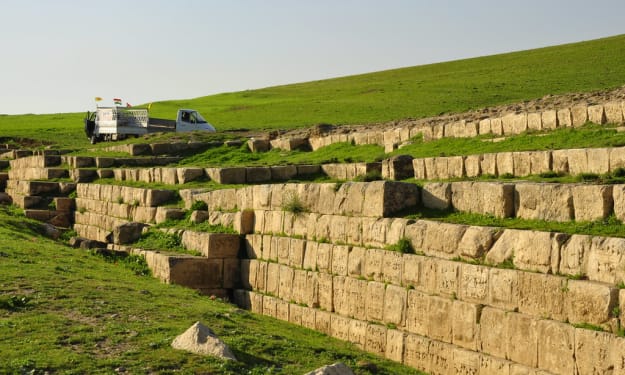
The Assyrian Aqueduct of Jerwan is a remarkable feat of ancient engineering that highlights the ingenuity and technological prowess of the Assyrian Empire. Constructed in the 7th century BCE, this aqueduct was part of an extensive water management system designed to supply water to the capital city of Nineveh. This article explores the origins, architectural design, construction techniques, historical significance, and enduring legacy of the Assyrian Aqueduct of Jerwan.
By Marveline Merab2 years ago in History
Why Phoenicians DOMINATED Maritime Commerce (Phoenician Ships). AI-Generated.
Phoenician ships are legendary for their role in establishing the ancient Phoenicians as preeminent mariners and traders of the Mediterranean. These advanced vessels enabled the Phoenicians to dominate maritime commerce, spread their culture, and establish colonies far from their homeland in modern-day Lebanon. This article explores the origins, design, technological innovations, economic impact, and enduring legacy of Phoenician ships.
By Marveline Merab2 years ago in History
Why Did The Romans Build Bathhouses?. AI-Generated.
Roman bathhouses, known as thermae, were monumental public structures that played a central role in the social and cultural life of ancient Rome. These sophisticated complexes went beyond mere bathing; they were centers for socializing, exercising, and conducting business. This article explores the origins, architectural design, cultural significance, social impact, technological innovations, and enduring legacy of Roman bathhouses.
By Marveline Merab2 years ago in History