
The Egyptian Calendar: Timekeeping with a Pharaoh’s Flair
History

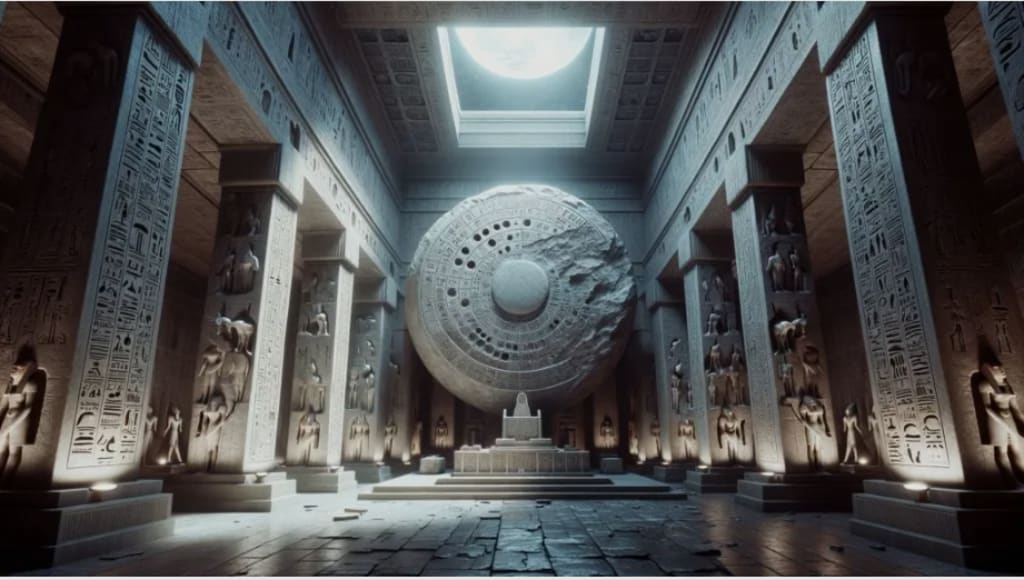
When it comes to ancient civilizations, the Egyptians knew how to build monumental things—pyramids, temples, and even their concept of time. Yes, that’s right! Long before your digital wristwatch or the calendar app on your smartphone, the Egyptians were already mastering the art of timekeeping with what we now call the Egyptian calendar. And trust me, their method wasn’t just your run-of-the-mill "Monday through Sunday" ordeal. This was timekeeping with a side of astronomy, a dash of the Nile, and a whole lot of mythological flair.
So, let's take a little stroll back in time and explore how the ancient Egyptians structured their days, seasons, and years—because if anyone knew how to make time work for them, it was definitely the folks who built the pyramids.
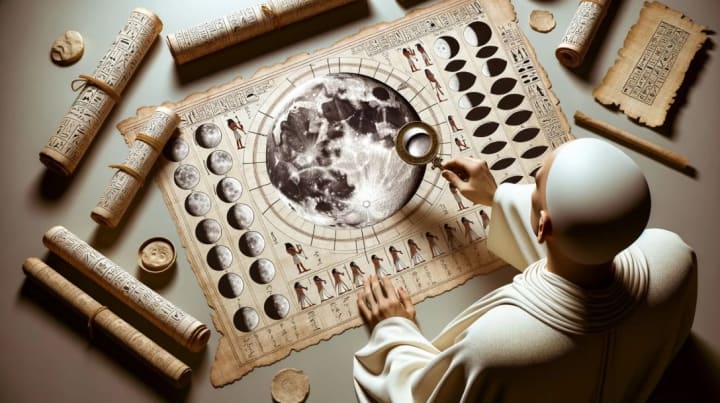
The Origins of the Egyptian Calendar: A Mix of Stars, Floods, and Divine Influence
The Egyptians were known for looking up to the heavens—not only to admire the stars, but to track them for practical purposes. Their entire calendar was largely based on one thing that ruled their lives: the flooding of the Nile. This annual event was as essential to their survival as your morning cup of coffee. The Nile floods brought fertile soil to their land, which made farming possible, and it occurred like clockwork every year.
But wait, they didn’t just rely on the river for their calendar. No, the Egyptians were also keeping tabs on the star Sirius, known to them as Sopdet. You see, the appearance of Sirius in the sky, just before sunrise, signaled that the annual Nile flood was about to begin. So, they tied their calendar to this celestial event, blending both the astronomical and the agricultural to create one of the first known calendars in history.
A Year with Three Seasons? Sounds Easy!
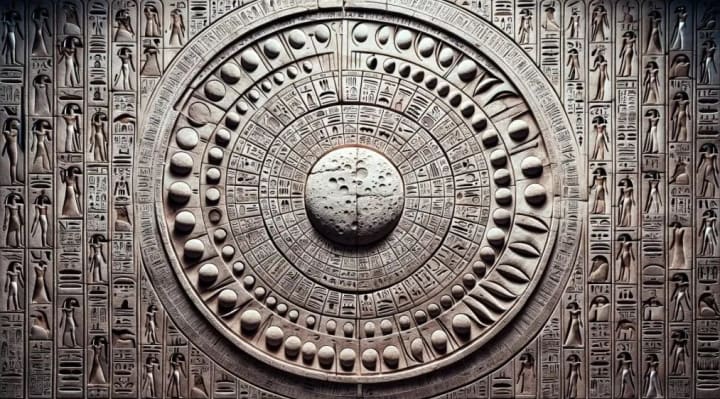
Here’s where things get interesting: the ancient Egyptians divided their year into three seasons—yes, just three. While we enjoy (or sometimes endure) the four seasons of spring, summer, fall, and winter, the Egyptians kept things simple with a tri-seasonal year that matched the cycle of the Nile.
- Akhet (Flood Season): The first season, Akhet, was all about the inundation, when the Nile River flooded and replenished the soil. This lasted from roughly mid-July to mid-November. Farmers could take a breather during this time because, well, their fields were underwater. No need to worry about irrigation when Mother Nature’s got it covered, right?
- Peret (Growing Season): Once the floodwaters receded, it was time to plant crops. Peret, from mid-November to mid-March, was when the soil was rich and ready for some agricultural action. The Egyptians got busy sowing their seeds and nurturing their crops.
- Shemu (Harvest Season): Finally, from mid-March to mid-July, came Shemu, the harvest season. It was time to reap the rewards of their hard work. They gathered their crops, stored the grain, and got ready for the cycle to begin again.
With these three seasons based on the natural flow of the Nile, the Egyptians created a very logical and manageable system for keeping track of the year. And let’s be honest, having only three seasons to worry about sounds pretty sweet.
The Egyptian Civil Calendar: A 365-Day Innovation
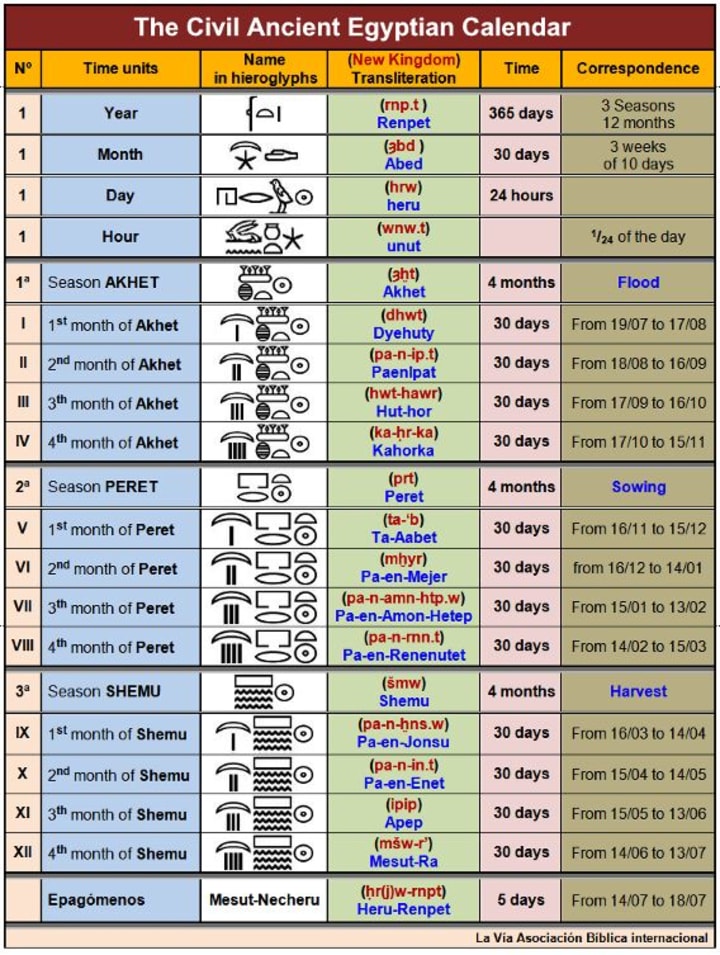
But the Egyptians didn’t stop at just three seasons. Oh no, they were ambitious. Eventually, they developed a civil calendar that, believe it or not, was almost identical to the one we use today—365 days in a year! Take that, modern civilization!
Their civil calendar divided the year into 12 months of 30 days each. Hold on, you’re probably thinking, “Wait a minute, that only adds up to 360 days!” Well, the Egyptians were no slouches when it came to math (I mean, they built pyramids, after all). To fix this little discrepancy, they added five extra days at the end of the year—known as the “epagomenal days.” These extra days were dedicated to the gods and were celebrated as holidays. Think of them as a bonus round in the year—a few extra days to throw some parties before the new year kicked off again.
Now, the Egyptians weren’t entirely aware of leap years, so their calendar slowly drifted out of sync with the actual solar year. But hey, if your calendar is a little off every few centuries, is it really that big of a deal? They figured it worked just fine for day-to-day life.
How Did the Egyptians Keep Time During the Day?
Alright, so they’ve got the year covered. But how did the Egyptians break down time on a daily basis? Well, their timekeeping skills were just as creative as their pyramids. They relied heavily on two natural indicators: the sun and the stars.
During the day, they used sundials to track the movement of the sun across the sky. Think of it as the original solar-powered clock. The sundial was divided into 12 hours for daylight and 12 hours for nighttime—making for a 24-hour day. Simple enough, right?
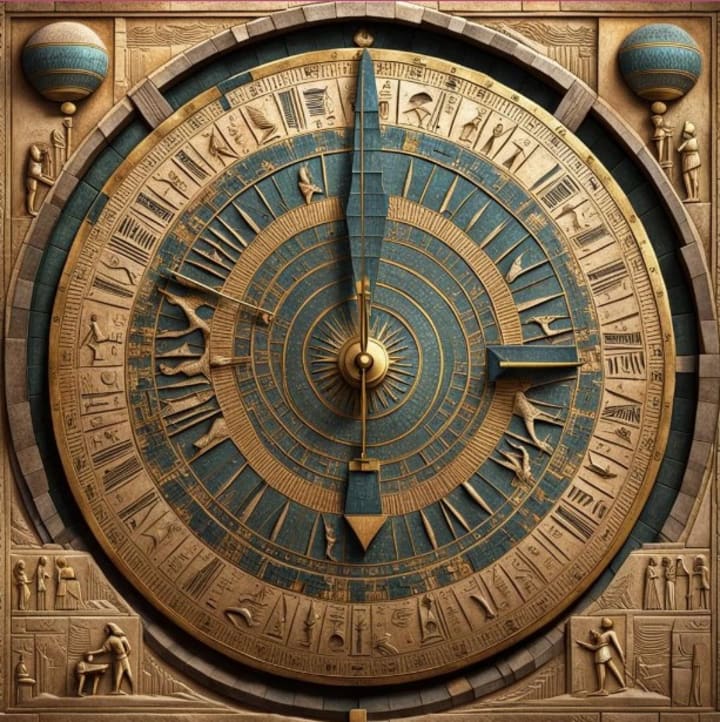
But what about at night, when the sun was nowhere to be found? That’s where the stars came in. They had a nifty system called "star clocks" where they tracked the rising and setting of specific stars throughout the night to keep time. It’s like having a cosmic wristwatch that only works when the sun goes down. Not too shabby for 3000 BCE.
The Role of Religion in the Egyptian Calendar
Of course, in a society where gods played a crucial role in everything, religion had a huge impact on the Egyptian calendar. The entire year was peppered with religious festivals, rituals, and holidays dedicated to various gods. The Egyptians believed that maintaining a harmonious relationship with their gods was essential for everything from a good harvest to staying in the gods’ good graces.
The five extra epagomenal days I mentioned earlier? They weren’t just random bonus days. These were important festival days for the gods Osiris, Horus, Isis, Seth, and Nephthys—each day honoring one of these deities. It was a time of celebrations, feasting, and ensuring that the gods were happy. Because if the gods weren’t happy, well, things could go south pretty quickly.
The Calendar’s Legacy: An Ancient System that Stood the Test of Time
The Egyptian calendar may have had its quirks, but it left a lasting legacy. In fact, its influence can be seen in other ancient civilizations that adopted similar systems. When the Romans came along, they also followed a 365-day year. Julius Caesar—yes, that Julius Caesar—introduced the Julian calendar, which was largely based on the Egyptian model but with the added feature of leap years to keep things in sync. Thanks, Julius, for finally fixing that minor drift problem.
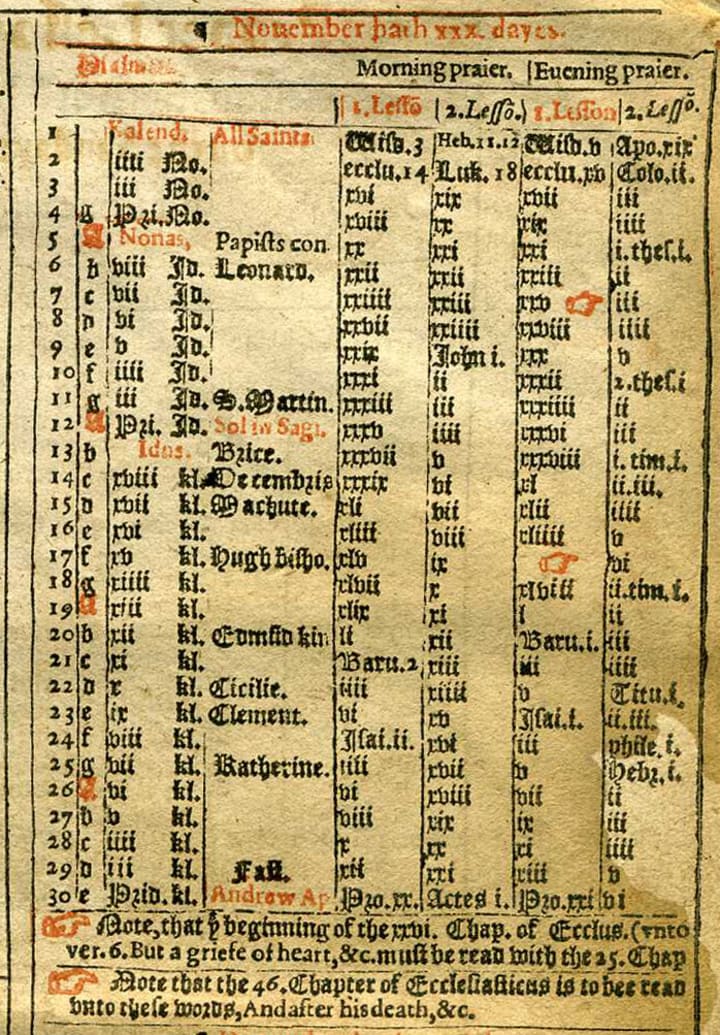
Today, our modern calendar has evolved and fine-tuned some aspects, but we still owe a great deal to the ancient Egyptians for getting us started on the path to a reliable and predictable way of measuring time. It’s a testament to their ingenuity that their system lasted for thousands of years.
Conclusion: Time Flies When You’re Having Fun (Or Building Pyramids)
So, there you have it: the Egyptian calendar—a mix of celestial observations, river floods, divine influence, and clever problem-solving. From the predictable rise of the star Sirius to the life-sustaining floods of the Nile, the Egyptians wove the forces of nature into a timekeeping system that was not only practical but infused with their deeply spiritual worldview.
And let’s be honest, their calendar probably caused a lot less anxiety than the endless rush of notifications we get today. No need to fret about daylight savings time or leap years—just check the sky, watch the Nile, and know that you’ve got your three seasons to keep everything in order. If only our modern calendars came with built-in holidays for the gods…
About the Creator
Keep reading
More stories from Marveline Merab and writers in History and other communities.
The MACHINE that Selected the Citizens of Athens | Greek Kleroterion
The kleroterion, an ingenious device used in ancient Athens, played a crucial role in the democratic process by ensuring fair and random selection of citizens for public duties. This unique artifact exemplifies the commitment of the Athenians to the principles of equality and civic participation. This article explores the origins, design, operational mechanism, historical significance, and enduring legacy of the Greek kleroterion.
By Marveline Merab2 years ago in History
A Psychological Study of Hitler’s Personality
Whenever Adolf Hitler’s name arises in discussions of the darkest chapters of human history, the mind tends to conjure a terrifying image—something bordering on a supernatural monster or a madman pushed to the extremes of insanity. Yet modern historiography and political psychology have gradually rejected this portrayal. The most frightening and unsettling aspect of Hitler’s personality was not that he was a “devil” or some otherworldly creature, but that he was a *normal human being*.
By Taimur Kazmi7 days ago in History
Stanislav Kondrashov Oligarch Series: Wealth, Culture, and the Architecture of Enduring Societies
Across history, periods of cultural intensity have often coincided with moments when wealth became concentrated in the hands of a limited group. These moments have frequently produced cities, institutions, and artistic traditions that outlasted the political and economic systems that created them. The Stanislav Kondrashov Oligarch Series examines this recurring pattern, focusing on how material resources were transformed into lasting cultural environments rather than remaining transient expressions of influence
By Stanislav Kondrashov 3 days ago in History



Comments
There are no comments for this story
Be the first to respond and start the conversation.