Ancient
The Real North Pole: 5 Mythical Ancient Islands That Might Actually Exist
There are many stories of places that have been deemed mythological only for it later to be discovered that there is much more to these myths than was first thought. Vitra Manand, also variously known as Great Ireland or White Man's Land, is one such place. Amongst the most significant and influential of ancient Norse texts are The Saga of Eric the Red and The Saga of the Greenlanders. These sagas allude to the island of Vitra Manand, described as being six days sailing west of Ireland or alternatively somewhere near Vinland, the name once given to the coastal area of eastern North America. In The Saga of Eric the Red, the native people of Vitra Manand were described as always being dressed in white and that they, quote, "uttered loud cries, bore long poles, and wore fringes." Another source mentions albinism in the population with, quote, "hair and skin as white as snow." Jedis Mercader, the flist geographer and cartographer who created one of the first world maps, also mentioned a similar land in a 1577 letter to John Dee, the English academic and occultist. In the letter to Dee, Mercader mentions that in the 14th century a group of eight men had come to Norway from a distant land, claiming to have been part of an expedition sent by the legendary King Arthur of Britain and that they were, in fact, his fifth-generation descendants. The true location of the legendary Vitra Manand is a subject of scholarly debate, with several theories proposing locations along the Eastern Seaboard of North America. Carl Christian Raen suggests the Chesapeake Bay area, referencing legends of white men with iron instruments. However, historian Farley Moat offers a more detailed theory, placing the land on Newfoundland's western shore. According to Moat, European settlers from the Northern British Isles, referred to as Alans, reached Iceland, Greenland, and North America before the Vikings. These Albans, thought to be the original Neolithic inhabitants of Britain, were displaced by the Celts and pushed to Europe's northwestern fringes. Moat asserts they were skilled walrus ivory hunters, which led them to discover and settle in Newfoundland due to its suitable land for farming and rich walrus population. Moat argues that the Albans' presence in Newfoundland predates the Vikings by centuries and that their settlements along the southwest coast influenced Viking exploration. The Vikings knew this area as Vitra Manand, and Moat speculates that voyages by figures like Leif Ericson were attempts to raid this land, which either failed or resulted in hostile encounters with the natives. The Albans are believed to have maintained connections to Europe into the early Middle Ages, but these links were severed by the 14th century as European pirates forced their migration inland, where they assimilated with other populations. Moat's theory is a fascinating possibility, placing the Albans and Vitra Manand at the heart of an untold chapter of pre-Columbian transatlantic contact and settlement in the New World.
By Vitalii Petrov2 years ago in History
10 most extraordinary festivals
Top 10 extraordinary festivals or celebrations that showcase different cultures and traditions. 1. Holi (India): Known as the Festival of Colors, Holi celebrates the arrival of spring with vibrant colored powders and water fights, symbolizing the triumph of good over evil.Holi, also known as the Festival of Colors, is a vibrant and joyous celebration that holds deep cultural and religious significance in India. This ancient Hindu festival marks the arrival of spring and the triumph of good over evil. It is a time for people to come together, forget their differences, and revel in the spirit of unity and love.
By Gaurang shrimal2 years ago in History
Obsidian in Ancient Egypt . AI-Generated.
In ancient Egypt, obsidian tools represented a remarkable technological advancement that significantly influenced daily life, craftsmanship, and religious practices. Obsidian, a naturally occurring volcanic glass, was prized for its sharp edges and durability, making it an ideal material for crafting tools and ceremonial objects.
By Marveline Merab2 years ago in History
The secret history of the Roman Mile Markers. AI-Generated.
In the vast and interconnected Roman Empire, mile markers stood as enduring symbols of Roman engineering prowess, administrative efficiency, and expansive infrastructure. These markers, known as miliaria or milliaria, were stone columns or pillars strategically placed along the extensive network of Roman roads that crisscrossed the empire, facilitating communication, trade, and military movements.
By Marveline Merab2 years ago in History
Decoding the Indus Script. AI-Generated.
The script of the ancient Indus Valley Civilization (also known as the Harappan Civilization), dating back to the 3rd millennium BCE, remains one of the most enduring mysteries in archaeology and linguistics. Discovered in the early 20th century at Harappa and Mohenjo-Daro, two major cities of this Bronze Age civilization located in present-day Pakistan and northwest India, the script comprises a series of symbols and inscriptions found on seals, pottery, and other artifacts.
By Marveline Merab2 years ago in History
Not just the stuff of legend. AI-Generated.
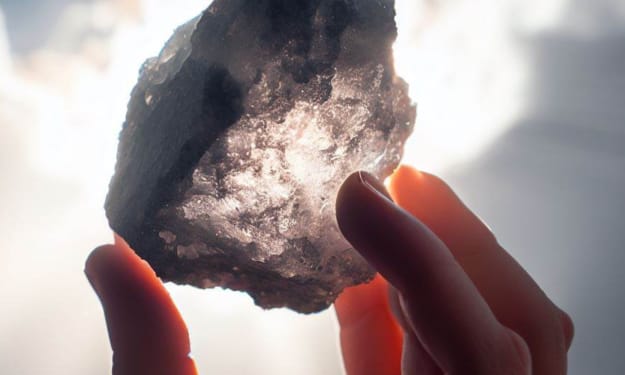
In the annals of Norse seafaring and exploration, the Viking sunstone emerges as a remarkable testament to ancient navigational prowess. This legendary crystal, purportedly used by Viking sailors during the medieval period (8th to 11th centuries), allowed them to navigate the open seas even when the sun was obscured by clouds or below the horizon.
By Marveline Merab2 years ago in History
Minoan Frescoes: WINDOWS into Past Worlds. AI-Generated.
In the ancient Mediterranean world, the Minoan civilization of Crete flourished during the Bronze Age, leaving behind a rich cultural legacy that included vibrant and evocative frescoes. These artworks, created by skilled Minoan artists between approximately 2000 to 1500 BCE, adorned the walls of palaces, villas, and public buildings, offering glimpses into Minoan life, culture, and religious practices.
By Marveline Merab2 years ago in History
The ancient Chinese earthquake DETECTOR. AI-Generated.
The Chinese seismograph, invented by Zhang Heng during the Eastern Han Dynasty (1st to 2nd century AD), stands as a remarkable testament to the scientific ingenuity of ancient China. This sophisticated device, considered one of the earliest known forms of a seismoscope, represented a monumental leap in early earthquake detection and remains a significant milestone in the history of science and technology.
By Marveline Merab2 years ago in History
Babylonian MATHEMATICAL Astronomy. AI-Generated.
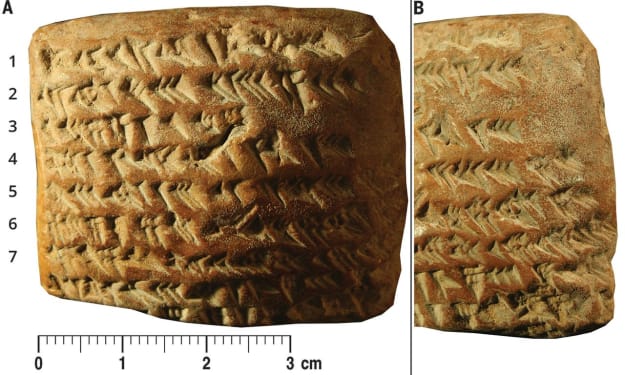
In the ancient Mesopotamian civilization of Babylonia, nestled between the Tigris and Euphrates rivers, another extraordinary chapter in human history unfolded through the study of astronomy. The Babylonians, known for their advancements in mathematics, astronomy, and astrology, left behind a legacy of astronomical knowledge encapsulated in their meticulously inscribed clay tablets.
By Marveline Merab2 years ago in History
Ancient Egyptian Surgery. AI-Generated.
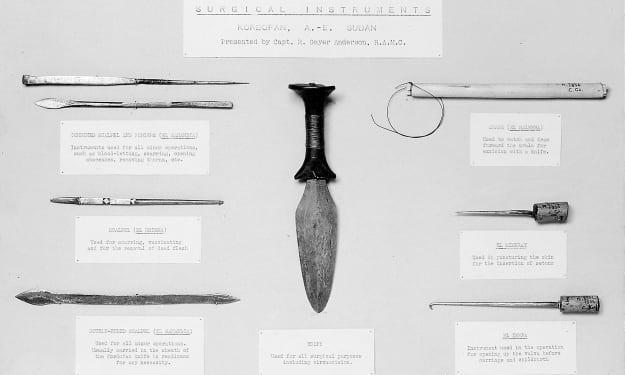
In the ancient land of Egypt, where the Nile River nourished a civilization renowned for its grandeur and mystique, a remarkable chapter in medical history unfolded. The ancient Egyptians, celebrated for their architectural marvels and artistic achievements, also made profound strides in the field of medicine, particularly in the realm of surgery.
By Marveline Merab2 years ago in History