Ancient
The Tragic Story of Nikola Tesla
When we think of the greatest inventors of all time, a few names come to mind - Henry Ford, the Wright brothers, and Thomas Edison. However, there is one individual whose contributions are often overlooked, yet his inventions have profoundly shaped our modern world - Nikola Tesla.
By Gilbert Ay-ayen. Jrabout a year ago in History
How the Atomic Bomb Destroyed the Life of its Creator
As J. Robert Oppenheimer witnessed the successful detonation of the world's first nuclear weapon, he was haunted by its devastating implications. Recalling a line from the Hindu scripture, the Bhagavad Gita, he said, "Now I am become Death, the destroyer of worlds." Oppenheimer, a man of remarkable intellect and talents, spoke eight languages and wrote poetry, but he would forever be remembered as the "father of the atomic bomb" - the man who gave humanity the power to destroy itself.
By Gilbert Ay-ayen. Jrabout a year ago in History
How the Genius of Marie Curie Killed Her
In 1927, 29 of the world's leading physicists gathered at the prestigious Solvay Conference in Brussels. The sole female attendee was Marie Curie, a pioneering scientist with numerous groundbreaking achievements. She was the first woman to win a Nobel Prize, the first person to win the Nobel Prize twice, and the first to win in two different fields. Curie's work on radioactivity would save countless lives during World War I, though it ultimately contributed to her own demise.
By Gilbert Ay-ayen. Jrabout a year ago in History
African Slave Trade
The African slave trade, a dark chapter in human history, refers to the systematic capture, transport, and enslavement of African people by European, Arab, and African slave traders between the 15th and 19th centuries. This trade involved millions of Africans who were forcibly removed from their homeland, transported across the Atlantic, and sold into lifelong servitude. The transatlantic slave trade, as it is commonly referred to, had a profound and devastating impact on Africa, its people, and the entire world.
By Obo Natureabout a year ago in History
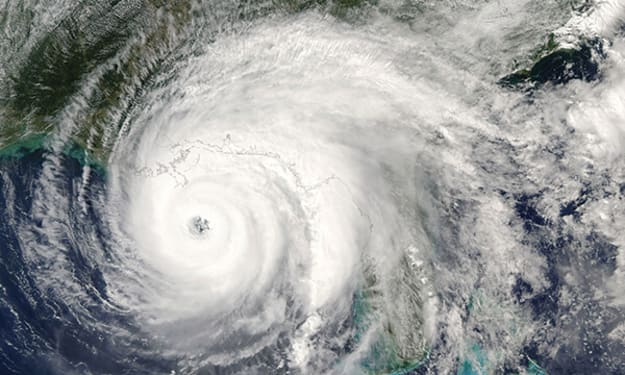
"Hurricane Francine:
Hurricanes are one of the most powerful forces of nature, leaving a trail of destruction in their wake. Each storm is a unique event, and while meteorologists work tirelessly to track them, the impact on human lives is often unpredictable. Hurricane Francine, which struck with unprecedented ferocity, was a vivid reminder of nature’s ability to wreak havoc. However, amid the destruction, it also revealed remarkable stories of resilience, as communities came together to rebuild their lives.
By Obo Natureabout a year ago in History
büyü
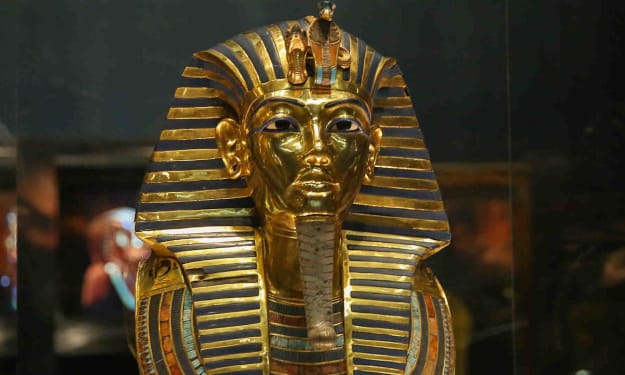
The story of the "Curse of Tutankhamun" has captured imaginations worldwide ever since Howard Carter discovered the young pharaoh's tomb in November 1922. Whispers of an ancient and malevolent force followed the excavation, fueled by eerie coincidences and strange deaths connected to those involved in the project. But how much truth is there to this legend? Is it just a thrilling tale, or could the curse really be responsible for the misfortune that befell several key figures? Let’s explore the facts.
By Horace Waslandabout a year ago in History
Tale of Marie and Jacques
In the heart of Paris, amidst the cobbled streets and towering cathedrals, a revolution was brewing. The year was 1789, and France was a cauldron of unrest, its people boiling over with fury and hunger. The nobility feasted behind gilded walls while the poor starved, desperate for change. At the center of this storm stood Marie Lefevre and Jacques Arnaud, two ordinary Parisians swept into the whirlwind of history.
By Yogesh Sawantabout a year ago in History
John of Cappadocia: The Byzantine Financial Genius Ahead of His Time. AI-Generated.
In the bustling world of Byzantine Constantinople, a city renowned for its splendor and complexity, John of Cappadocia emerged as a financial genius whose work profoundly transformed the empire’s economic landscape. Operating during the 6th century under Emperor Justinian I, John’s contributions went beyond typical financial management, leaving a lasting imprint on Byzantine finance.
By Kamran Khanabout a year ago in History